

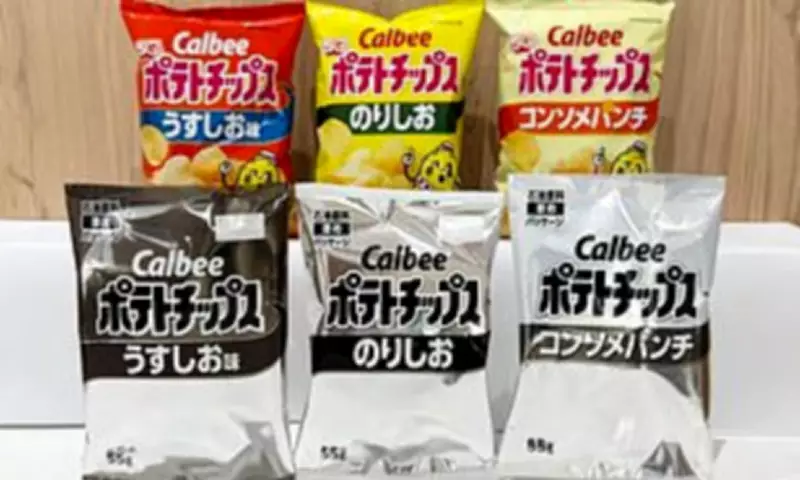
A leading Japanese crisp manufacturer is being compelled to market its products in black-and-white packaging as the ongoing conflict in Iran triggers shortages of printing ink. Calbee, a household name in Japan renowned for its savoury potato chips available in an array of flavours ranging from seaweed salt to soy sauce and butter, announced on Tuesday that it will 'revise the packaging specifications' and utilise only 'two colours' for 14 product lines, commencing later this month or in June. The company did not specify which two colours would be employed, but accompanying photographs depicted grey packaging.
Supply Chain Disruptions
Calbee attributed this decision to 'supply instability for certain raw materials resulting from the escalating tensions in the Middle East'. Local media reports indicate that the snack-maker's procurement of printing ink has been compromised by shortages of naphtha, an oil byproduct utilised extensively across various industries. The affected products encompass several potato chip varieties, a breakfast cereal, and Kappa Ebisen, a popular shrimp snack famous for its 'can't stop, can't stop' slogan.
'We will continue to respond swiftly and flexibly to changes in the business environment, including geopolitical risks, while striving to deliver safe, reliable, and satisfying products,' the company stated.

Broader Industry Impact
Another Japanese food enterprise, Itoham Yonekyu Holdings, also informed AFP that transitioning to black-and-white packaging or employing alternative inks for some of its products were among potential future options, similarly citing supply problems due to the Middle East conflict. Approximately one-fifth of the world's oil typically transits through the Strait of Hormuz, and its de facto closure since the war commenced in late February has driven prices sharply upward.
Japan's Prime Minister Sanae Takaichi previously asserted that Tokyo anticipated having sufficient naphtha-derived chemical products to last beyond the year's end after boosting imports from outside the Middle East. Last week, Takaichi remarked that the global oil supply squeeze was exerting an 'enormous impact' on the Asia-Pacific region.
Potential UK Ramifications
Last month, a leaked report disclosed that British supermarkets might face shortages of items such as chicken and pork in a 'reasonable worst case' scenario due to the Iran war. Carbon dioxide (CO2) supplies are predicted to decline should the conflict persist into the summer, potentially reducing the variety of certain products on shelves. CO2 is employed for various purposes in the UK, including stunning pigs and chickens prior to slaughter and aiding the growth of plants like cucumbers in greenhouses. Water, soft drinks, and alcohol are carbonated with CO2, which is also used to dispense beverages in pubs and to maintain food freshness during transport as dry ice. CO2 can extend the shelf life of packaged meats, some cheeses, baby foods, and baked goods by inhibiting bacteria through 'Modified Atmosphere Packaging' (Map). Dry ice is also utilised to cool blood supplies, organs, and vaccines, while CO2 has functions in electricity supply, such as storing excess renewable energy. The Government has been preparing for shortages resulting from the war, according to the Times, which has seen plans relating to what was dubbed 'Exercise Turnstone'.






