

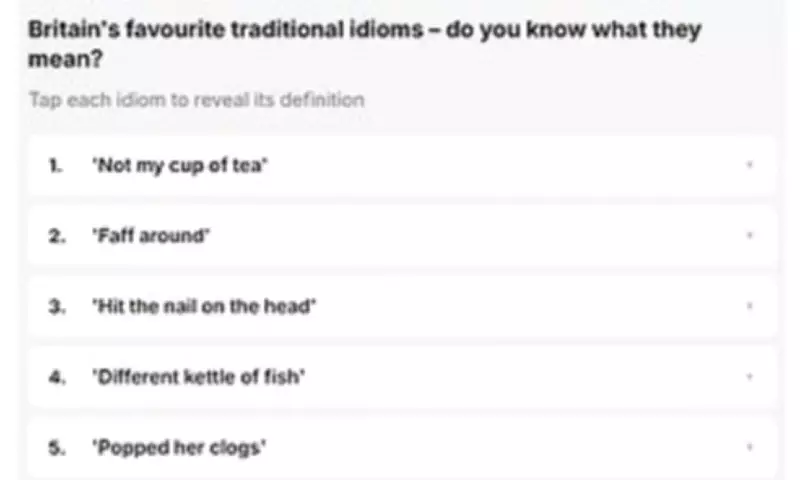
A new study has shed light on Britain's favourite traditional idioms, revealing a resurgence in classic expressions despite the dominance of social media slang. The research, conducted by language learning app Preply, analysed UK literacy data to identify which idioms have seen the greatest increase in usage from 2000 to 2022.
Top Idioms and Their Meanings
Topping the list is 'not my cup of tea', a polite way to express dislike or lack of enjoyment. Originating in the late 1800s, this phrase experienced a remarkable 614 per cent increase over the study period. Close behind is 'faff around', meaning to waste time on unnecessary tasks, with a 449 per cent resurgence. 'Hit the nail on the head' follows with a 327 per cent spike, while 'different kettle of fish' saw a 245 per cent increase.
Other popular idioms making a comeback include 'popped her clogs', 'cry over spilled milk', and 'raining cats and dogs'. The full list of revived expressions also features 'brass monkeys', 'cream crackered', 'a few sandwiches short of a picnic', 'put a sock in it', 'under the weather', and 'take the biscuit'.

Why Idioms Are Making a Comeback
Anna Pyshna, a spokesperson from Preply, explained the significance of these phrases: 'Whether it's "raining cats and dogs" or "not my cup of tea", these traditional British idioms build connections through shared understanding. While some classic idioms may be falling out of use, many are experiencing a revival as Brits continue to embrace humour and familiarity in everyday conversations.'
The study highlights how social media is influencing language evolution. Pyshna noted: 'Social media has quickly become the primary facilitator for language development, with digital communication transforming how idioms are used and interpreted. Traditional idioms are now accompanied by memes, images, and GIFs, adding layered meaning. Social media gives way to hybrid idioms, mixing traditional phrases with new slang to create digital idioms. A prime example is the shift from "spill the beans" to "spill the tea", meaning to reveal a secret.'
Contrast with Modern Slang
The findings come shortly after a separate survey revealed outdated British slang terms for sex that have fallen out of favour. 'How's-your-father' topped that list, with 80 per cent of Gen Z admitting they have never used it. 'Hanky-panky' left 67 per cent baffled, while nearly half (48 per cent) said they have never used 'nookie'. In contrast, Gen Z's preferred slang for sex is now 'smash'. Harriet Scott, founder and CEO of Perspectus Global, commented: 'Our research shows just how much language evolves and changes, and over relatively short periods of time. Terms for sex or sexual activity have often relied on euphemisms, slang or metaphor, as to talk directly about the act itself is taboo.'
The Role of Punctuation in Texting
In a related note, studies have shown that punctuation in text messages can alter meaning. Research from Binghamton University found that ending texts with a full stop can make them seem less sincere, while abbreviations, emoticons, and emoji add emotional context. Professor Celia Klin stated: 'In contrast with face-to-face conversation, texters can't rely on extra-linguistic cues such as tone of voice and pauses. One way that texters add meaning is by using textisms like emoticons, irregular spellings, and irregular punctuation.'






