

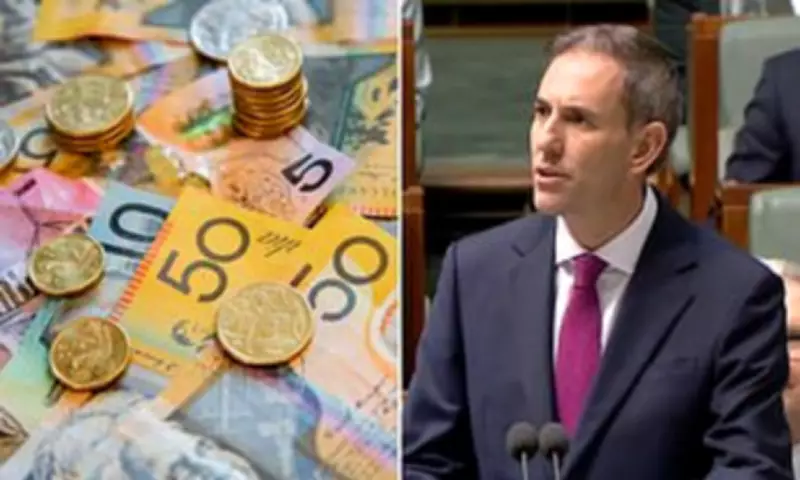
Four major cost of living measures are set to put more cash in the pockets of Australians. The policies had already been leaked, but Treasurer Jim Chalmers confirmed on Tuesday night that a tax offset and a deduction would be introduced next financial year. The two policies have been combined with a pair of tax cuts announced earlier this year and will see the average Australian save about $2,800.
Tax Offset of $250
Under the plan, workers who pay tax will see an income offset of $250 each year from July 1, 2027, but only for income earned during work, not from investments. This policy, titled the Working Australians Tax Offset (WATO), means it will come back on tax returns. An Australian who earns less than $19,985 – or up to $24,985 for workers eligible for the Low Income Tax Offset – and as a result do not pay income tax, would not benefit.
Instant Tax Deduction
Chalmers confirmed that the government is also introducing a $1,000 instant tax deduction for work-related expenses without the need for receipts. Around 6.2 million workers (42 per cent of taxpayers) will benefit from the change in the next financial year, 2026/27, with an average tax saving of $205. The current arrangements for those who have more than $1,000 in work-related expenses will remain the same or earn only business or investment income.

Two More Tax Cuts
The WATO and $1,000 deduction will come into force after two tax cuts, which were announced earlier this year. From July 1 this year, the Labor government will reduce the 16 per cent tax rate to 15 per cent for income between $18,201 and $45,000. From July 1, 2027, this tax rate will be reduced further to 14 per cent.
So, How Much Will Aussies Save?
An Australian on full-time national minimum wage of $49,296 is due to save $1,179 under the first two tax cuts for 2026/27, and then up to $2,032 for 2027/28 when the Budget’s additional measures come into force. For an Australian on an average income of $81,245, the savings will be $1,978 under the two tax cuts for 2026/27 and $2,816 as a combined benefit for 2027/28. It also means that those on an average full-time income of $106,657 will save $2,613 next financial year thanks to the first two cuts. Their savings will then increase to $3,451 in the financial year 2027/28.
Backing Wage Changes
The Albanese government confirmed its support for higher wages for low-paid workers by recommending an economically sustainable real wages increase for minimum wage and award-reliant workers to the Fair Work Commission. However, the revelation was expected after the government signalled its backing earlier this year – and has previously backed growth in each of the last four Annual Wage Reviews. It is understood that, across these reviews, the National Minimum Wage will have increased by over $9,120 per year. Earlier this year, the government announced it would phase out junior award rates of pay for retail, fast food, and pharmacy workers aged 18 to 20.
The Fuel Relief Factor
On March 30, the Albanese government halved the fuel excise tax for three months up to June 30, aiming to reduce the cost of a 65L tank of fuel by nearly $19. The Budget indicated about $2.9 billion had gone towards the cut and reducing the heavy vehicle road user charge to zero for three months. There has been speculation that the relief might be extended, but no further measures are planned beyond June, according to the Budget. The ATO has previously streamlined access to temporary relief from tax obligations for eligible businesses until June 30. This included more generous payment plans, remission of interest and penalties, support in varying pay as you go (PAYG) instalments where there has been a reduction in taxable income, and a new dedicated channel for businesses to access relief. However, the Budget revealed there are no plans to extend this either.






