

Australian Households Confront $2,000 Annual Bill Surge as Cost of Living Crisis Intensifies
Australian citizens are urgently calling on Prime Minister Anthony Albanese to implement stronger measures to alleviate the escalating cost of living pressures. A financial timebomb is set to detonate for households across the nation, with experts predicting an average annual increase of over $2,000 in essential expenses.
The Triple Whammy of April 1 Changes
From April 1, three significant financial burdens are converging to strain household budgets. The Albanese government's approved increase in private health insurance premiums, the conclusion of the temporary energy bill rebate scheme, and the full impact of the Reserve Bank of Australia's recent interest rate rise will all take effect simultaneously.
According to analysis from insurance broker Compare Club, this combination is expected to force the typical Australian household to shoulder more than $2,000 in additional yearly costs. The research indicates that young families and small business proprietors are particularly vulnerable, facing these new expenses on top of already stretched finances exacerbated by skyrocketing fuel prices.

Small Business Owners on the Brink
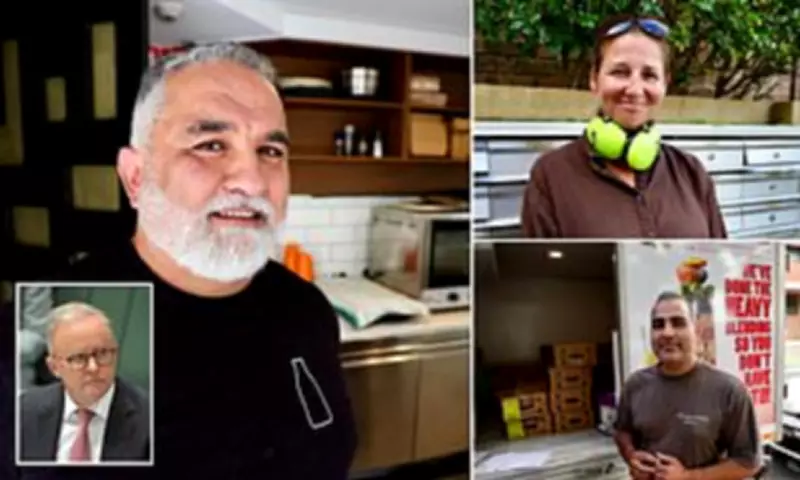
Sam, proprietor of West End Bakes cafe on The Corso in Manly, Sydney's Northern Beaches, described a precarious situation where staggering petrol bills and rising energy rates threaten his livelihood. "Everyday I get a new email from suppliers saying they are putting a fuel levy on. It's just extra money that we have to cop every week and it reduces profit," he revealed.
His suppliers have increased delivery charges by approximately $10 per order, a cost he has been reluctant to pass directly to customers. "I've had to reduce my expenses because I can't keep up. I've cancelled my private insurance and am re-thinking the car insurance. We used to make profit, now we're running on hardly anything," Sam explained, adding that closure might become inevitable if conditions don't improve soon.
He appealed directly to the government: "Back off a little bit, let us do business the way we used to do it 30 years ago, stop being so controlling about small little things and just let us do business."
Cumulative Impact on Household Essentials
The incremental nature of these cost increases creates a compounding effect that many find overwhelming. Sam detailed specific price surges: coffee up 40% over three years, milk rising from $2 to $3.15, and bacon increasing from $46 to $59. "You can see a lot of businesses closing," he observed grimly.
Peta, who operates a small gardening business with her husband on the Northern Beaches, reported that her fuel costs have nearly doubled recently. "I used to be able to get it just under $100 a tank, and yesterday it cost me $140 and that was a cheap one!" she exclaimed.
The crisis extends beyond business operations to family life. Peta described receiving a $535 bill for her children's school trip to Canberra, questioning the transportation costs. "My kids came home waving a note, 'Mum, we're going to camp!' and it was $535 to go to Canberra and back for a one-night sleepover. We were like, 'How much is this bus?!'"
Government Response and Public Reaction
Prime Minister Anthony Albanese announced several temporary relief measures on Monday, including:
- Reducing Australia's fuel excise by 26.3 cents per litre for three months
- Cutting the heavy vehicle road user charge to zero for three months
- Deferring the next scheduled increase in the road user charge by six months
While Peta welcomed these announcements, she argued that more comprehensive support is needed for essential service providers. "If we don't have trucks, we get nothing, no fuel, no food, nothing. Instead of giving them a hard time and charging them a fortune to drive on government toll roads, they need to be looked after," she asserted.
She expressed frustration with Australia's economic vulnerability: "I think it's a bit sad that we're so heavily influenced from other countries and it would be nice to see some more autonomy, a little more narcissism from our own government to just look after us and put us first."

Broader Economic Strain and Consumer Anxiety
The Compare Club Financial Stress Index, published in March, revealed alarming statistics about Australian financial wellbeing:
- 38% of Australians reported being financially worse off than the previous year
- 43% of surveyed Australians admitted relying on credit to cover everyday household bills
Kate Browne, Compare Club's head of research, explained: "These are people trying to keep up with costs that are rising faster than their wages."
Another business owner, Sam from QB Smoothies (a fruit and vegetable supplier to Sydney businesses), described passing on a fuel surcharge to clients after his daily fuel costs tripled from $50 to $150. "We've had to pass that on and if businesses struggle, then we also struggle. And then at the end of the day, we're not sure if we're going to get the job or not," he said.
Retiree Sue from the Northern Beaches reported feeling the pinch particularly at supermarkets, while a visitor from Perth expressed concerns about potential supply chain disruptions. The collective sentiment reflects a nation grappling with a cost of living crisis that shows no immediate signs of abating.





