

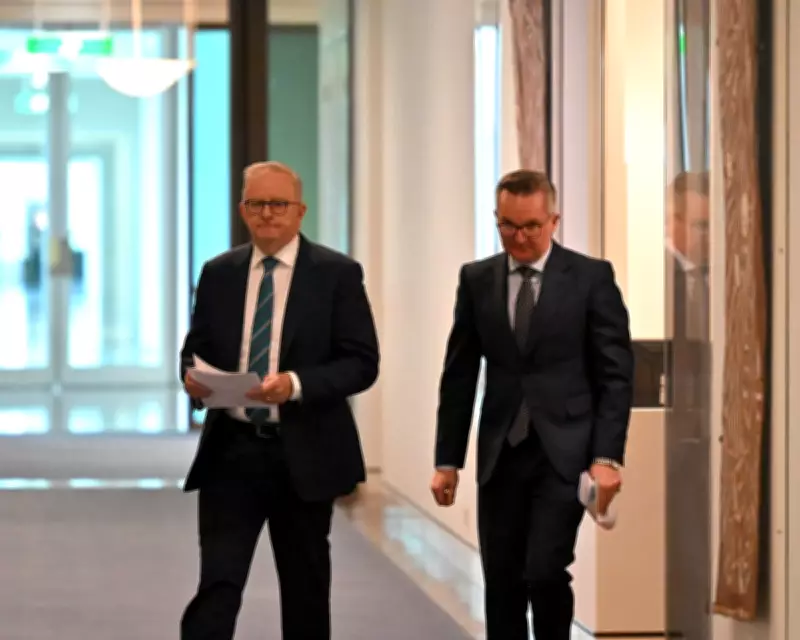
Australian Government Grapples with Escalating Fuel Crisis Demands
The Australian government is under mounting pressure to demonstrate decisive action in addressing the worsening fuel crisis, following criticism of its initial response being perceived as inadequate. With the situation showing no signs of immediate resolution, Environment Minister Murray Watt has cautioned that even if current conflicts were to cease abruptly, the nation faces a prolonged period of fuel supply challenges.
Budgetary Pressures Intensify as Crisis Deepens
As the federal budget approaches on May 12th, Treasurer Jim Chalmers confronts unprecedented spending demands from multiple sectors. Businesses across various industries are urgently requesting financial assistance, while vulnerable Australians struggle with the compounding effects of inflation, rising interest rates, and skyrocketing fuel prices. Minister Watt acknowledged that budget decisions might be delayed due to the volatile economic climate, with uncertainty about which sectors will require emergency support by May.
The government's current parliamentary focus centers on a plan to underwrite petrol companies to secure additional supply, though officials recognize that most fuel problems stem from logistical rather than legislative issues. This realization opens the door to alternative government interventions that could be implemented to alleviate the crisis.

Political Calculations and Policy Options
Prime Minister Anthony Albanese will outline his government's comprehensive approach in a scheduled National Press Club address on Thursday. Meanwhile, political dynamics are evolving rapidly, with the opposition calling for a temporary halving of the 52.6 cent per litre fuel excise. While the government has previously indicated reluctance to implement such a measure due to its estimated $1.5 billion cost and concerns about poor targeting toward wealthier Australians, Albanese has notably left this option open as a potential emergency measure.
Recent polling reveals complex public sentiment, with approximately one quarter of Australians believing government spending contributes significantly to interest rate increases. This creates a challenging political environment where the government faces simultaneous pressure to increase spending on crisis response while being criticized for excessive expenditure.
State Coordination and Industry Concerns
National cabinet discussions are focusing on developing contingency plans for when fuel shortages begin causing more severe economic disruption. Various industries are lobbying to be classified as essential services with priority access to diesel supplies. State governments have already taken independent action, with Victoria and Tasmania announcing free public transport initiatives similar to proposals the Greens party advocated nearly two weeks earlier.
Prime Minister Albanese has drawn parallels between the current fuel crisis and pandemic management, emphasizing the importance of coordinated state responses and consistent planning. However, the government remains determined to avoid the economic downturn and movement restrictions characteristic of the COVID-19 era, while also learning from previous policy implementation challenges.
Additional Policy Considerations
Beyond the immediate fuel crisis, the government is monitoring other policy areas including social media regulations for minors. Communications Minister Anika Wells is expected to provide updated statistics on minimum age compliance, amid government concerns that technology companies may not be adequately restricting underage access to their platforms.
As the fuel crisis continues to evolve, the Albanese government faces the dual challenge of addressing immediate supply issues while preparing for longer-term economic impacts, all within the constraints of an increasingly demanding budgetary environment and complex political landscape.






