

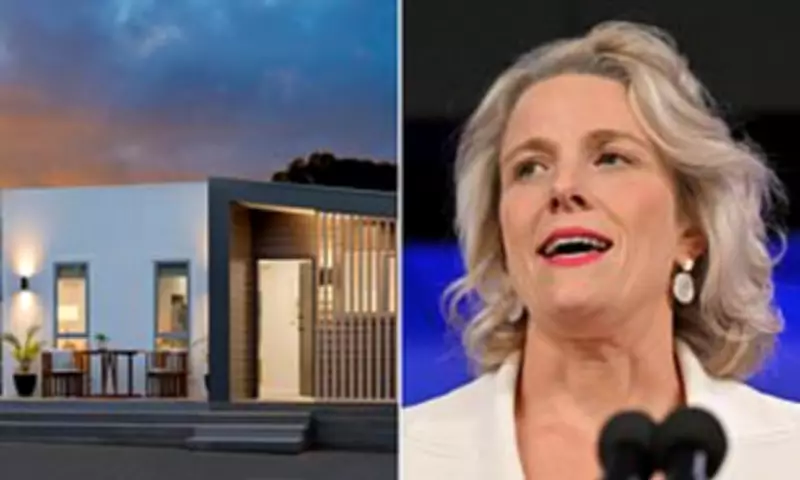
The Australian federal government has unveiled a $40 million plan to advance modular construction methods, marking its latest initiative to accelerate home building and reduce costs. This strategy draws inspiration from Scandinavian approaches, particularly Sweden, where approximately 80 percent of detached homes utilize prefabricated parts, compared to just five percent in Australia.
Government Investment in Innovative Housing
Housing Minister Clare O'Neil announced a $39.3 million commitment to trial modular, premade building components, akin to IKEA flat-pack furniture, which could significantly shorten construction timelines and lower expenses. 'Most homes use the same basic components—walls, windows, roofs, bathrooms, kitchens,' O'Neil stated ahead of a major speech defending controversial tax concession changes for investors. 'So instead of designing everything from scratch every single time, we can standardise some parts of the process and make construction more efficient.'
The funding will support a 'kit of parts' system developed by Building 4.0 CRC, an industry-led research group co-funded by the federal government. This open-source system allows businesses nationwide to participate without reliance on a single proprietary company. The initiative includes pilot projects, design work, technical advice, training, and supply chain development across states and territories.

Industry and Advocacy Support
Jackson Hills, chief executive of National Shelter, a housing advocacy nonprofit, welcomed the funding, stating, 'There is simply no pathway to meeting our future housing needs without the adoption of new and innovative housing.' The government also aims to increase the use of prefabricated parts in social housing, creating a steady pipeline for the nascent industry.
Building 4.0 CRC chief executive Mathew Aitchison emphasised the need for transformation: 'While many industries around the world have transformed over the last 100 years, we still make buildings very much the same as we have previously, and in that same period costs have gone up and productivity has continued to fall.'
Economic Context and Criticism
The announcement comes amid rising housing costs, with new dwelling prices increasing an average of 4.7 percent in the year to April, according to Bureau of Statistics data. The Commonwealth Bank expects home-building costs to peak at eight percent by September. Meanwhile, Labor faces criticism over tax concession changes for property investors. Opposition housing spokesman Andrew Bragg labelled the policy 'crazy,' citing Treasury analysis suggesting it could reduce housing supply by 35,000 homes. He supported modular construction but argued the National Construction Code makes building cheap homes too difficult, stating, 'In Australia, it is illegal to build a cheap house.'






