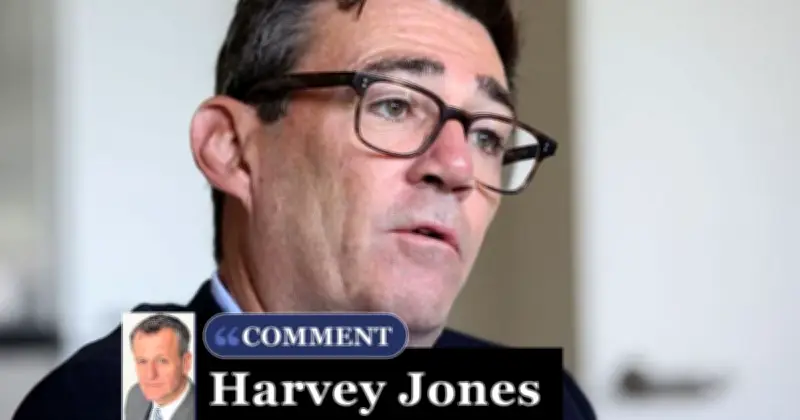
Andy Burnham's long-held ambition to become Prime Minister has arrived at what analysts describe as the worst possible time, with the UK facing a mounting debt crisis and a looming global financial storm.
Debt levels soar to historic highs
According to a report by Harvey Jones, the UK's national debt-to-GDP ratio is now close to 100%, up from 37% in 1997 under Tony Blair and 75% when Gordon Brown left office in 2010. The figure has risen sharply after 14 years of Conservative rule and the subsequent fiscal policies of Keir Starmer and Rachel Reeves.
Chancellor John Healey is reportedly planning to tax, borrow, and spend in his Budget on October 28, but the article warns that a global storm may prevent such measures. The UK owes £3 trillion, and the debt is rising.
Global debt crisis intensifies
The US is also struggling with debt, which has doubled in a decade to $40 trillion, or 125% of GDP. Japan's debt burden is even higher at 204% of GDP, while Italy (139%) and France (118%) are also heavily indebted. China's official debt figure is 69%, but the IMF estimates it at over 300% when hidden liabilities are included.
Governments worldwide continue to issue new bonds to fund deficits, but interest rates are no longer low. In the US, 30-year bond yields hit 5.3%, the highest since the 2007 financial crisis. In the UK, yields are at 5.75%, the highest in the developed world, reflecting investor concerns about risk.
Debt interest consumes growing share of spending
The article states that £1 in every £12 the British state spends now goes on debt interest, while in the US, it is $1 in every $7.40. This is described as unsustainable, yet politicians continue to borrow more.
The crisis is being aggravated by the Iran war, which is driving up energy prices and inflation, pushing bond yields higher. Tech giants such as Google and Microsoft are also borrowing heavily to invest in artificial intelligence infrastructure.
Yesterday, the US resorted to buying its own bonds to calm markets, a move described as desperate. The article notes that Donald Trump is unlikely to address the debt.
Burnham is not blamed for the situation, but he is criticised for acting as if it is 1997, when Labour could tax, borrow, and spend freely. The article concludes that the new PM is a man out of time, and his time is about to run out.