

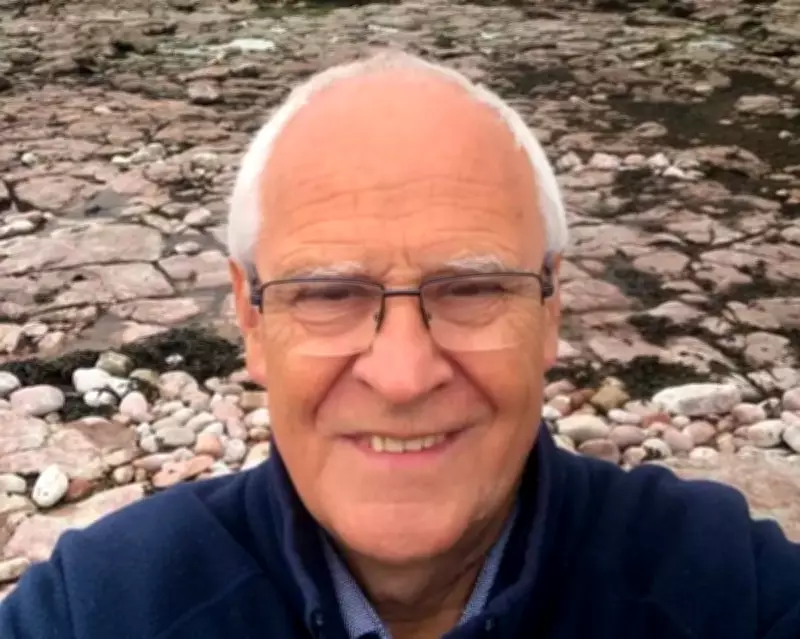
Andy Alaszewski, a pioneering social scientist who co-founded the journal Health, Risk & Society and served as its editor for two decades, has died at the age of 76. His research covered health policy, illness, disability, and the broader relationship between health and society.
Academic career and contributions
In 1998, Andy founded the journal Health, Risk & Society alongside Jill Manthorpe. Over 20 years as editor, he transformed it into a key platform for risk theory and empirical studies, attracting contributors and readers from around the world.
From 2001, he was professor of health studies at the University of Kent and director of its Centre for Health Services Studies. There, he developed critical social science approaches to risk and risk governance, advising UK Research Councils on priorities alongside Tom Horlick-Jones. His work demonstrated how studying organisational cultures and lived experiences can explain why risk-management policies affect different groups differently and can have unintended consequences.

In 2008, Andy joined the government’s scientific advisory committee on pandemic influenza. Later, he published two timely books: Covid-19 and Risk: Policy Making in a Global Pandemic (2021) and Managing Risk During the Covid-19 Pandemic (2023).
Early life and education
Andrzej, known as Andy, was born in Lewisham, south-east London, to Danuta (nee Piotrowicz) and Mieczysław, refugees from Nazi- and Soviet-invaded Poland. His mother later became a physiotherapist; his father worked as a property manager but had played football for Polonia Warsaw, making Andy an avid football fan.
He attended St Dunstan’s College in south London, then studied social anthropology at the University of Cambridge, completing his PhD under Dr Gilbert Lewis. His thesis examined the lives of patients with learning disabilities in a local long-stay hospital. Later, he evaluated a Barnardo’s project providing community care for former child patients, with Bie Nio Ong.
Career at Hull and Kent
In 1976, Andy became a lecturer at the University of Hull, moving north with his family—he had married Helen Walker in 1970—and travelling in colourful Dormobiles. He taught health policy in his characteristically relaxed style, often perched on a desk, and began new research on learning disability policy, professional education, and risk practices. He founded MBA programmes in health and social services, and took on more administrative duties after becoming a professor in 1992, but remained committed to supporting junior colleagues.
After a first cancer diagnosis during his undergraduate studies, further cancers prompted early retirement from the University of Kent in 2010. He then completed an archaeology degree there and recently finished his 12th book, Listening to Stroke Survivors: Life after Stroke, due for publication later this year.
Personal life and legacy
Andy was an infectious enthusiast, endlessly curious about politics, travel, and culture. Empathy with those displaced by conflict led his family to host Ukrainian refugees at their home in Canterbury. His commitment to social justice was evident in support for the city’s food bank and anti-racism demonstrations.
He is survived by Helen, their children Jane, Mark, Ed, and Anna, and nine grandchildren.






