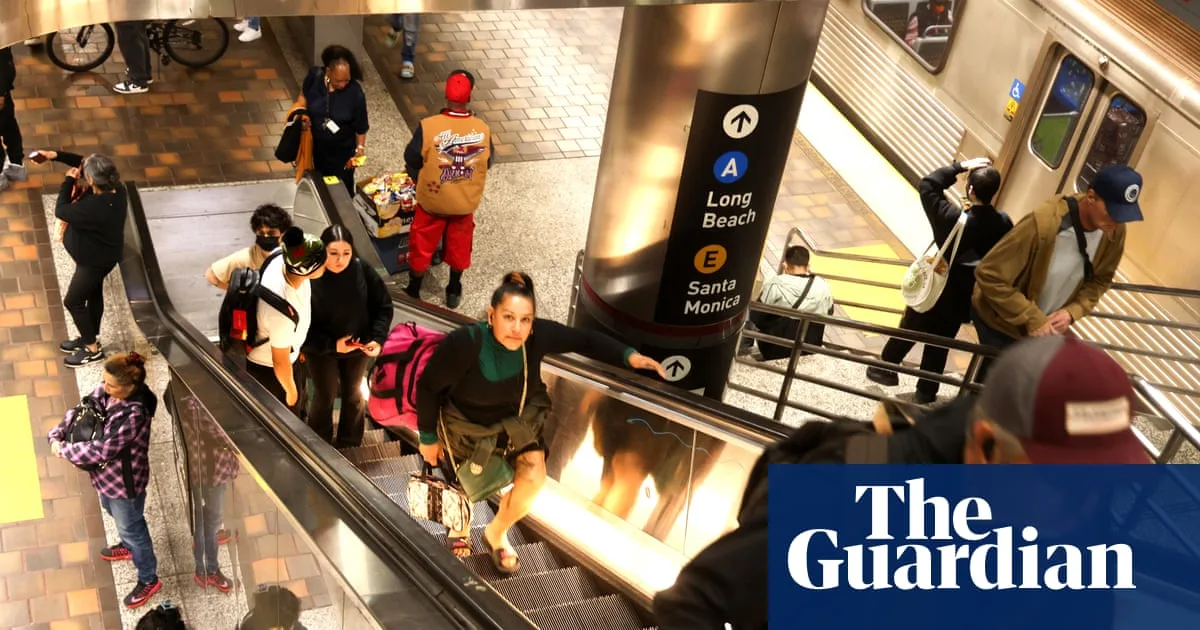
Guardian readers in the US have shared their experiences of living without a car in a country dominated by automobile culture. While some highlight the benefits of walking, cycling, or using public transit, many point to significant challenges, including inadequate infrastructure, safety concerns, and social stigma.
Ellen, who moved from New York to Los Angeles five years ago, initially planned to go car-free for a year but has continued. She finds public transit frustrating, describing it as “all over the place,” and relies on a bike and train combo to minimise travel time. She also notes that the fentanyl crisis has affected public transit, with drug-addicted individuals riding late at night. Socially, she feels pressure to lie about not driving due to judgmental attitudes.
Nathaniel Knize, a librarian in Chicago, uses public transport and walking exclusively. He praises the city’s transit system as “world class” but struggles with trips to family homes on the outskirts, which can take 90 minutes. He also avoids holiday destinations without metro systems, noting that Chicago’s stations feel outdated compared to those in cities like Paris or Toronto.
Enzo Mthethwa, a train conductor in Oakland, California, relies on Lyft bikes, BART trains, and buses. He considers Oakland one of the best US cities for car-free living but criticises the Bay Area’s rail system for being less frequent than in major global cities. Early Sunday shifts are particularly challenging when BART does not operate, forcing him to take expensive rideshares.
Despite these hurdles, all three express a commitment to car-free living, citing environmental benefits, cost savings, and a sense of independence. They adapt by renting cars for road trips, carpooling, or reorganising social habits around transit options.