

The 1973 Oil Shock: A Global Energy Catastrophe
On October 6, 1973, the outbreak of the Yom Kippur War between Egypt, Syria, and Israel ignited one of the most significant energy crises in modern history. This conflict triggered a chain reaction that would reshape global economics for years to come.
The Immediate Impact of the OPEC Embargo
Just eleven days after the war began, several Arab members of the Organization of the Petroleum Exporting Countries (OPEC) announced a dramatic decision. They would cease oil sales to nations supporting Israel while simultaneously implementing substantial production cuts. The consequences were both immediate and severe.
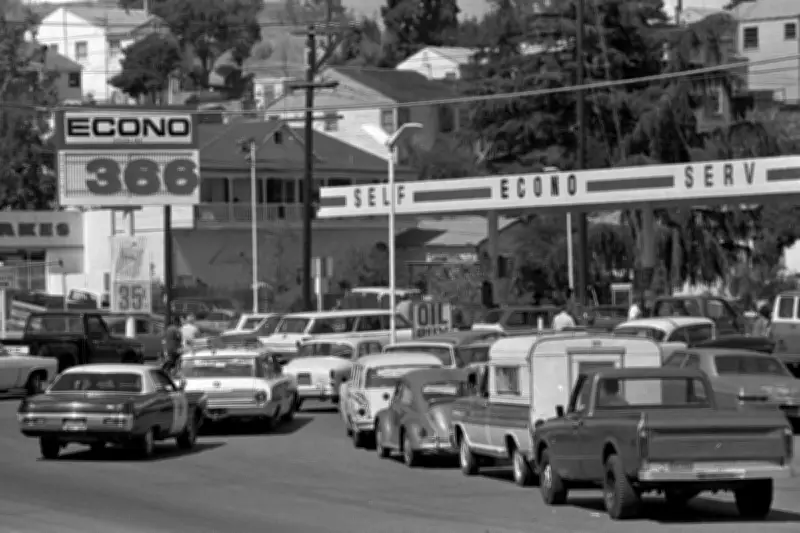
Within mere months, global oil prices quadrupled, shattering decades of price stability. The world suddenly confronted a severe petroleum shortage that manifested in dramatic ways. Petrol stations across Western nations ran completely dry, with many displaying red flags to signal empty pumps. Desperate drivers queued for hours, sometimes overnight, hoping to secure limited fuel supplies.

In the United States, authorities implemented fuel rationing based on license plate numbers. By March 1974, economists calculated that time spent waiting in line had effectively increased petrol costs by approximately 50%, as drivers were essentially "paying" through lost working hours. European governments responded with various fuel-saving measures: the Netherlands and West Germany introduced car-free Sundays, while Britain reduced speed limits to conserve precious petroleum.
Why the 1973 Crisis Was So Economically Devastating
The scale and persistence of the 1973 oil shock resulted from multiple converging factors beyond the embargo itself. A crucial development was the United States losing its position as the world's primary "backup supplier" of oil. American production had peaked around 1972, eliminating a critical buffer that had previously stabilized global markets during supply disruptions.
Simultaneously, Middle Eastern oil-producing nations gained unprecedented political leverage through OPEC coordination, strengthening their influence over global pricing. Furthermore, the collapse of the Bretton Woods international monetary system in 1971 had already created inflationary pressures before the embargo began, as currencies decoupled from the US dollar.
The Stagflation Decade and Policy Responses
Higher oil prices rapidly increased costs across virtually every sector. Transportation became more expensive, electricity bills soared, and businesses passed elevated production costs onto consumers through price hikes. Inflation surged across advanced economies, prompting workers to demand higher wages to maintain living standards. Strong labor unions in many countries negotiated substantial pay increases, creating a wage-price spiral.
Expectations worsened the crisis as firms and households, fearing shortages, stockpiled resources, further reducing available supply. Economic growth slowed dramatically, factory production declined, unemployment rose, and investment plummeted. The result was a decade of stagflation: persistently high inflation combined with stagnant economic growth.
Governments experimented with various responses. The United States implemented price controls to limit what petrol companies could charge, while Britain and France imposed rationing systems to manage shortages. Central banks faced particularly difficult dilemmas: raising interest rates could reduce inflation but risked deepening recession, while keeping rates low might fuel further price increases.
Modern Parallels and Important Differences
Today, as tensions involving the United States, Israel, and Iran disrupt the Strait of Hormuz—a crucial artery for global oil—energy markets have again reacted strongly, with prices exceeding $100 per barrel. However, contemporary economies possess stronger defenses against oil shocks.
Central banks now have clearer mandates to control inflation and greater credibility to act decisively. Research indicates the economic impact of oil price shocks has diminished over time due to several factors: wages adjust more rapidly, central banks respond more effectively, and petroleum constitutes a smaller portion of modern economies.

Recent events confirm this transformation. While Russia's invasion of Ukraine significantly increased energy prices and inflation, it did not trigger the deep recessions characteristic of the 1970s. Additionally, today's high oil prices may accelerate investment in renewable energy sources, potentially speeding the transition toward cleaner alternatives.
Enduring Lessons from Historical Energy Crises
The 1973 oil crisis offers enduring insights about how economic systems interact with supply disruptions. The damage caused by an energy shock depends not merely on the disruption's magnitude but equally on the economic environment it encounters. In the 1970s, heavy petroleum dependence, rigid wage structures, and uncertain economic policy dramatically amplified the crisis.
While modern economies demonstrate greater resilience, constraints on energy supply remain genuine concerns, as demonstrated by current Strait of Hormuz disruptions. The duration and objectives of contemporary conflicts remain uncertain, and this uncertainty itself imposes costs on businesses and economies.
History provides perspective rather than precise prediction. The size of any supply shock represents only one component; what truly matters is the system it impacts, the shock's duration, and how it influences expectations. Understanding these dynamics remains crucial as nations navigate today's complex energy landscape.





