
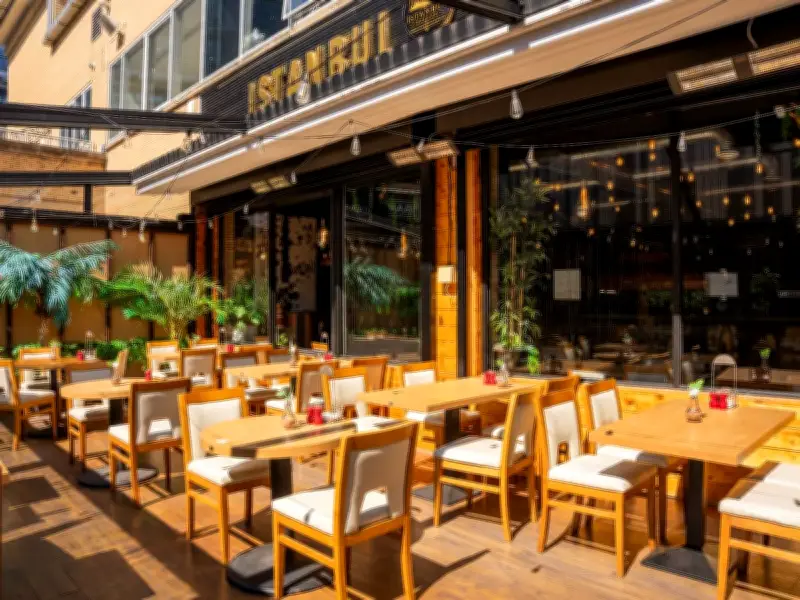
Liverpool's Queen Square will be looking totally different by the end of the year. The area is constantly changing, and the latest change is Istanbul Breeze, a Turkish and Mediterranean restaurant that opened this week in the former premises of Brazilian steakhouse Copacabana. It sits just a stone's throw from the Liverpool Empire Theatre, the World Museum, the Central Library, the Walker Art Gallery and St George's Hall.
Istanbul Breeze brings Turkish hospitality to Queen Square
Located beside ASK Italian, Istanbul Breeze offers a menu inspired by traditional recipes that have been passed down through generations, including hot and cold mezes such as patlıcan tarator, aqli nazik kebab, grilled halloumi and Turkish köfte.
Owner Reza Nowrouzi said: "Turkish hospitality is about making every guest feel like family. So many people return from Turkey with wonderful memories of the food, atmosphere, and warmth of the welcome. We want to recreate that feeling here in the heart of Liverpool."
Accommodating around 120 guests across two floors, the restaurant is styled with Mediterranean character, including wooden flooring, timber seating, and smoky mirrored tiles. There will be live music and DJs throughout the week.
Reza added: "Istanbul Breeze may be a hidden gem today, but with its beautiful setting, authentic food, and space for dining and celebrations, we hope it will not remain hidden for long."
Elixir to bring a champagne garden to the square
Another restaurant new on the scene is Elixir, which has yet to open. It is moving into the premises previously occupied by Tapas Revolution, which opened a 132-seat venue with a Spanish-style terrace accommodating more than 100 people for outdoor food and drinks in 2021. The restaurant has since closed. Before then, the site was occupied by La Tasca, and it was later rebranded and relaunched by the Spanish Restaurant Group under the Tapas Revolution name.
Elixir, which has already established itself in Oxton Village, Wirral, has taken over and promises the area will "be booming". Announcing its arrival on social media, Elixir said: "We're going to bring this square back to life and restore its vibrancy. There will be seating for more than 80 guests, and it will feature the first Laurent-Perrier Champagne garden in the North West. Inside, there will be a baby grand piano, open windows, live entertainment and singers."
Yates closes for refurbishment
This month has also seen Stonegate pub Yates shut up shop for several weeks for a refurbishment. The Liverpool venue left a note on the door for customers, which reads: "Temporarily closed. Closed for a refurbishment. We are busy making some exciting improvements." The pub will reopen on Wednesday, August 19.
From fruit market to bus station: Queen Square's history
In line with all the changes, the ECHO has taken a look back at Queen Square and how it grew to be the place it is today. Thought to be named after King George III's Queen Charlotte, the square has seen much change over time.
Before the bus station looked and operated as we know it today, in the 1990s the area was home to "bubble bus stops" and even had its own "sky bridge". Go back further and the square was a very different place, renowned for its vibrant fruit and veg market.
Queen Square was also home to the Stork Hotel, a popular hotel which operated for around 90 years and served as a favourite meeting place for actors from the nearby Royal Court and Playhouse theatres. The Stork had originally been a mansion house belonging to John Roe, who gave his name to Roe Street. Opposite it, in the middle of the square, was Liverpool's open-air wholesale fruit and flower market. Up until the late 1960s, Queen Square was also Liverpool's unofficial gay quarter, with gay-friendly pubs in this miniature version of London's Soho including the Roebuck, the Spanish House, the Magic Clock and the Royal Court.
But the building of the new St John's Centre in the mid-1960s marked the beginning of the end for the area. The Roe Street Gyratory and bus station were in place by the early 1970s, and the Stork was demolished. It was in the late 1960s that the last of the wholesale market stalls moved out, ending what had been a unique and vibrant area of the city. By 1969, after a decade of wrangling between traders and the city council, stall owners had started to move into the newly built Stanley Market in Old Swan.
Following the complete redevelopment of the Roe Street Gyratory, the new Queen Square bus station was constructed in 1996. Demolition of the old Gyratory began in 1992. The old Roe/Hood Street Gyratory had been known locally as the "bubble bus stops" due to the curved plastic design of its shelters, which took up the length of both Roe and Hood Street. In the early 1990s, the ECHO also campaigned for the demolition of the Roe Street walkway, which spoiled the view of St George's Hall. In August 1992, its demolition made the front page of the ECHO under the headline "It's Gone."




