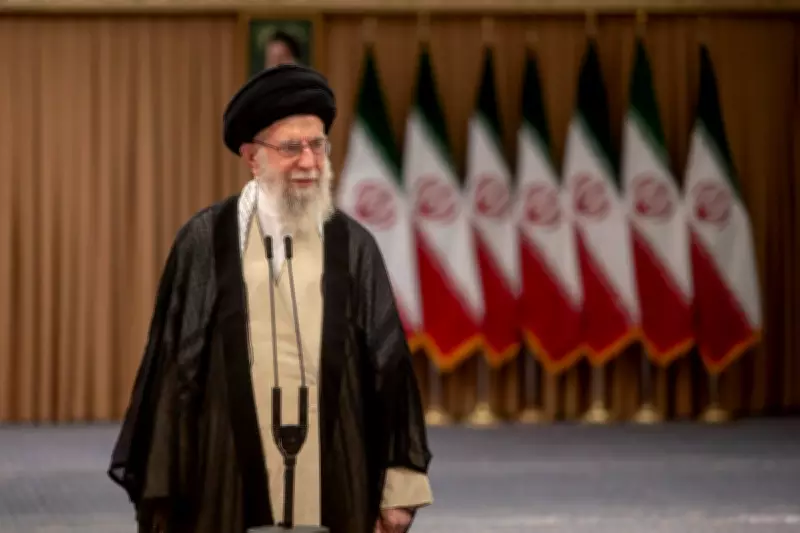
Prediction Market Faces Backlash Over $54 Million Ayatollah Bet Payout Refusal
Popular predictions market Kalshi has announced it will not distribute the $54 million that users wagered on the death of Iran's Supreme Leader Ayatollah Ali Khamenei. The company insists its promotion was 'grammatically ambiguous' and misunderstood by customers, reiterating that it 'does not offer markets that settle on death'.
Controversial Promotion and Clarification
Kalshi, which enables gambling on real-world events, provided favourable odds on Khamenei, aged 86, being 'out as Supreme Leader' following joint U.S.-Israeli airstrikes on Tehran early Saturday morning. The company promoted this trade on its homepage, app, and via a tweet stating: 'BREAKING: The odds Ali Khamenei is out as Supreme Leader have surged to 68 percent.'
The tweet included a reminder: 'Kalshi does not offer markets that settle on death. If Ali Khamenei dies, the market will resolve based on the last traded price prior to confirmed reporting of death.' However, after Khamenei was confirmed dead in the airstrikes, Kalshi issued a follow-up clarification, admitting a prior version was grammatically ambiguous and offering to reimburse lost value from trades made between clarifications as a customer service measure.

CEO's Explanation and Customer Outrage
Kalshi CEO Tarek Mansour elaborated on X (formerly Twitter), explaining that 'event contracts' like these are not directly tied to death. He argued that by 'out,' Kalshi meant the possibility of Khamenei voluntarily stepping down or agreeing to a peaceful transition, not assassination. Mansour maintained the trade was important due to leadership changes in Iran impacting global order, oil prices, and geopolitical relations.
Despite reimbursement offers for bets, fees, or losses prior to clarification, the company has faced a firestorm of complaints on social media. One Israeli-American executive in New York told The Washington Post he placed two bets totalling $3,460 on Khamenei's removal, believing he won $63,000 upon the ruler's death announcement. 'I was booking my trip to Courchevel,' he said. 'Then they changed the rules... and everybody got screwed.'
Regulatory and Ethical Concerns
Amanda Fischer, a former SEC chief of staff now at Better Markets, criticised Mansour's response, stating the episode exposes how problematic this business is. She questioned: 'How is an 86-year-old theocratic leader supposed to lose his power other than through death?' Fischer added that users believed they were voting on a death market and are angry at Kalshi for breaking trades.
Connecticut Senator Chris Murphy condemned such trades as a sign of a 'dystopian world,' calling it 'American commercial immorality on steroids.' He warned that when events involving good and evil become financial products, right and wrong lose meaning, and people shouldn't root for deaths due to bets. Murphy is drafting legislation to ban prediction market gambling related to government actions, citing corruption risks.
Broader Context and Insider Trading Allegations
The controversy extends beyond Kalshi, with Donald Trump Jr. joining advisory board of competitor Polymarket last August. Additionally, betting analytics firm Bubblemaps tweeted that six suspected insider traders made $1.2 million by correctly guessing the U.S. would attack Iran on February 28, when Operation Epic Fury began. Senator Murphy responded on Threads: 'It's insane this is legal. People around Trump are profiting off war and death. I'm introducing legislation ASAP to ban this.'
Similar accusations arose in January when an anonymous Polymarket trader won $400,000 by correctly forecasting the capture of Venezuelan President Nicolas Maduro by U.S. Special Forces, highlighting ongoing ethical and regulatory debates in prediction markets.