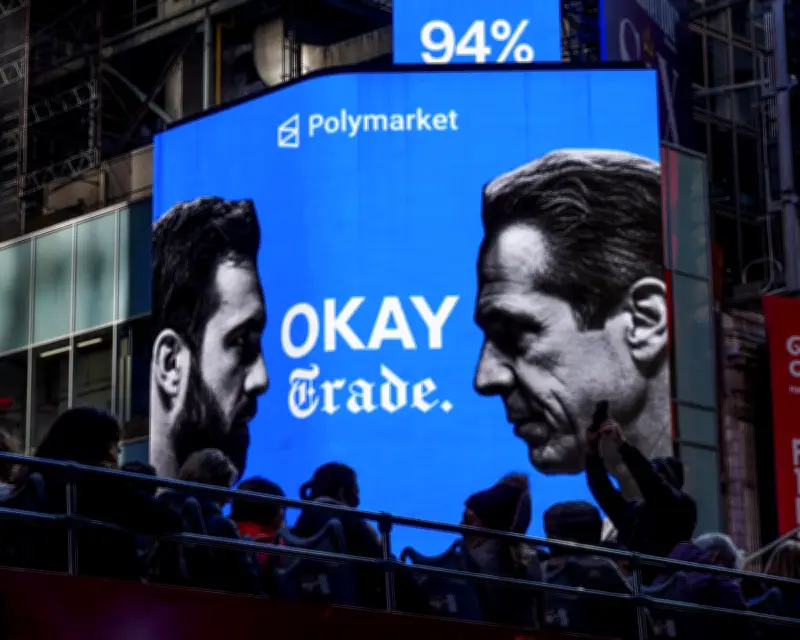
Prediction markets such as Polymarket are growing rapidly in the US, but their future in the UK remains uncertain amid regulatory barriers and concerns about democracy.
A father's trick reveals market speed
During a World Cup match, Dode Dahroug, a former RAF pilot, amazed his 16-year-old son by predicting goals seconds before they appeared on TV. The secret: a live odds graph from Polymarket, which receives data faster than broadcast feeds. Dahroug used it purely for fun, not gambling.
Polymarket and Kalshi allow betting on sports, politics, and events, wrapped in financial-trading language. Their US popularity has soared since the Supreme Court lifted a federal sports betting ban in 2018, but states like California and Texas still lack regulations, giving these platforms a free run.
Market size and misleading volumes
Registered prediction markets claim World Cup trading volumes of at least $45bn, but analysts at Eilers & Krejcik Gaming estimate actual stakes are closer to $5.6bn per month in the US. The figures inflate because each trade adds to volume without necessarily increasing risk.
In the UK, the Gambling Commission requires prediction markets to hold a gambling licence for sports trading, while the Financial Conduct Authority bans betting on financial markets via binary options. Nonetheless, UK users can easily access these sites using VPNs, as demonstrated by The Guardian.
UK users bypass restrictions
James Bradley of Fairer Finance says it took him ten minutes to set up an account with Polymarket using a VPN. Polymarket states it takes compliance seriously and is strengthening tools to prevent access from restricted countries.
Bets on UK political events (e.g., by-elections in Clacton, Gorton and Denton) reach millions of dollars, suggesting many Britons are participating. Bradley believes it is only a matter of time before prediction markets go mainstream in Britain.
Scepticism from analysts
Alun Bowden of Eilers & Krejcik Gaming disagrees, noting prediction markets are similar to established betting exchanges like Betfair, which are less popular than traditional sportsbooks in the UK. He argues US demand stems from a lack of legal sports betting in many states, a need that does not exist in Britain.
Small UK operators like easyBets and Smarkets have rebranded as prediction markets, but Bowden says the user experience lags behind UK sportsbooks. “As a consumer betting product, they are just not as good – for now,” he says.
Risks to democracy
Bradley warns that prediction markets could harm democracy by enabling insider trading and manipulation. The UK has already seen a political betting scandal involving former MP Craig Williams, who pleaded guilty to cheating. In the US, evidence of insider trading on geopolitical events is abundant.
Bowden remains sceptical about a UK boom, citing lower usability and feature depth compared to existing sportsbooks. The potential for harm, however, continues to draw attention from regulators and consumer advocates.