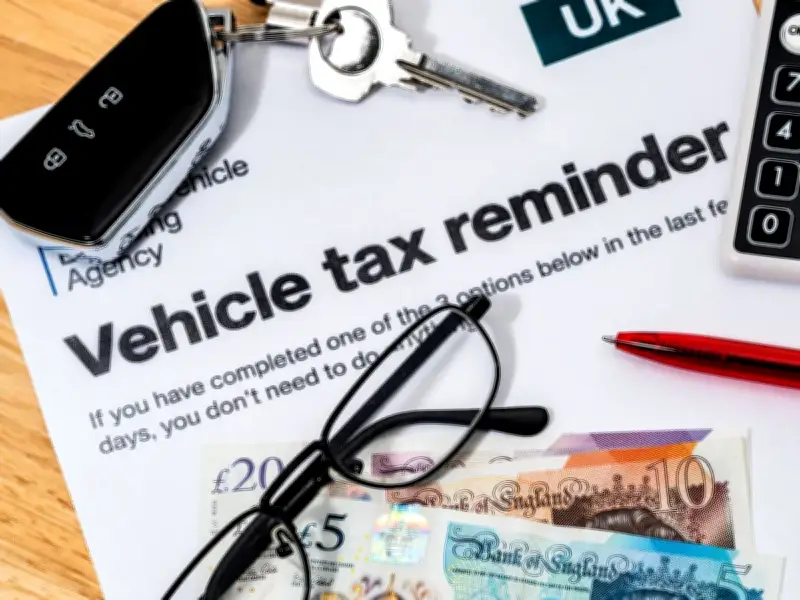
Most UK motorists overestimate their knowledge of car tax, with 85% unable to name the £40,000 threshold for the expensive car supplement and six in ten unsure whether electric cars pay tax at all, new research has found.
A Censuswide survey of 1,000 drivers, commissioned by car retailer Dick Lovett, found that two-thirds (67%) say they understand Vehicle Excise Duty “well”, while only 6% admit they don't understand it at all. Yet when tested on the rules, the majority got questions wrong or didn't know the answer.
Key Knowledge Gaps
Only 32% knew that vehicle tax does not go directly towards maintaining UK roads. A third (32%) believe it does, and 36% are unsure, meaning 68% don't know what the tax is used for.
Just 40% knew that fully electric cars have paid vehicle tax since April 2025, more than 18 months after the change. Half (51%) were unsure, and 9% believe EVs are still exempt.
The expensive car supplement caught out most drivers. Only 15% correctly identified the £40,000 list price at which it applies to petrol, diesel and hybrid cars. Almost half (45%) said they didn't know, and among those who guessed, the average answer was £37,186.
Myths and Misunderstandings
Asked what affects vehicle tax, 14% of drivers said mileage and 13% said the driver's age, neither of which has any bearing. Only 54% named CO2 emissions, 44% fuel type, 28% the registration date and 18% the original list price, the four factors that do.
Eight percent believe there are no consequences for using an untaxed car as long as it is insured, rising to 14–17% among under-45s. Only 61% knew they could be fined, 51% that the car could be impounded and 41% that it could be clamped.
Admin Gaps and Demographics
Almost one in four drivers (24%) don't know when their car tax is next due. Half (50%) can't find their car's tax band, and more than one in five (22.5%) don't know where their V5C logbook is.
The youngest drivers are the least prepared: 38% of 18- to 24-year-olds don't know when their tax is due and 41% don't know where their logbook is. They are also most likely to believe myths, with 29% thinking mileage affects their tax and 25% thinking the driver's age does.
Electric car owners are the most confident group, with 85% saying they understand vehicle tax well, yet they are the most likely to get basics wrong. More than a quarter (27%) think tax transfers to the new owner on sale, 41% think a car parked on the driveway must be kept taxed, and 14% believe insurance means no consequences for driving untaxed.
Men are more likely than women to say they understand car tax well (72% vs 63%) and score higher on some questions, but where women say “unsure”, men are more inclined to pick a confident wrong answer: 14% of men think tax transfers to the new owner, against 8% of women.
Fairness and Advice
Just under half of drivers (46%) think the amount of vehicle tax they pay is fair, 39% think it isn't and 15% are unsure. Nearly six in ten (58.5%) think electric cars should pay the same as equivalent petrol and diesel cars, though only 52% of EV owners agree.
Alex Lee, motoring expert at Dick Lovett, said: “What stood out for us is the gap between how confident people are and how much they know. Two-thirds say they understand car tax well, yet most couldn't tell us whether electric cars pay it, what the expensive car supplement threshold is or what happens to the tax when they sell. These aren't obscure rules. They affect what a car costs to run every single year and in the case of the supplement, they can add well over £2,000 across five years of ownership.
“The practical advice is simple. Check your renewal date and set a reminder, keep your V5C somewhere you can find it, and if you're buying or selling, ask the dealer to walk you through the tax position before you commit. It takes five minutes and it's something we do with every customer.”
Censuswide conducted the research among 1,000 UK motorists between 14 and 16 September 2026. Censuswide is a member of the Market Research Society and the British Polling Council.