
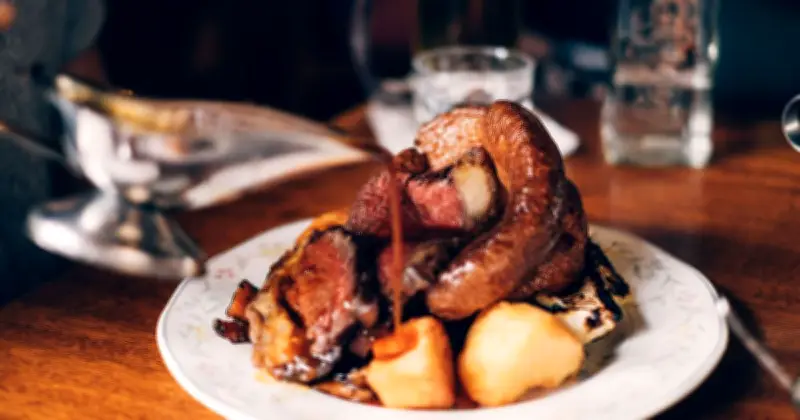
Brits have been warned their Sunday roasts could keep rising in price as households buckle under the cost-of-living crisis. The almost £10 spike recorded this decade is primarily linked to the rise in cost of a key ingredient on dinner tables across the country – traditional, carved roast beef.
A roast dinner for four people, including beef, potatoes, vegetables and Yorkshire pudding, now averages £21.80 in total, up £7.80 since the end of the last decade. Analysis by the Office for National Statistics (ONS) also suggested a Sunday roast with a chicken centrepiece now costs around £11.70 for four people, an increase of £8.70 since 2020.
Beef and potato costs drive up prices
Chief economist Grant Fitzner told The Sun: "Roast dinners have seen significant price rises. If we look at February 2020, a roast beef dinner was £14. It's gone up to almost £22 since then. That's a 55% increase."
Rising beef prices can be linked to a drop in domestic cattle supply as farmers face higher costs, with around 8.5% of UK cattle farms closing over the last six years.
Extreme weather hits vegetable yields
Extreme weather has also destabilised vegetable yields, with potatoes especially hit by this summer's drought and yields expected to be around 11% below the five-year average. Data from the Energy and Climate Intelligence Unit (ECIU) suggests British potato growers could lose up to £169million this year.
Sally Abé, of Teal restaurant in east London, said "in days gone by", Sunday roasts would have been lucrative for the hospitality industry. "But with the price of meat and everything now, it's not the meal necessarily that's the cash cow," she said. "It's the fact that it brings people in."
NFU warns on food self-sufficiency
The National Farmers' Union (NFU) warned last month that the UK's self-sufficiency in key foods including wheat, meat and fresh vegetables has fallen in the last 30 years, with much of it now being produced at a loss. NFU president Tom Bradshaw warned "we can't rely on the rest of the world to feed us" in a report produced for Back British Farming day on September 9.
The report showed that production of commodities including wheat, oilseed rape, pig meat and fresh vegetables has fallen since 1995, raising the reliance on imports. And where foods have seen domestic production increase, such as for fresh fruit, eggs and poultry, demand has grown faster still, so that even "success stories" are losing share of their own home market.
The NFU called on the Government to set out ambitious targets for domestic food production to reverse the situation and help producers contend with soaring fuel, fertiliser and energy costs linked to the conflict in Iran. Mr Bradshaw said: "Farmers are battling devastating drought, disease outbreaks and soaring costs. At the same time, policy uncertainty, chronic underinvestment and a restrictive planning system are eroding Britain's ability to produce its own food. This must and can be reversed."
It comes as Brits continue to struggle amid a five-year cost-of-living crisis, which the Resolution Foundation thinktank said has left households almost £3,000 worse off. Chief economist James Smith said: "While the hit to incomes from rising prices has been felt right across the board, the hardship has not been equally shared. It is poorer families who have cut back hardest on heating and are falling behind fastest on essential bills, and the conflict in the Middle East is set to keep energy prices high."




