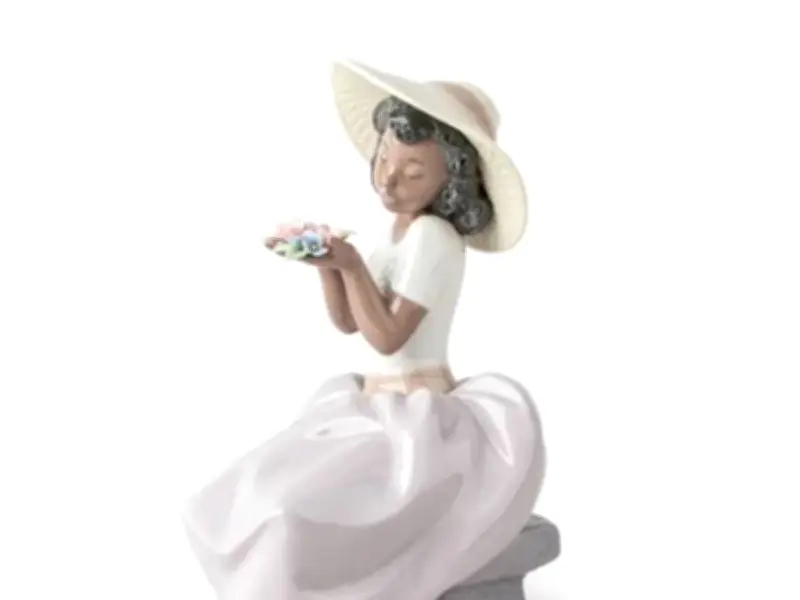
Some rare vintage Lladró porcelain figurines, once a common sight in British homes, can now fetch tens of thousands of pounds, with certain pieces reaching around £48,000 at auction.
Lladró figurines were a familiar presence on mantelpieces throughout the 1980s and 1990s, and many owners have held onto their collections, hoping they might one day sell them for a profit or pass them down as family heirlooms.
While some designs have become highly valuable, others are worth far less than owners might expect. The Spanish brand dates back to the 1950s, when brothers Juan, José and Vicente Lladró began making porcelain plates, vases and figurines from their family home in the village of Almàssera.
From family workshop to global brand
What started as a modest family enterprise quickly grew into an internationally known name, with the firm developing its characteristic style and experimenting with new materials in the decades that followed.
By the 1980s, Lladró was expanding internationally, setting up subsidiaries in Japan and China in 1986 before opening its first museum and gallery in New York in 1988. Its Collectors' Society, launched in 1985, eventually attracted more than 100,000 members.
As tastes changed, the company began introducing more contemporary designs in the 2000s, moving beyond its traditional porcelain figurines. Today its collections include sculptures, lighting, tableware and jewellery, alongside collaborations with designers such as Paul Smith, Rolito and Gary Baseman.
How much are Lladró figurines worth?
The value of a Lladró figurine varies considerably depending on its age, condition, rarity, size and whether it forms part of a limited-edition collection. As a general guide, prices can range from a few pounds for smaller, common pieces to tens of thousands for particularly rare creations.
Typical estimated price ranges include small common figurines at £8 to £150, medium detailed figurines at £56 to £375, large single figurines at £150 to £1,501, retired figurines at £75 to £3,752, numbered limited editions at £375 to £11,256, High Porcelain works at £1,501 to £48,778, multi-figure groups and dioramas at £750 to £37,522, Gres collection pieces at £38 to £1,126, and Nao by Lladró at £8 to £113.
The most valuable Lladró figurines
Some of the brand's most elaborate creations have achieved notable prices, with certain pieces reportedly selling for tens of thousands of pounds. According to Lion and Unicorn, examples include A Grand Adventure (2002), part of the High Porcelain Collection sculpted by Joan Coderch and D. Julio Ruiz, with documented sales reaching approximately £48,215.
Others include the 18th Century Coach (1985), an elaborate horse-drawn carriage scene by Francisco Catalá that reportedly sold for around £42,925, and Cinderella's Arrival (1994), a limited-edition piece by Francisco Polope with reported sales ranging from approximately £30,017 to £38,272.
Further valuable pieces include Summertime Symphony (2014) by Marco Antonio Noguerón, valued at around £14,108, The Fox Hunt (1986) by Salvador Furió, estimated at over £11,256, and Tea in the Garden (1992) by José Puche, which reportedly sold for approximately £9,681. Equestrian sculptures such as Spanish Pure Breed, Haute Ecole, Spanish Pure Breed Horse, Arabian Pure Breed and Quarter Horse carry estimated values of around £9,493, £8,555, £8,082 and £6,581 respectively.