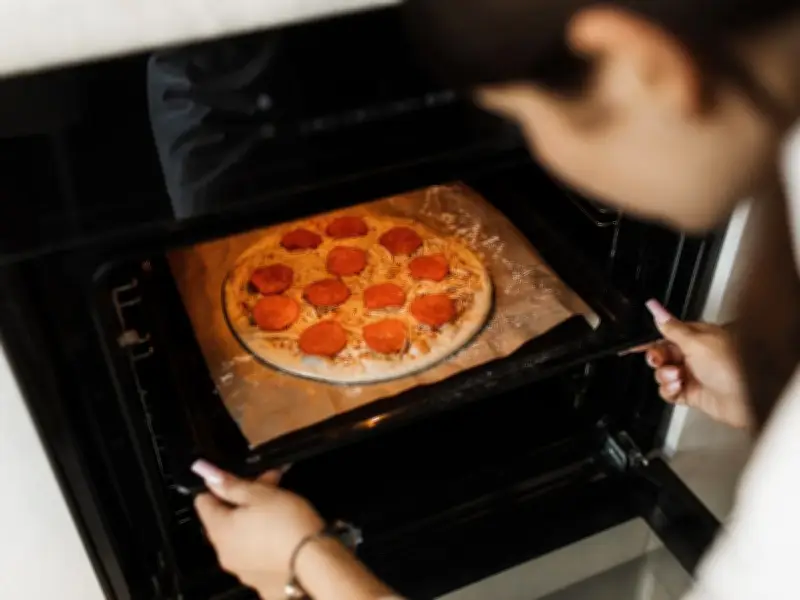
Pizza bases come out crispy every time when the pizza is placed on the lower oven shelf rather than the middle, according to food appliance experts. The advice from Hotpoint follows research showing that half of all UK households cook from scratch every day or most days, with around 16% doing so more often due to the rising cost of living.
Why the lower shelf works best for pizza
Many people slide their pizza onto the middle shelf, but the base often suffers as a result. "The lower shelf sits closer to the heat source, which helps crisp up the base properly rather than leaving it soft in the middle," says Ecem Uslubaş, Senior Product Manager for Cooking at Hotpoint. "A soggy base is usually a sign the pizza needed to be nearer the bottom of the oven rather than left where the heat is gentler."
The same logic applies to homemade loaves, as the lower shelf gives bread a firmer, well-risen base and a better overall crust. "Bread relies on a strong burst of heat from below to help it rise fully before the crust sets," advises Uslubaş. "Placing it too high in the oven can leave the base pale and slightly undercooked, even when the top looks ready."
Other dishes and their ideal shelf positions
Victoria sponges and similar bakes are best placed on shelf two, where they can benefit from even heat to help them rise evenly without the top catching too quickly. "Shelf two provides a good balance of heat for sponge cakes, helping them rise evenly while allowing the centre to cook through properly," explains Uslubaş.
Meringues need long, slow drying rather than intense heat, so the lower shelf, paired with a reduced temperature, gives the best crisp shell without browning too quickly. "The aim with meringue isn't really cooking in the traditional sense, it's drying out the mixture gently," says Uslubaş. "Too much heat too quickly can cause cracking or an overly golden finish."
A whole roast chicken or joint of meat does well on the middle to lower shelf, giving the heat room to circulate and cook the meat through. "Root vegetables can go on the shelf above, so they catch more direct heat and crisp up properly," adds Uslubaş. "Splitting the oven this way means the meat cooks gently while the vegetables get the stronger heat they need for colour."
Yorkshire puddings rely on a fierce blast of heat to rise properly, so the top shelf is usually the best position. "The fat needs to be smoking hot before the batter goes in, and keeping the tray near the top of the oven helps maintain that intense heat throughout cooking," says Uslubaş. "Opening the door too early is the most common reason they collapse, so it's worth resisting the urge to check on them too soon."
Placing pies on a lower shelf helps the pastry base cook through fully rather than turning soggy underneath the filling. "Wet fillings, such as fruit or custard, are the biggest culprit for a soft base," explains Uslubaş. "A lower shelf gives the pastry the best chance of crisping up before the filling has a chance to soak through."
Layered dishes like lasagne cook most evenly in the middle of the oven, where the top can brown gently while the layers beneath heat through at a steady pace. "These dishes need time for the heat to work through several layers, so a shelf that's too close to the top or bottom risks an uneven result," says Uslubaş.
For normal cooking, the middle shelf helps fish cook evenly without drying out. When grilling, move fish higher up to bring it closer to the heat for quicker cooking and browning. "For everyday cooking, the middle shelf gives fish a more even heat, while a higher shelf is better when grilling," says Uslubaş.
The middle shelf provides a more even heat distribution, helping biscuits and cookies colour nicely on the outside while staying soft inside, without spreading too thin. "The middle shelf gives biscuits a more balanced heat distribution, helping the edges set while the centre stays soft," says Uslubaş.
Airflow and oven technology
Uslubaş stresses that shelf position only works alongside good airflow. "Leaving space around trays and dishes lets hot air circulate properly. Overcrowding the oven is one of the most common reasons food cooks unevenly, regardless of which shelf it's on."
In many ovens, shelf position matters because heat isn't distributed evenly throughout the cavity. "Our models at Hotpoint are fitted with Active MultiFlow or MultiFlow technology, meaning they're designed to deliver consistent heat to every shelf," says Uslubaş. "Active MultiFlow offers enhanced airflow which delivers even heat distribution throughout the oven. This feature allows cooking on up to four levels at once without flavours transferring too. MultiFlow technology works slightly differently, controlling temperature to within two degrees, to provide consistency while cooking, avoiding burnt edges or raw middles."