
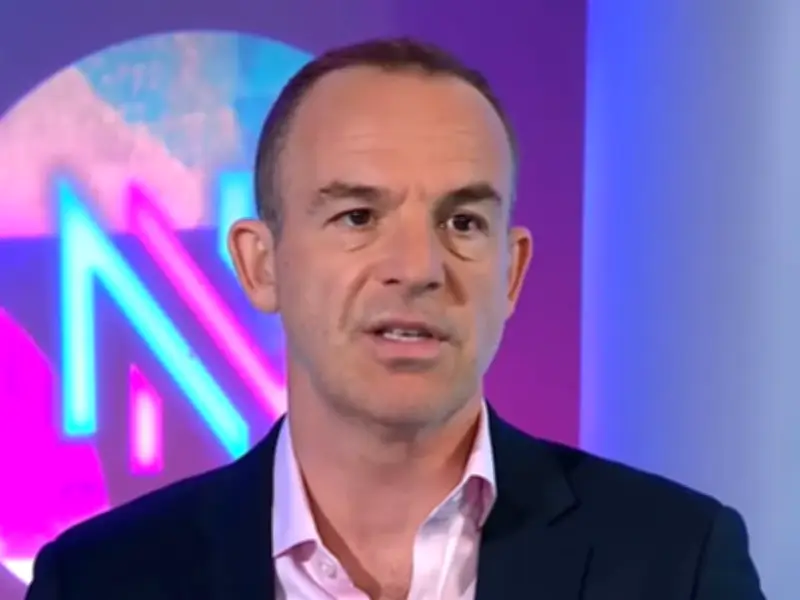
Martin Lewis has issued an 'important alert' to millions of people across the UK, warning that those carrying debt on a credit card or store card are set to experience four significant changes. The money-saving expert attributed this to the likelihood of interest rates rising.
Speaking on X today, Friday, October 16, he warned that 'subtle' changes were on the horizon for so-called balance transfers, which large numbers of people use to get zero interest deals on their debts. He said these changes could have a considerable impact on how much you pay, the type of deal you secure, and whether you qualify for a deal at all.
What are balance transfers?
Balance transfers occur when people move debt from one credit card to another. Credit agency Experian says that such moves frequently allow bank customers to benefit from 0% interest for a set number of months. Given that debt charity StepChange reports 18 million people in the UK hold credit card debt, large numbers of people could be affected by what lies ahead.
However, after a speech in September by a senior Bank of England official warning that interest rates could increase, Martin said those attempting to arrange such deals may face four key changes. Firstly, he indicated that the duration of a 0% deal could be reduced. He also warned that the one-off fee payable could increase. Furthermore, the rate charged once the 0% deal expires could rise, he said.
What Martin Lewis said
Finally, he said that fewer applicants could be accepted for the most competitive deals. In the post on X - captioned 'important alert' - he said: "This is a warning for anyone who has existing debt on credit or store cards. I'm concerned the deals you can get to cut the cost are about to get worse. So acting sooner is safer."
He continued: "Now, we're in an upward rate environment. The predictions are the Bank of England is going to put UK base rates up. And when that happens, the changes to credit card 0% deals are subtle. The 0% length may shorten. The fee, the one-off fee you charge for doing a balance transfer may increase. The go-to APR, the rate you charge once the 0% ends, may also increase. But I suspect the most likely change and the most difficult to spot is that fewer people will be accepted for the best deals. They're going to tighten their eligibility criteria."
The host of the Martin Lewis Money Show on ITV explained what this could mean in practice. "So, they might still advertise a three-year balance transfer, 0% interest free," he said. "Sounds great. They're available at the moment. But suddenly, when you apply because it's an up to rate. Not as many people are going to get three years. Some will get two, some will get one. So, you need to get your skates on."
How balance transfers work
He encouraged people to tune into his new podcast on the matter - on the BBC Radio 5 Martin Lewis Podcast. He rounded off by saying: "Because the less interest you're paying, the more of your money clears the actual debt itself."
Those who obtain a balance transfer card benefit from 0% interest for a set period. Once this expires, the rate reverts to the bank or lender's standard rate, which can be considerably higher, so Experian advises cardholders to clear the debt wherever possible before the introductory period concludes.
A fee is charged for carrying out a balance transfer. Experian indicates these typically range from around two to four per cent of the amount being transferred. The credit reporting agency notes that balance transfers can prove beneficial for rewards, consolidating payments in a single place and cutting costs through 0% rates.
However, it cautions that the drawbacks of balance transfers include fees, time restrictions on 0% rates, interest applied to new purchases and transfer limits that cap how much can be moved across. For assistance with credit card debt, visit the StepChange website.




