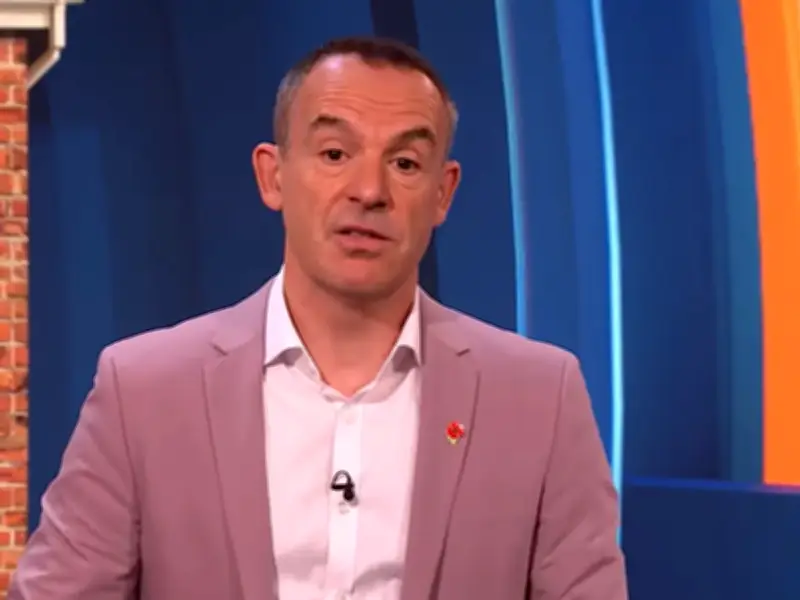
Martin Lewis has shared how households can cut heating costs this winter using inexpensive radiator upgrades, as temperatures drop sharply and energy bills reach record highs.
Cheap radiator upgrades that work
During his ITV Money Show Live this week, Mr Lewis advised people to reduce heating settings in unused rooms and ensure radiators are properly bled. He also recommended affordable purchases, including reflective panels for behind radiators and shelves positioned above them.
He stated: "Fit reflective foil behind radiators on external walls. You can get specialist foil-only on external walls, not interior. That works, doesn't it, the reflective foil? People are asking if it's a myth. It's not a myth. It really does work."
"It means the heat is reflected back into the house rather than going into the external walls. Install a radiator shelf. You can get them for about eight quid. They go on top of the radiator-again, the heat is then being bounced away and brought into the main part of the house. And finally, move your big furniture away from the radiators because otherwise you're just paying to heat the back of the furniture. You want that air to be circulating around the house."
Where to place radiators
One viewer asked whether radiators work better on an inside wall or beneath a window. Prof Richard Fitton, Technical Director at Energy House Labs, explained: "We generally design radiator systems to go under a window so the air naturally rises in front of the window, keeps that window kind of to one side of the heat and circulates round and round. So you would want it under the window-that is absolutely the key place to do it."
The one-degree challenge
Mr Lewis also suggested his "one-degree challenge", noting the World Health Organization recommends setting the thermostat at 18°C for a healthy adult. He said: "Take my one-degree challenge. It doesn't sound very much. The World Health Organization says for a healthy adult, you can set the thermostat at 18°. Most of you are far higher than that. Obviously, if you've got a medical condition or older people, you'll want it to be higher. But if you were to drop, say, from 21°C to 20°C, that could cut your heating bill by 7%."
He added: "I am not telling you to do it. I'm telling you to experiment and see whether you can really notice a difference. So maybe you put a little bit more clothing on while you're doing it on the top. Also a little note because people often contact me: if it's cold outside, lots of people turn the thermostat up. The thermostat's job is to take your house to a set temperature. You don't need to turn it up. Let the thermostat do its work for itself."
The Met Office has forecast overnight temperatures to plummet to between -4C and -6C over the coming days, with some experts forecasting a 28% increase in energy costs come January.