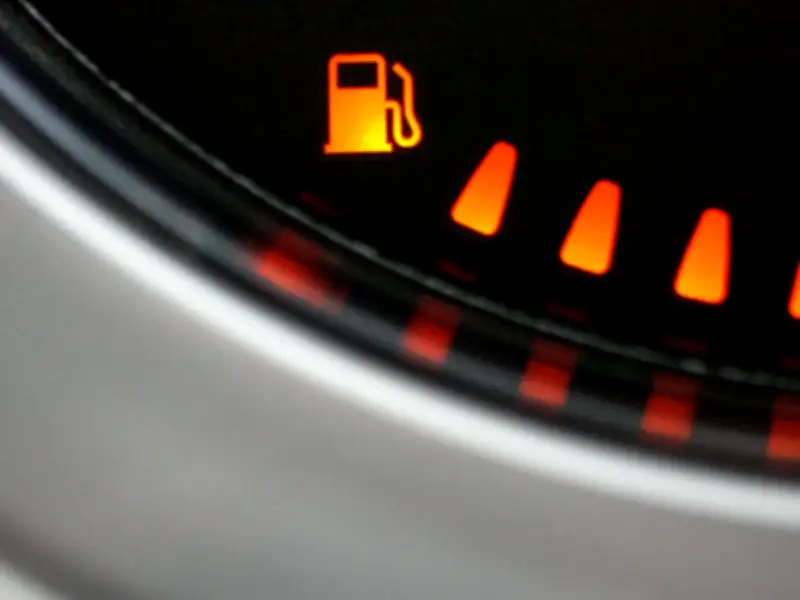
Drivers who push on after the fuel warning light appears are taking a gamble, as there is no universal number of miles left in the tank once it comes on, according to a car safety expert.
Ollie Green, car safety expert at Collect Service Go, explained that the amount of fuel remaining when the warning light pings on depends on the make and model of the vehicle, while how far that fuel takes you also depends on your driving.
Why Dashboard Estimates Are Not Reliable
Traffic, road conditions and driving style can all affect fuel consumption, meaning the distance you can travel before running out can change throughout a journey. Green warned drivers against treating the warning light as an opportunity to see how far they can get.
“It's easy to see how far you can push it once that fuel light comes on, especially if you're busy and don't fancy stopping. But it's always better to get fuel sooner rather than later. How far you can go will depend on your car and the way you're driving,” Ollie said.
He also cautioned against putting too much faith in the estimated range displayed on a dashboard, even if it suggests there are still plenty of miles left.
Ollie explained: "Your dashboard might tell you that you've got 30 miles left, but don't take that as a guarantee. Traffic, road conditions and your driving style can all affect how quickly you use up the fuel, so it's best not to leave it until you're running on your last few miles."
Risks of Running Out Completely
Although driving with the warning light on will not automatically damage the vehicle, allowing the tank to run completely dry can cause problems. Depending on the car, running out of fuel can affect components such as the fuel pump, and some diesel vehicles may struggle to restart afterwards because the fuel system might need to be reprimed.
There is also the practical problem of being left stranded, particularly if you run out while travelling on a busy road or in an unfamiliar area. Even if you think you have enough fuel to reach the next petrol station, unexpected traffic, a diversion or a closed petrol station could leave you with fewer options than expected.
Green said there was no need to panic as soon as the warning light appeared, but stressed that drivers should take it as a sign to start looking for somewhere to refuel.
He added: "But don't keep putting it off and hope for the best. If you run out completely, you could end up stranded at the side of the road, and getting going again might not be as straightforward as putting more fuel in the tank."
Many modern cars show an estimated range on the dashboard, giving drivers an idea of how far they might be able to travel before needing to refuel. While this can be useful, the figure is an estimate rather than a guarantee.
Ollie warned drivers not to assume the number on their dashboard would remain the same throughout their journey. He said: “It's easy to see you've got 20 miles left on the dashboard and assume you've got plenty of time, but that number can change as you drive. If you're already low on fuel, it's better to stop at the nearest convenient petrol station than risk running out just to save a few pence per litre.”