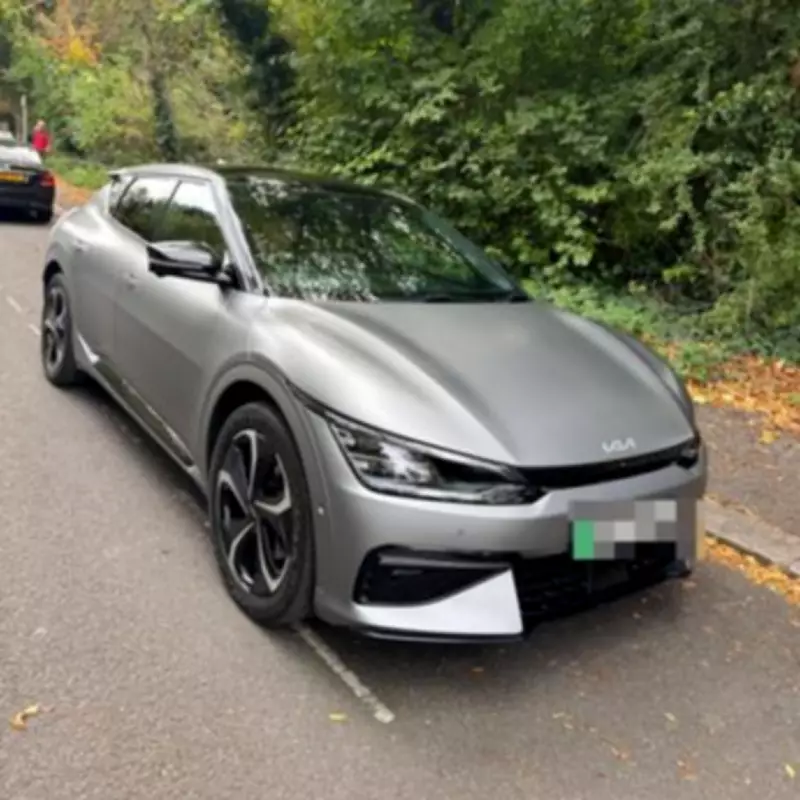
A Cardiff man has revealed how he fell victim to a sophisticated car cloning scam on Facebook Marketplace, leaving him paying hundreds of pounds monthly for a vehicle that was seized as stolen property. Sevak Maljian, a 36-year-old physiotherapist, had saved for years to purchase a Kia EV6, but his dream purchase turned into a financial nightmare when the car he bought for £13,500 was identified as a cloned vehicle.
The Alluring Deal That Turned Sour
Sevak Maljian had long aspired to own a Kia EV6 and diligently searched for the best available deal. His search led him to Facebook Marketplace, where he found a 2022 model listed for £17,000. After negotiating with the seller, who agreed to reduce the price to £13,500 for a cash payment, Sevak believed he had secured an excellent bargain.
In October 2025, he traveled by train to London to collect the vehicle, meeting the seller outside Putney station. Following what he believed were proper precautions, Sevak purchased insurance and drove the car to the address listed on the provided V5C logbook, which appeared genuine with watermarks and matching identification.

Meticulous Checks That Failed to Reveal the Truth
Sevak conducted multiple verification steps that should have protected him from fraud. He matched the Vehicle Identification Number (VIN) mentioned in the logbook to the one on the front windscreen and paid £8 for a vehicle history check that showed appropriate previous ownership, mileage, and background information. "Everything appeared legit," he later recalled.
The deception only unraveled when Sevak noticed a faulty button on the key fob and took the car to his local Kia dealership for investigation. Technicians immediately identified that the key had been forged and discovered that the VIN number on the chassis didn't match those on the windscreen or door.
The Devastating Discovery and Consequences
Car cloning represents a particularly insidious form of vehicle fraud where criminals copy registration plates from legally registered vehicles and place them on stolen or similar-looking cars. This sophisticated deception makes cloned vehicles appear legitimate, often allowing offenders to avoid detection for traffic violations and other offences.
For Sevak, the discovery was devastating. "They were shocked as to how I was able to access the car," he said of the dealership staff. "It was such a gut-churning moment. All that excitement had gone. I did everything I could and it wasn't enough."
After reporting the incident to police, the vehicle was seized and confirmed to have been stolen originally from Kent. Despite filing a case with Report Fraud, the decision was made on 9 December 2025 not to pursue further investigation due to 'insufficient viable lines of enquiry.'
Financial Fallout and Life Disruption
The financial consequences have been severe for Sevak, who continues to pay £236 monthly for the loan he took out to purchase the non-existent vehicle. "I'm having to sell my current car to help pay off some of the loan," he explained. "Even then, I'll still be in debt. I didn't need to have this hanging over my head."
The scam has forced him to recalculate his finances completely and put his long-awaited house renovation on hold. "It's such a drastic change to my life," he added. "I don't know what to do anymore."
Official Responses and Consumer Warnings
A DVLA spokesperson emphasized the importance of following official guidance to reduce fraud risk: "We understand how distressing vehicle crime can be. To help reduce the risk of fraud, we encourage buyers to follow the guidance on GOV.UK such as checking VIN details and confirming the seller's identity. Anyone who believes they may have been a victim of fraud should contact the police straight away."
Kia expressed sympathy for Sevak's situation, with a spokesperson stating they had advised him to continue liaising with police, his insurance provider, and the DVLA as the most appropriate support channels.

Report Fraud confirmed receiving the case but explained that not all reports can be investigated due to volume and resource constraints. A spokesperson noted: "Over 850,000 reports are made every year. These reports are assessed against several criteria, unfortunately not every case will be sent to law enforcement for investigative opportunities."
The organization emphasized that every report contributes to building intelligence and enabling disruptive activities against fraud networks, even when individual cases cannot be fully investigated.
Growing Sophistication of Vehicle Fraud
This case highlights how car cloning has evolved from simple number plate theft to increasingly sophisticated operations that can bypass standard verification checks. Criminals now create convincing forged documentation that can deceive even diligent buyers who perform due diligence.
Sevak's experience serves as a stark warning to second-hand car buyers, particularly those using online marketplaces. "I feel unprotected that such a thing has happened," he said. "It's not my fault, yet I'm dealing with the repercussions. I didn't commit any crime - I simply bought a second-hand car without knowing it was stolen, and had no idea what havoc it would bring to my life."