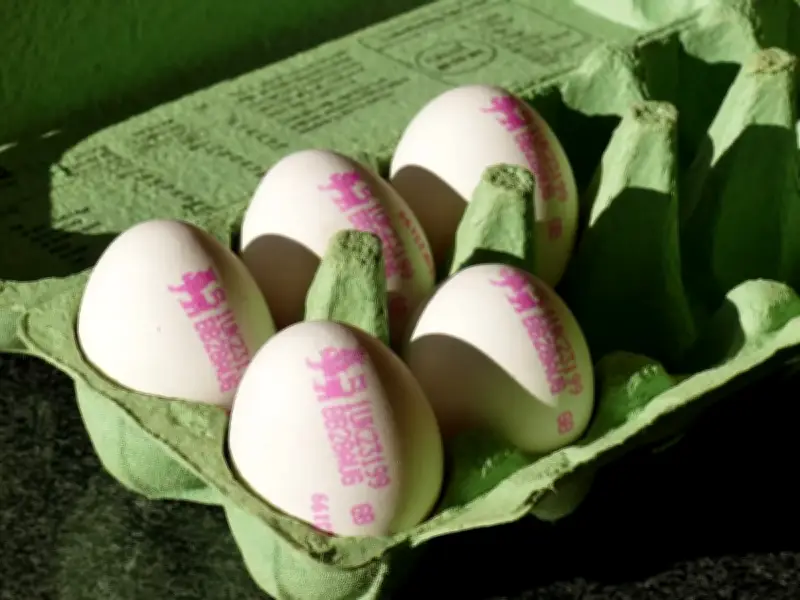
Most eggs bought in shops and supermarkets carry a red stamp featuring a lion and two rows of numbers, and the code reveals how the hens that laid them were kept. The top row begins with a single digit between zero and three, followed by the country of origin, usually UK, and then another series of numbers.
What the numbers on the stamp mean
The bottom row is a best before date, starting with the letters 'BB'. The top row is more complex. TikTok account madegooduk, which has almost 58,000 followers and regularly shares advice on shopping responsibly, ethically and sustainably, explained the code. He said the first number "tells you how the hen lived".
According to madegooduk, a number one represents a free range herd, but this does not always match customer expectations. He said a standard free range flock can have up to 16,000 birds in a single building, and that in such a crowd hens get stressed and start pecking each other. To combat this, he said a common practice is to cut off up to a third of a chick's beak.
Which numbers to look for
Madegooduk said a number zero means organic, which caps the flock at 3,000 hens, gives them more space inside, and does not allow routine beak trimming. A number two means hens were kept indoors in a barn but not in cages, and a number three means they were caged "with less usable space than an A4 piece of paper".
He described purely organic as the gold standard, with code zero getting the 3,000 flock cap, extra space, and no routine beak trimming. He also urged customers to look for egg boxes with an RSPCA Assured badge, which means the farms have been assessed by the animal welfare charity, as well as a Soil Association label, although he added this is rare outside of farm shops. He said: "It's the gold standard. Hens are let out at 12 weeks rather than 21, they get double the outdoor space, and beak trimming is completely banned."
Concluding, he said: "So here's our rule for the egg aisle. Read the first digit on the shell, not the front of the box as a friendly-looking brand and a cute message tells you almost nothing."
What else the red stamp shows
According to egginfo.co.uk, the Lion mark signifies that the hens which laid the eggs have been vaccinated against salmonella, and codes of practice were followed in the production cycle. The final series of numbers on the top line identify the farm where the eggs were produced.