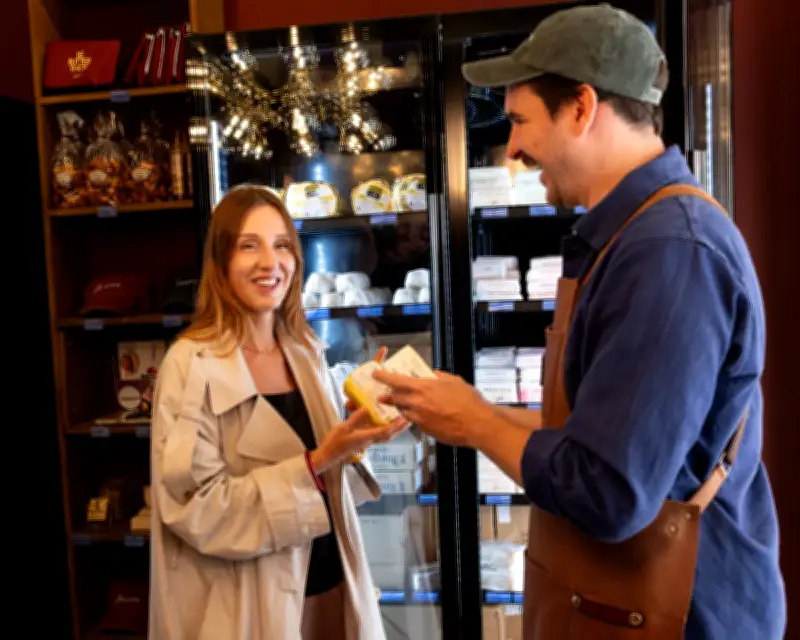
Paris's first butter-only shop, Le Butter, has become a hotspot since opening in the summer, drawing queues of tourists and locals despite scorching temperatures that initially worried its owner. The shop, located in the 8th arrondissement near the Eiffel Tower, sells 50 different types of butter and has become a social media hit, with a bench and retractable barrier now managing the crowds.
A shop devoted to butter
Erwan Leo, the 34-year-old owner, opened Le Butter in July when temperatures in Paris were nearing 41C and wildfires were tearing through France. "We were just so worried about the fridges," he says. "We didn't think anyone would even turn up." Two months later, the shop is busy, with customers comparing purchases outside, including Clifford Yellen, a 66-year-old Italian-American chef who bulk-bought "only pure stuff – salted" for his flight home. Inside, tourists from Brazil and Korea sample quenelles of wild garlic, raspberry, and chocolate butter on wooden spoons. "I call Le Butter an ice-cream shop for butter!" Leo says.
The butter boom extends beyond Paris. In London, the Pembroke Club in Belgravia advertised for a butter sommelier in Country Life magazine, seeking someone to "curate our butter assortment and assist in training staff using our silver butter trolley". Reddit threads discuss the best ways to transport butter by plane, and La Grande Épicerie de Paris sells 150 types at its "wall of butter", with Le Beurre Bordier and Beillevaire among the most popular.
Butter as art and obsession
Butter has become a material for food artists. Laila Gohar, the American-Egyptian artist, carved it into a fragment of Michelangelo's David, while Imogen Kwok built a foot-high cone from whipped butter and foraged herbs during a design festival. The trend has also turned Safia Patel, a 35-year-old South African journalist, into a self-described "butter hoarder" who collects and categorises it, storing "ornamental" butter in her freezer. "Once things returned to normal, I began coercing people into bringing me butter from around the world in case I ran out," she says, adding that she carries portion-sized packs in her handbag "just in case".
The fetishisation of butter is divisive. "When it comes to food styling, some of what they do looks cool," says Seb Myers of the restaurant Planque in east London. "But when you see a mound of butter – all that extravagance for the sake of a photo? I'm quite squirrelly with food. Waste is my big thing." Myers uses Beillevaire butter demi-sel in his restaurant, keeping it in "a cheese fridge for a week to slow-mature it", and goes through 10kg of Douceur de France a week for cooking. Pravin Nayar, who runs Castle Farm restaurant in Somerset, makes his own butter, saying, "The way I see it, bread is just a spoon for butter."
Health and cultural shifts
Butter consumption hit a historic low by the late 1990s after anti-saturated fat campaigns, with the average Brit consuming just 2kg a year. Today, UK consumption is just over 3kg per capita per year, compared to 8kg in Belgium and almost 9kg in France and Denmark. "The heart-health advice hasn't changed," says Tracy Parker, a registered dietitian and adviser for the British Heart Foundation. "If you've got high cholesterol, or your diet already leans heavily on saturated fat – think fatty meats, pastries, cakes, biscuits – then you should probably reconsider how much you're eating and whether you could swap it for something like olive, avocado or nut oil." She adds that butter in moderation is fine: "A light scrape on your morning toast, and thinking about everything else you eat – you're probably OK."
Parker attributes butter's cultural rehabilitation partly to the anti-ultraprocessed-food movement. "UPFs have been linked to poor health including obesity, type 2 diabetes and heart disease," she says, whereas butter is seen as a natural, farm-adjacent product. In Paris, many still believe in the French Paradox, the idea that they can eat butter and cheese without suffering the same rates of heart disease as other nations. "It's something we eat every day," says Leo. "I don't check my cholesterol – I don't want to know." For Patel, one frozen half pack of Kerrygold from 2019 stands out as insurance and a reminder of a different time; her dream job is to run a dairy farm, "or at least go to Paris, to that shop, and eat all that butter".