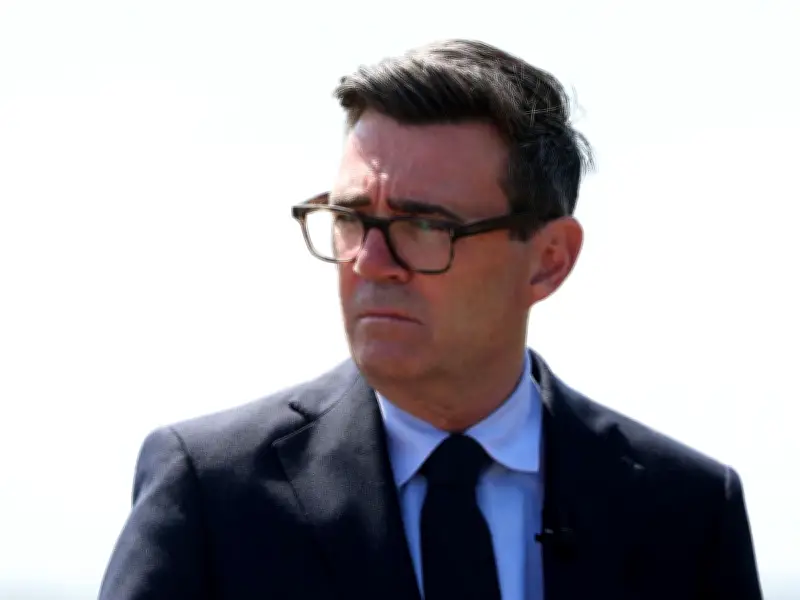
Prime Minister Andy Burnham has vowed to help people save money by banning retailers from advertising 'phoney' discounts and making it easier to leave subscription deals. The Labour leader says they are just two of what he calls 'everyday fixes', which he claims will help to ease the cost of living crisis for households.
New rules from January 2027
It is the latest in a flurry of policy announcements from the Makerfield MP since he became Prime Minister on July 20. Mr Burnham says there will be more 'everyday fixes' to come.
Mr Burnham said: “I know people are sick and tired of rip-off discounts and subscription traps. Westminster has got used to telling people that everyday hassles like this are just part of life.
“I don’t think that’s right, especially when the cost of living continues to weigh heavily on so many people’s lives. I’m determined to pull every single lever we can to provide people with some room to breathe on the cost of living.
“We’re putting an end to phoney bargains. If something is advertised as half price, it should actually be half price. We’re also making it as easy to leave a subscription as it is to join.
“These are just two of the everyday fixes we’re going to be rolling out – today is just the start. We want to put more money in people’s pockets and give people hope that politics really can work for them and their everyday lives.”
Details of the proposals
The Prime Minister said that new rules will come into force from January 2027, which mean business will have to provide clearer information up-front to customers, as well as regular reminders and an easier exit to contracts. There will also be a 14-day cooling-off period, allowing customers to cancel after a trial period or after a long-term contract renews.
It is said that households across the UK spend an estimated £1.6 billion a year on subscriptions they don't actually want. The PM said that certain charitable memberships for cultural and heritage organisations will be exempt from the new rules.
Reactions from key figures
The announcement comes ahead of the launch of a consultation in the autumn, which will investigate pricing and assess whether 'misleading' discounts should be added to the list of practices banned under the Digital Markets, Competition and Consumers Act.
Jonathan Reynolds, the Business, Innovation, Science and Trade Secretary, said: “There’s nothing worse than realising you’ve been fleeced by a dodgy deal, or seen money leaving your account because of a subscription you didn’t want to renew or couldn’t easily cancel.
“This Government is on the side of families working hard to make ends meet, while making sure the rules are clear for businesses and easy to follow.”
Sue Davies MBE, Head of Consumer Rights Policy at Which?, said: “Which? has repeatedly exposed businesses, including trusted household brands, ripping off customers with dodgy deals that aren’t what they seem - but regulators have often found it too difficult to take action. It’s great news that the government intends to tighten up the law and explicitly ban misleading pricing practices, while putting an end to subscription traps.
“The government must implement these rules swiftly to give consumers much-needed protection against sneaky pricing tactics and hold businesses to account with tough enforcement, including fines, if they fall short.”
Dame Clare Moriarty, Chief Executive of Citizens Advice, said: “For too long consumers have been tricked into paying for products or services they don’t use - or didn’t even want to begin with - costing millions of pounds each year. So we really welcome the government’s move to speed up action on subscription traps and look at banning other tactics firms use to catch consumers out.
“At Citizens Advice, we’ve sounded the alarm on this for years, because we know subscription traps and sneaky online practices that hit consumers’ pockets hard are a widespread problem. We previously found that over 13 million people (26% of UK adults) accidentally took out a subscription in a year.
“People shouldn’t have to waste their time and effort avoiding dubious online tactics and fixing unwanted purchases and sign-ups. Today’s announcement is an important move, but it can’t be the end of the story. We look forward to seeing the detail in the consultation on deceptive online pricing and how it will ensure consumers are protected and treated fairly.”
Helen Undy OBE, CEO of the Money and Mental Health Policy Institute, said: “It can be hard for anyone to spot a misleading discount, but this is particularly difficult for people with mental health problems who can struggle with concentration, impulsivity and decision-making, which can make it harder to resist pressure selling tactics and compare prices to get a fair deal.
“This group is already at the sharp end of the cost of living crisis - people with mental health problems are three times as likely to currently be behind on some or all household bills - so it’s good news that the government is taking action to help tight budgets go further, and it’s important that it happens quickly.
“It’s also encouraging to see that the subscription trap protections will be brought forward. We know that the symptoms of mental health problems such as increased impulsivity and memory problems, can contribute to someone signing up without realising and forgetting about a subscription. We’ve long argued that it should be as easy to cancel a subscription as it is to sign up - and as ever the proof will be in how companies put this into practice.
“Today’s announcement is good news - however, subscription traps and misleading discounts are only the tip of the iceberg when it comes to unfair practices that make it harder to get a fair deal when you’re struggling with your mental health. We look forward to working with the government to see what further action can be taken in future.”