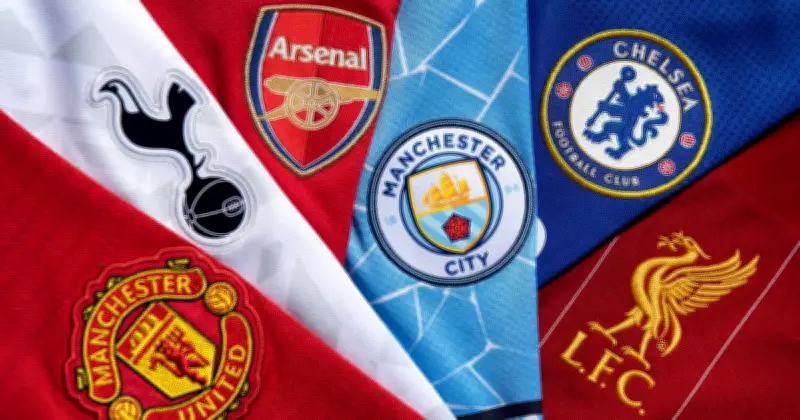
Premier League clubs are reportedly at odds over a proposal to collectively sell additional commercial rights, a move that could increase the league's annual commercial revenue from £200m to £750m. The 'Big Six' clubs—Arsenal, Chelsea, Liverpool, Manchester City, Manchester United, and Tottenham Hotspur—are understood to be firmly against the plan, according to reports.
Revenue disparity fuels dispute
The 'Big Six' currently generate the highest revenues among Premier League clubs, with each exceeding £490m according to their latest accounts for the 2024/25 season. Aston Villa and Newcastle United are the closest challengers, but neither breaks the £400m mark. Manchester United, for example, reportedly views any further pooling of rights as an obstacle to growing its individual income streams.
The proposal, as detailed by The Telegraph, would involve adding rights inventory to the overall sponsorship package, including match-day perimeter LED boards. Currently, some perimeter advertising is sold collectively, with proceeds distributed equally among all 20 clubs as central payments. However, the vast majority of such rights are sold independently by the clubs.

Big Six seek larger share
Should an expanded commercial arrangement be approved, the 'Big Six' clubs would reportedly push for a larger share of the revenue. Premier League sources indicate that the league is working with clubs to reach an agreeable solution.
All clubs have reportedly held in-depth discussions on the matter twice this year—initially in February and subsequently at June's annual general meeting. The rights are expected to be reviewed again at a league shareholders' meeting scheduled for 24 September.
Voting dynamics and next steps
Amendments to the league's rulebook require a minimum of 14 clubs to vote in favour. For instance, six clubs rejected this season's new squad cost ratio (SCR) regulations, yet the quorum overruled them. Those six clubs were Bournemouth, Brentford, Brighton and Hove Albion, Crystal Palace, Fulham, and Leeds United—not the 'Big Six'.
Manchester City and Manchester United were reportedly among a dozen clubs that successfully blocked a spending cap proposal late last year, which was to be calculated at 4.5 times what the Premier League's 20th-placed club earns. To prevent the latest proposal from passing, the 'Big Six' would need to persuade at least one additional club. Their next opportunity to do so comes in a fortnight when all 20 clubs convene.
Collective commercial revenues are expected to be a prominent topic on the agenda, especially as SCR rules incentivise clubs to expand their revenue streams even further than the previous Profitability and Sustainability (PSR) rules did.