
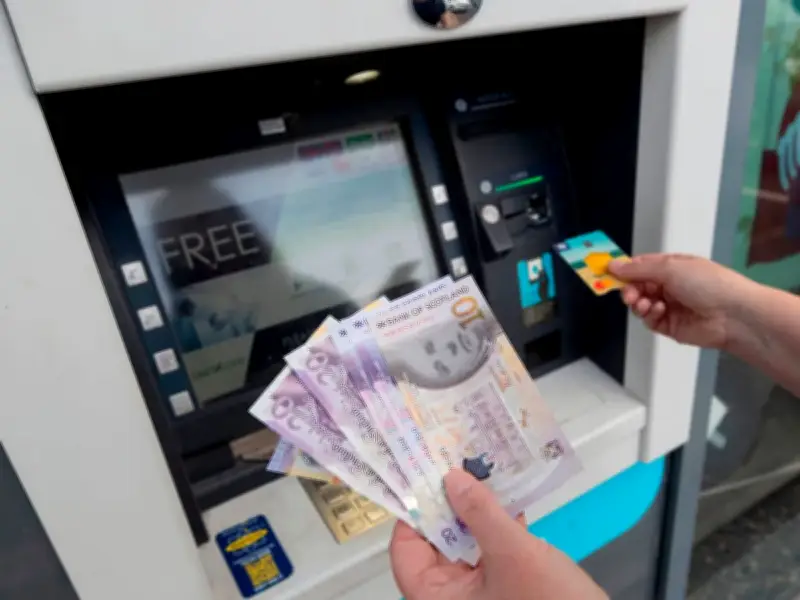
Households are being encouraged to take simple steps to ensure they can still access their money if banks suffer IT failures, cyber attacks or payment system outages this winter.
The advice comes as the UK Government's Be Ready campaign encourages people to prepare for disruption caused by severe weather, power cuts and other emergencies. While many households may already have torches, batteries and emergency food supplies, a banking expert has highlighted the importance of making sure people can continue paying for essential items if their usual banking services become unavailable.
Noyan Nihat, Co-CEO of FCA-authorised payments firm Cardaq and Deputy Chair of The Payments Association Advisory Board, has shared several practical measures that could help households manage a temporary disruption.
Open a backup account with a separate banking group
He said one of the biggest mistakes people can make is assuming that opening a second bank account automatically provides protection against outages.
Mr Nihat said: "A second account is a good idea, but most people don't realise a sister brand gives you very little protection. If one goes down, the other can go down with it."
"Your backup should be with a completely separate banking group, and ideally on a different card network, so one Visa and one Mastercard."
For example, Halifax, Lloyds and Bank of Scotland are all part of Lloyds Banking Group, while NatWest and Royal Bank of Scotland (RBS) belong to NatWest Group. Although different banking brands do not necessarily share every IT system, using accounts with separate banking groups could reduce the risk of being unable to access money during a disruption.
Keep some emergency cash at home
Mr Nihat recommends keeping a modest amount of cash available for essential purchases if card payment systems stop working.
He said: "Keep a bit of cash at home too. You don't need a mattress full of it. Somewhere between £100 and £300 covers a week of food, fuel and medicine for most households."
"Get it in smaller notes, because in an outage nobody will have change for a £50."
However, he cautioned against keeping large amounts of money at home. "Don't hold more than you need. Cash at home isn't protected like money in the bank, and many home insurance policies cap cash cover at a few hundred pounds."
The suggested amount is the expert's recommendation rather than an official Government requirement, and households should consider their own circumstances.
Keep important banking information on paper
Many people rely on mobile banking apps to check their balances, transfer money and contact their bank. However, these services may become inaccessible during an internet outage or disruption to mobile networks.
Mr Nihat said: "Keep a paper note of your banks' phone numbers and your account details, because if your phone or the internet is down, the app won't help you."
Any written account information should be stored securely, and passwords or PINs should not be kept alongside it.
Prepare for Direct Debit payments
Banking disruption could also cause problems for households with bills due to leave their accounts on particular dates. Mr Nihat recommends making sure enough money is available to cover essential payments rather than relying on last-minute transfers.
He said: "Set money aside for anything that leaves your account on a fixed date. Missed direct debits during an outage are usually sorted out afterwards, but it's far less stressful if you're not cutting it fine."
Customers affected by a banking outage should contact their bank or payment provider if a scheduled bill is missed or a payment is incorrectly recorded.
Check your savings protection
Mr Nihat also recommends checking where savings are held and whether they are covered by the Financial Services Compensation Scheme (FSCS). Eligible deposits are protected up to £120,000 per person, per authorised banking institution.
However, different banking brands can operate under the same banking licence, meaning customers may need to consider their combined balances when checking the protection available.
Mr Nihat said: "Check that savings at any one banking licence stay within the £120,000 FSCS protection limit. Money in e-money apps works differently. It isn't covered by the FSCS but has to be kept separate from the company's own money, so it's worth knowing which type of account you've got."
People can check whether their bank or savings provider is covered through the FSCS website. FSCS protection applies if an eligible financial institution fails. It does not guarantee uninterrupted access to money during a temporary IT outage.
Consider different payment networks
As well as using a separate banking group for a backup account, Mr Nihat recommends considering whether cards operate on different payment networks. He said that having access to both Visa and Mastercard could provide another option if a disruption affects one network.
He also suggested that different technology providers could offer additional resilience. "A lot of banks now run on big cloud platforms like Microsoft Azure or Amazon Web Services. It's very unlikely both would go down at once, so a backup bank on a different provider gives you another layer of protection."
However, customers may not always be able to establish which technology providers their banks use, and separate providers cannot guarantee protection against every type of outage.
Beware of scammers during banking outages
Mr Nihat warned that criminals may exploit banking disruptions by contacting customers and pretending to offer assistance. He said: "Fraudsters thrive on disruption. When a bank has an outage, criminals start calling customers pretending to help."
"Your bank will never ask you to move money to a 'safe account'. If anyone does, hang up and call the number on the back of your card."
Customers should also be wary of unexpected text messages, emails or telephone calls asking them to provide banking passwords, security codes or other sensitive information.
Preparing for temporary disruption
Mr Nihat stressed that households do not need to prepare for a complete collapse of the banking system. Instead, he said the more realistic risk is a temporary disruption that prevents customers from accessing accounts or making payments.
He said: "The realistic 'doomsday' isn't the banking system collapsing. It's a cyber attack or IT failure that knocks out payments for a few days, as Barclays customers found over payday weekend last year."
"That's very survivable if you've done a little planning in advance."
The UK Government's Prepare website provides additional information on preparing households for emergencies, including power cuts and other disruptions to essential services.




