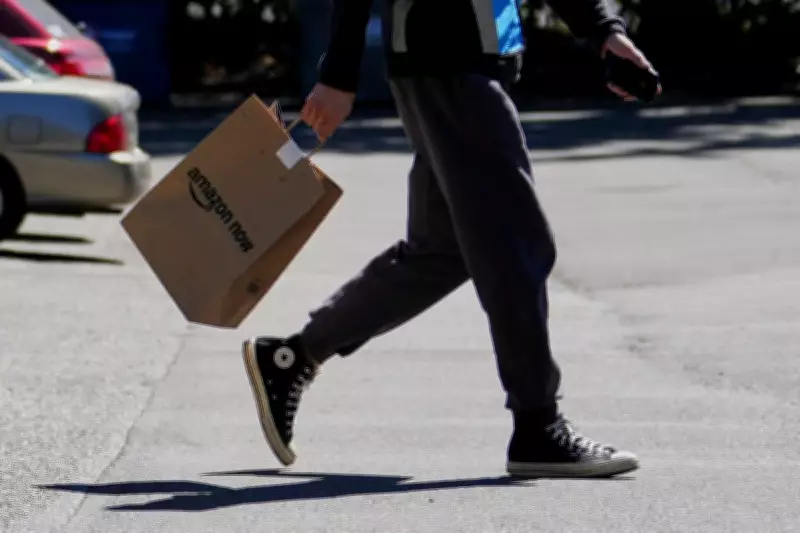
More than two decades after revolutionizing online shopping with two-day deliveries, Amazon is once again raising the bar on consumer expectations. The company is rapidly opening store-sized delivery hubs in dozens of U.S. and international cities to fulfill urgent product needs within 30 minutes for an additional fee. This new service, dubbed Amazon Now, first launched in India last June and is now available in urban areas of Brazil, Mexico, Japan, the United Arab Emirates, the United Kingdom, and the United States.
How Amazon Now Works
The mini-warehouses dedicated to Amazon Now are roughly the size of a CVS drugstore, stocking about 3,500 products for expedited delivery. Items include beer, diapers, pet food, meat, nonprescription medications, playing cards, and cellphone charging cables. Beryl Tomay, Amazon’s head of transportation, told the Associated Press that customers love speed and tend to purchase more from Amazon when faster delivery options are available.
In the U.S., the service was initially tested in Seattle and Philadelphia. Most residents of Atlanta and the Dallas-Fort Worth area now have access, and Amazon plans to expand to Houston, Denver, Minneapolis, New York, Phoenix, Oklahoma City, Orlando, and dozens of other cities by year-end. Pricing starts at $3.99 for Prime members (who pay an annual fee of $139) and $13.99 for non-members. A $1.99 small basket fee applies to orders under $15.

Addressing Environmental and Labor Concerns
Amazon’s push for speed comes as some consumers question the environmental impact and worker pressures associated with rapid deliveries. The company uses AI and technology to tailor inventory to local demand, with popular U.S. purchases including soap, toothpaste, mouthwash, toilet plungers, bananas, limes, and wireless earbuds. The microhubs are staffed by a handful of workers, unlike Amazon’s massive fulfillment centers that employ both humans and robotics.
Competition in the Instant Delivery Market
Amazon Now directly competes with on-demand platforms like Instacart, Uber Eats, DoorDash, and Grubhub. Retail analyst Bruce Winder noted that Amazon’s supply chain prowess gives it an edge. However, DoorDash spokesperson Ali Musa said the company sees Amazon as a complement rather than a threat, emphasizing DoorDash’s ability to offer over half a million grocery and retail items in under an hour through partnerships.
Walmart also competes in this space with its Express Delivery service, guaranteeing delivery within an hour for an additional $10 on top of standard charges. Walmart CEO John Furner told analysts in February that many customers receive items in under 30 minutes.
Lessons from Past Fast-Delivery Failures
History offers cautionary tales. Domino’s “30 minutes or it’s free” promotion in the 1980s boosted market share but led to driver accidents and lawsuits, forcing the company to drop the guarantee in 1993. Brad Jashinsky, a retail analyst at Gartner, warned Amazon against overpromising. Amazon’s Tomay confirmed the company will not offer time guarantees but will keep customers updated on order progress, adding that workers and gig drivers are not rushed.
Consumer Trends and Future Outlook
Some analysts question the cost-effectiveness of 30-minute deliveries unless orders are concentrated in dense areas. Meanwhile, Generation Z shoppers increasingly opt for no-rush shipping to reduce environmental impact. Darby Meegan of Flexport noted that Gen Z is more accepting of slower delivery than millennials.
Despite these trends, Amazon executives report positive early results in India, where Prime members tripled their use of 30-minute deliveries after trying the service. Tomay said Amazon Now is attracting repeat customers in the U.S. as well. “It’s in early days and time will tell,” she said. “I think that it will be interesting to see how it evolves.”