
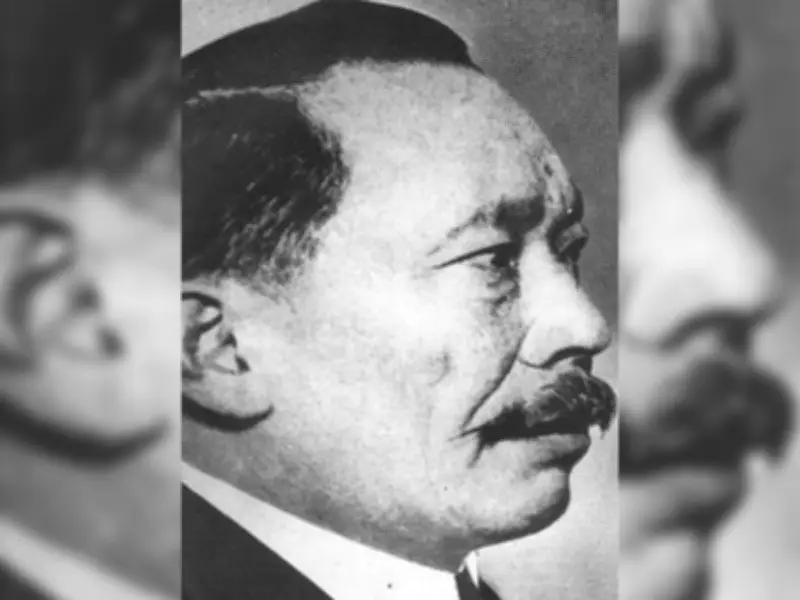
Shortly after 1.30am on December 2, 1925, three gunshots rang out on Price Street in Birkenhead. Residents were woken by the sound of gunfire, followed by screams, a whistle and running feet.
At Cleveland Street Police Station, Sergeant Hamer received a phone call from Lock Ah Tam, a 54-year-old man who lived at 122 Price Street. Tam said: "Send your folks please, I've shot my wife and children."
A respected community leader
Born in Canton, China, in 1872, Tam came to England in 1895 as a ship's steward, aged 23. Liverpool's established Chinese community made the region a hub for East-Asian immigrants, with Birkenhead considered the epicentre for those arriving in the north west.
Tam became head of the European branch of the Jack Ah Tai organisation, a worldwide union for Chinese dock workers. He also led the Chinese Progress Club and served as superintendent of all Chinese sailors for three Liverpool steamship companies.
As the Sunday Post put it in 1926: "A word spoken by Tam carried weight among Chinamen in all the wide world." Journalists described his influence among Liverpool's Chinese community as "immense", and he was equally respected by English residents, counting many as friends.
A wealthy benefactor
Tam grew wealthy through boarding houses across the country and his own Liverpool club for Chinese sailors. He hosted annual Christmas parties for impoverished children at his own expense and regularly paid hospital bills for sick and injured sailors. The ECHO wrote: "He could always be relied upon to dig deep into his pockets."
In 1903, Tam married Catherine Morgan in Cardiff. They had four children: Lock Ling (1905), Doris (1906), Cecilia (1908) and David Young (1910), who died in infancy.
The bar fight that changed everything
In February 1918, Tam was in his club playing billiards when a gang of drunk Russian sailors burst in. After Tam ordered them to leave, one sailor seized a pool cue and struck him hard on the head, leaving him bleeding profusely on the floor.
Though Tam appeared to recover physically, the ECHO later described a "sinister and distressing" change in his personality. By 1924 he was a full-blown alcoholic, behaving erratically, and was declared bankrupt that year.
At a dinner party with 10 friends, Tam sprang up in a rage after a remark from a Mr Jones, grabbed every glass on the table and hurled them one by one into the fireplace. He also began quarrelling incessantly with his wife and developed paranoia, keeping a loaded revolver under his mattress, a handgun in his desk drawer and a shotgun in his room.
The murders on Price Street
Lock Ling, who had been educated at a prestigious school in Hong Kong, returned to Merseyside on December 1, 1925 to celebrate his 21st birthday. A party was held that evening, with Tam refraining from alcohol and appearing a proud father. The last guests left at 12.45am.
At around 1am, Lock Ling heard arguing from his parents' bedroom. Fearing his father was abusing his mother, he burst in with his sisters. After a brief argument, Lock Ling took his mother to the Chin household next door, asking her to stay the night. He then returned to fetch Mr Chin.
Upstairs, Catherine's servant Margaret Sing heard angry mutterings from the master bedroom. Through a slightly open door she saw Tam in the mirror, his face a "mask of fury", holding his revolver. Margaret warned Catherine, Doris and Cecilia, who barricaded themselves in the kitchen while Lock Ling and Mr Chin ran to alert police.
Giving up on the kitchen, Tam slunk off. The three women crept back into the scullery, believing it would be safer. Tam returned with a shotgun and fired at Catherine, killing her instantly. He then shot Cecilia. Mrs Chin heard Doris say: "Oh daddy, what did you do that for?" Doris was then shot in the head.
Tam calmly picked up the phone and confessed to police. He was arrested that morning, charged with the wilful murder of his wife and Cecilia, and with "felonious shooting with intent to murder" for Doris. When asked if he had anything to say, he replied: "Nothing at present." He was remanded to Walton Gaol.
Trial and execution
On January 21, after more than a month with serious shotgun wounds to the head, 19-year-old Doris died, adding a third murder charge. She was buried with Catherine, Cecilia and little David.
Tam came to trial at Chester in February 1926. His defence lawyer, Sir Edward Marshall-Hall, argued a plea of not guilty by means of insanity, claiming Tam had suffered automatism caused by an epileptic seizure, triggered by his 1918 head injury. The Chinese community had raised thousands of pounds for his legal support.
The jury returned a guilty verdict after just 12 minutes of deliberation. Mr Justice McKinnon sentenced Tam to die, reportedly shedding tears as he passed sentence. Tam was executed on the morning of Tuesday, March 23, 1926, at Walton Gaol, with William Willis performing the execution. He was buried in the prison grounds, against his wishes to be placed in the family grave.
Sir Edward Marshall-Hall died the following year, but it was widely reported that the death of Lock Ah Tam haunted him until his own passing. The barrister firmly believed the Chinese national was insane and did not deserve to be put to death.




