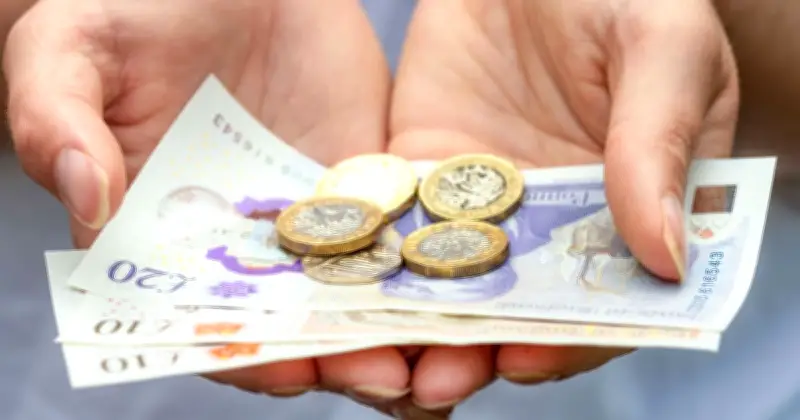
HM Revenue and Customs (HMRC) has confirmed early £108.20 Friday payments for UK households claiming Child Benefit before September. The early payments come as a result of the late summer Bank Holiday, which falls on Monday, August 31, in England, Wales and Northern Ireland.
When a benefit payment, such as Child Benefit, is due on the same day as a Bank Holiday, payments will be issued on the earliest working day before. Child Benefit is usually paid by HMRC every four weeks on a Monday or a Tuesday, meaning it may coincide with the upcoming August bank holiday.
Payments moved to Friday 28 August
As such, households expecting a payment on Monday, August 31, will instead be paid three days early on Friday, August 28, ensuring claimants receive the financial support they need before the long Bank Holiday weekend.
HMRC said: “Child Benefit is usually paid every 4 weeks on a Monday or Tuesday. There are different payment dates if it’s due on a bank holiday.”
“You can work out when you’re next going to get Child Benefit by counting 4 weeks forward from your last payment. Do not count forward if your payment was due on a Bank Holiday - the dates are different.”
“Your payment might be delayed if the bank is closed for a public holiday on the day HM Revenue and Customs (HMRC) pays you. Check with your bank for the date you’ll get your payment.”
Child Benefit rates and eligibility
Child Benefit can be claimed by parents or guardians who are responsible for raising a child under the age of 16, or under 20 if they stay in approved education or training.
In the 2026 to 2027 tax year, Child Benefit is paid at a rate of £27.05 per week for the eldest or only child, and £17.90 per week for each additional child - an uplift of 3.8% on the previous tax year’s rates.
As the benefit is paid by HMRC every four weeks, it means parents with one child can get payments of up to £108.20 in each four-week payment period, while those with additional children will get £71.60 every four weeks. So if a payment is due on the same day as the Bank Holiday, claimants will receive at least £108.20 from HMRC in their bank account on Friday, August 28.
High Income Child Benefit Charge rules
Confirming the 3.8% payment uplift for Child Benefit last year, James Murray, Chief Secretary to the Treasury, said: “The Tax Credits Act 2002 and Social Security Administration Act 1992 place a statutory duty on His Majesty’s Treasury to review the rates of child benefit each year in line with the general level of prices. There is a further statutory duty on the Treasury to increase guardians’ allowance in line with price growth. I have now concluded the review for the tax year 2026-27.
“I have decided to increase child benefit rates in line with the consumer prices index for the year to September 2025, which is 3.8%. Guardian’s allowance will also increase by the same rate. This means that, from 6 April 2026: the child benefit rate for the eldest child will increase from £26.05 to £27.05 per week; the child benefit rate for other children will increase from £17.25 to £17.90 per week; guardian’s allowance will increase from £22.10 to £22.95 per week.”
There is no limit as to how many children parents can claim for and Child Benefit claims can be made just 48 hours after a baby’s birth is registered. In cases where a Child Benefit claimant or their partner has an individual income of between £60,000 and £80,000, the higher earner may be liable for the High Income Child Benefit Charge (HICBC).
For claimants in the 2026/27 tax year, 1% of Child Benefit payments must be paid back to HMRC for every £200 earned above £60,000, while for households with higher earnings of £80,000 or more, all of the Child Benefit must be paid back to HMRC. If your income exceeds the threshold, you can choose to either get Child Benefit payments and pay the tax charge, or opt out of getting payments and not pay the tax charge.