
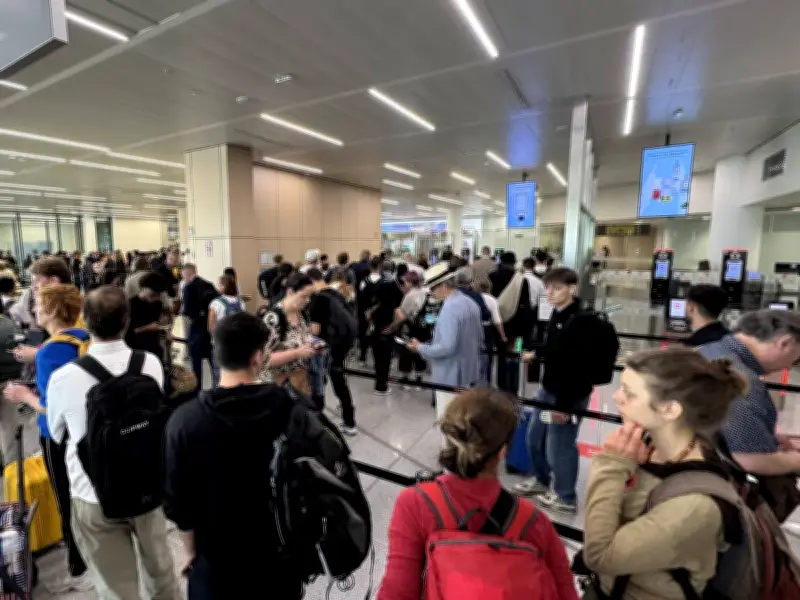
The EU's new Entry/Exit System (EES) is causing long airport delays and additional costs for British travellers. Since its full implementation in April this year, the system requires UK nationals to register fingerprints and a photograph when their passport is scanned upon entering the Schengen area, including Spain and France.
Delays and Missed Flights
The additional time required for these biometric procedures, along with some technical difficulties, has resulted in significant queues at certain airports. Some holidaymakers have missed their flights and been forced to buy new plane tickets. According to the Association of British Insurers (ABI), travel insurance is unlikely to cover the cost of new flights, hotels, or any other losses incurred as a result of delays caused by EES queues, as it is considered an expected procedure.
Essential Tips to Avoid Extra Costs
To prevent extra expenses from the new checks, travellers are advised to follow these four key steps:
1. Arrive Early at the Airport
Allow enough time to check in and complete EES registration procedures. Wizz Air boss Yvonne Moynihan has cautioned travellers to get to the airport three hours before their scheduled departure. Other carriers, including Jet2 and Ryanair, offer similar advice depending on the airport. However, Eurostar recommends passengers arrive at the station at the time stated on their ticket, as this already factors in EES procedures.
2. Sign Up for Alerts
Airlines and travel operators will send notifications to inform passengers of current waiting times and any alterations, so it's essential to register to receive them. The Civil Aviation Authority advises: "Airlines typically notify passengers of significant delays. We also advise passengers to always check directly with their airline before heading to the airport to allow enough time for security checks and reaching their departure gate." Most airlines offer an app to download beforehand for alerts, and it's also worthwhile checking that texts are enabled and emails aren't going into junk folders.
3. Read Your Paperwork
If you miss your flight due to EES queues, airlines are under no obligation to put you on another flight without an additional charge. Travel insurance is unlikely to cover the cost of new flights, hotels, or any other losses incurred as a result of delays caused by EES queues, the ABI says. No travel insurance policies explicitly cover EES delays because it is an expected or routine process.
4. Check Your Passport's Validity
It is vital to check your passport's validity, as there are strict rules. As well as the new EES, those travelling to Europe need a passport that was issued less than 10 years before your travel date and is valid for at least three months after departure.




