

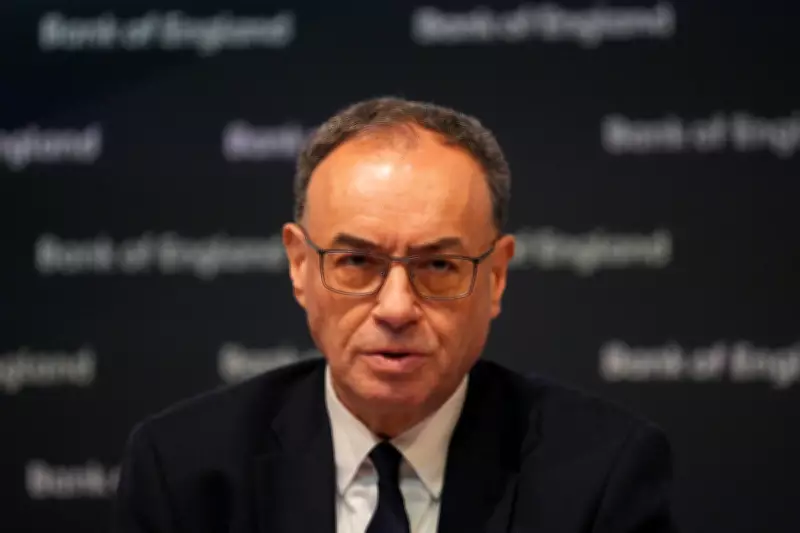
Bank of England Governor Warns of 'Difficult Judgements' on Interest Rates Amid Iran War Fallout
Bank of England Governor Andrew Bailey has issued a stark warning about the challenges facing policymakers as they navigate the economic turbulence caused by the ongoing conflict in Iran. Speaking to the BBC, Bailey emphasised that there will be no hasty moves on interest rates, highlighting the "really difficult judgments" required to balance a potential surge in inflation against the broader needs of the UK economy.
Economic Pressures from the Iran Conflict
The war in Iran has triggered a sharp rise in oil prices due to the blocking of the Strait of Hormuz, a critical global shipping route. Despite a recent slight pullback, Brent crude oil remains approximately 40 per cent higher than its price at the end of February. This increase is expected to translate into higher energy costs for households and businesses, with companies likely to pass on these expenses through increased prices for goods, including essential items like food.
Higher prices typically lead to rising inflation, which central banks often combat by raising interest rates. This measure can reduce spending, stifle demand, and help control price increases. However, the UK's current economic situation complicates this approach. The economy has experienced long-standing faltering growth, aside from a surprising rise in GDP in February, and the labour market has seen unemployment surge past five per cent. In such conditions, the Bank of England's Monetary Policy Committee (MPC) would usually lean towards cutting rates to stimulate borrowing and spending.

Delicate Balancing Act for the MPC
Governor Bailey and his fellow MPC voters face a delicate balancing act as they prepare for their next vote on 30 April, with the current interest rate standing at 3.75 per cent. They will consider "meaningful" updated economic data and recent warnings from the International Monetary Fund (IMF), which indicated that the UK faces the most significant growth hit among major economies due to the conflict.
"There's really difficult judgments to be made," Bailey stated. "We're not going to rush to judgments on those things, because there are a lot of uncertainties around this, not just how it's going to play out, but also how it's going to pass through into the UK economy." He added that a swift resolution to the energy supply issues in the Gulf would lead to a better outcome, emphasising the critical nature of the situation.
Market Reactions and Analyst Predictions
Money markets reacted sharply to the Iran war, initially pricing in about four interest rate hikes over the year, though economists widely dismissed this as unrealistic. Currently, markets anticipate around one rate increase, but it appears more likely that the Bank of England will maintain the current rate until more is known about the war's impact on the UK. This includes whether the conflict reaches a quick resolution or persists.
Suren Thiru, chief economist at the Institute of Chartered Accountants in England and Wales (ICAEW), commented, "Even if a peace deal is reached soon, a severe spell of stagflation looks locked in with surging energy costs expected to trigger sizeable falls in investment and consumer spending, likely leaving growth weaker than many – including the IMF – expect." He noted that while the Iran war has shifted focus towards potential rate rises, a prolonged policy pause remains the most probable outcome, as the conflict's squeeze on growth could help dampen inflation over time.
Diverging Views Among Economists
Analysts are divided on the future course of action. Yael Selfin, chief economist at KPMG, pointed out that British firms are facing a "double whammy of higher energy and borrowing costs," which may lead to delayed or scaled-back investment plans and price hikes passed on to consumers. Conversely, Lindsay James, an investment strategist at Quilter, suggested that the unexpectedly strong economic growth numbers from Thursday might provide room for a rate cut. She warned that moving in the opposite direction could "cut off any green shoots [of economic productivity] that do survive this period."

James added, "The market still expects the BoE to cut at least once this year and with a fairly strong start to 2026, that may give it enough cover to do so. However, with growth now forecast by some to stall completely, the BoE is going to have to make a call on how much to look through any inflation spike and focus on the potential growth implications that are to follow."
As the 30 April vote approaches, the Bank of England's decisions will be closely watched, with the outcome hinging on how the Iran war evolves and its ripple effects on the UK's economic landscape.





