Mine Warfare Lessons from Korea and Gulf Wars Ignored in Iran Conflict
Mine Warfare Lessons Ignored in Iran Conflict

The 75-year-old military deadlock which Trump must learn from in his war with Iran is highlighted by the latest US strikes targeting Iranian boats laying mines in the Strait of Hormuz. John W S Clark asks why no one is heeding the lessons of the past: that mine warfare will bring any ill-conceived conflict to a shuddering standstill.

Historical Precedents of Mine Warfare

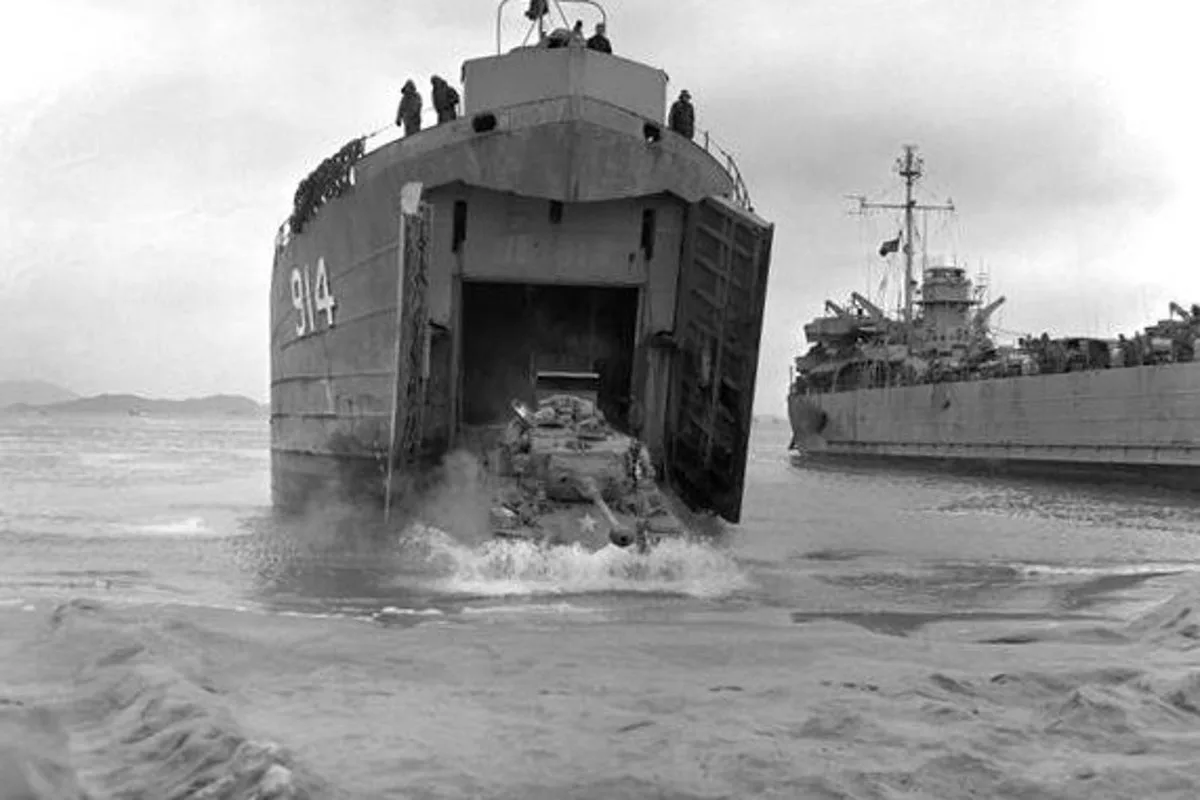
In October 1950, at the peak of the Korean War, Rear Admiral Smith, second in command of US Naval Forces Far East, sent a signal to his commanding officer, Vice Admiral Turner Joy: “We have lost control of the seas to a nation without a navy, using pre-World War I weapons, laid by vessels that were utilized at a time of the birth of Christ.” This exasperated comment reflected on a plan to invade Wonsan on the east coast of the Korean peninsular, which had been held up for weeks by the presence of North Korean mines.

Over the preceding five days, the whole invasion fleet, complete with its embarked forces, had been compelled to “yo-yo” back and forth up and down a stretch of water 20 miles off the coast, waiting for clearance. By the time they finally reached the shore, the city already had been taken by their South Korean allies (before being won back by North Korea a couple of months later), leaving the US to impose a drawn out blockade offshore.

Wide Pickt banner — collaborative shopping lists app for Telegram, phone mockup with grocery list

Such success at stopping the US in its tracks, down to the mining of Wonsan, was regarded as one of the major setbacks of the Korean War. It linked directly back to the fact that the mine countermeasures of the US Navy had been completely neglected since the end of Second World War. In 1945, the amphibious assault on Okinawa in Japan was preceded by more than 100 minesweepers, while D-Day relied on 300 for the invasion of Normandy the year before. By the end of the Second World War, the US Pacific fleet alone had between 525 and 550 minesweepers.

But just five years later in Korea, Commander Naval Forces Far East had six small wooden ships and one larger steel minesweeper in active commission, with another three of the steel ships in a caretaker status. The fallout from such neglect caused a brief upsurge of interest in mine warfare, but compared to submarines, guided missile ships and aircraft carriers, minesweeping is seen as unglamorous drudgery, and so the lessons learned were soon forgotten.

The Gulf War and Mine Threat

Roll forward to 1991 and the first Gulf War. The mining threat had again been overlooked. The only naval casualties of Operation Desert Storm, the allied offensive against Iraq, were the USS Princeton and the USS Tripoli, both of which were damaged by mines. There were no effective mine countermeasures available in the Gulf at the time. Reflecting on the impact, General Schwartzkopf, then head of the coalition forces, said: “The losses alerted the allied coalition to the severity of the mine threat and were a factor in the cancellation of the allies' planned amphibious assault into Kuwait.” After Wonsan, Admiral Forrest P. Sherman, US Chief of Naval Operations, had said: “When you can't go where you want to, when you want to, you haven't got command of the sea. And command of the sea is a rock-bottom foundation of all our war plans…” Schwartzkopf would have agreed.

Current Stalemate in the Strait of Hormuz

Roll forward again to 2026 and the lessons of history have still not been learned. The Iranians have been threatening for years that, if they were attacked, the Straits of Hormuz would be mined, effectively closing the entrance to the Gulf. They have now achieved this and shipping has been bottled up at anchor on both sides of the Strait since the end of February. It would appear that no account was taken, when considering the likely consequences of the war on Iran, that the simple threat of mines in the Straits (whether or not actually laid) would be enough to ensure the cessation of traffic. No shipowner is going to place his vessel at risk in those circumstances and no insurer is going to allow him to do it.

Pickt after-article banner — collaborative shopping lists app with family illustration

So the answer from Trump, sounding, it has to be said, a bit desperate, was that everybody else’s navy should pitch in and help to reopen the waterway. This duly implied that the United States Navy was not capable on its own, and that is almost certainly the case. It is also the case that it would be extremely difficult for any other navy or combination of navies to guarantee much success in the current situation. And until that success is guaranteed and the Straits are declared free from mines (thus proving a negative, always difficult) none of those ships will move. Because of the mining threat, any talk of “escorting” merchant ships through the straits is just talk.

Why Is Clearance So Difficult?

Mine countermeasures is a slow and grinding business. Mines are complicated and sophisticated weapons, having come a long way from the spheres with horns now used to collect cash for the RNLI on the seafront. Those, of course, can still be used but their more ambitious cousins sit on the sea bed and wait to be activated by unwary ships passing overhead. This can be done magnetically, acoustically or by pressure or by a combination of those. They can target individual types of ship by their signature. They can count the ships going over and let the first ten or twenty go and then explode under the next one, when everybody had thought it was safe.

The mines may be sophisticated, but they are easily laid. They don’t need a specialist minelayer. They can be pushed off the back of a merchant ship, a fishing boat or, in this case, a dhow, as seems to have been happening. These are the wooden vessels of ancient design referred to in the quote from Korea. At Wonsan, the North Koreans laid 3,000 mines in three weeks in this way.

Those mines have to be searched for, ‘hunted’, and destroyed before they can do damage. This is done using sonar to scan the sea bed, but the sea bed is not flat and smooth but has endless obstacles and debris all over it. The bed of the Straits of Hormuz has the debris of centuries discarded from passing vessels and some of this will look very “mine-like”. All these contacts have to be investigated and either destroyed or discarded as safe. This takes time and an immense effort in a waterway as long as Hormuz.

Available Assets and Challenges

What assets are there available to carry out this task? We know that the last of the Royal Navy’s ships in the Gulf, the minehunter HMS Middleton, returned to the UK on 1 March, just one day after the start of the war. HMS Dragon, a Type 45 or Daring-class air-defence destroyer has finally been sent from Portsmouth but she is of no use against mines. The US Navy had also removed its four Avenger class minehunters USS Devastator, Dextrous, Gladiator and Sentry from Bahrain in 2025 for scrapping. They replaced these ships with Independence-class littoral combat ships USS Santa Barbara, Tulsa and Canberra which do have minehunting capability, but they then withdrew these ships from the Gulf just before the start of the war. In any event, some experts question if they are as effective as their forebears.

But even if the ships were available, it would mean putting them right into harm’s way from a shaky ceasefire, risking drone attacks from the Iranian shore, and so it is unlikely that any clearance operations can be started until the ceasefire turns into a more meaningful peace deal. So it would seem that the answer has to be that, unless Trump is prepared to accept severe casualties in ships and people, it will be unlikely that anything will be able to be done to reopen Hormuz until some political settlement is reached. But even in the event of a deal, clearance of this stretch of water will take some considerable time. What an indictment that before starting this war, those responsible didn’t consider the likely effect of their actions, and, as importantly, their history.




