

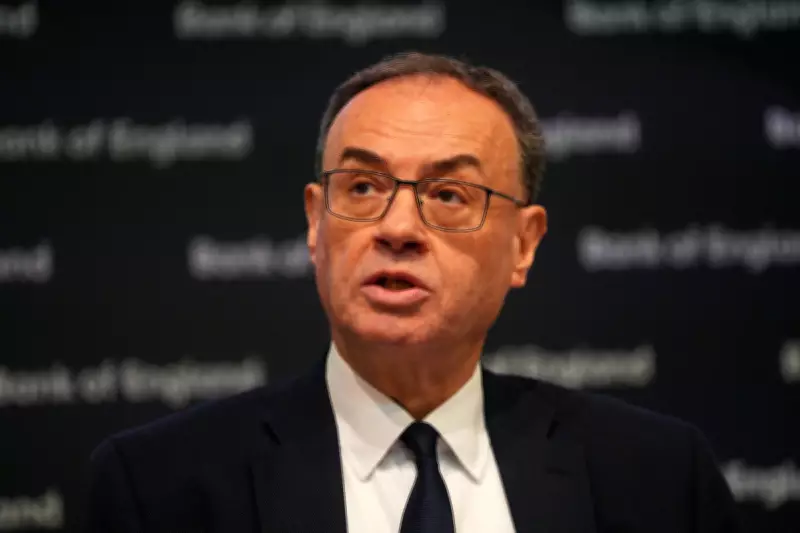
Bank of England Holds Interest Rates Steady, Governor Bailey Warns Cuts Are 'Not on the Horizon'
In a unanimous decision that marks the first such agreement since September 2021, the Bank of England's Monetary Policy Committee (MPC) has voted to maintain the base interest rate at 3.75%. Governor Andrew Bailey has delivered a stark message following the announcement, indicating that any reductions in borrowing costs are currently 'not on the horizon' and hinting that further hikes may be necessary if inflationary pressures intensify.
Middle East Conflict Fuels Inflationary Fears
The ongoing war in the Middle East, which has led Iran to effectively close the vital Strait of Hormuz shipping route following attacks by the US and Israel, is identified as a primary driver of global economic instability. Governor Bailey emphasised that this geopolitical crisis is already impacting petrol prices, is likely to increase household energy costs this summer, and will exert significant pressure on food prices.
'The duration of this problem is crucial,' Bailey stated during an interview with LBC's Andrew Marr. He made it clear that monetary policy alone cannot resolve the issue, advocating instead for action at the source. 'Frankly, reopening the Strait of Hormuz is the best thing to do. Get the energy market back on its normal footing,' he asserted.

Revised Inflation Forecasts and Policy Stance
The MPC has revised its inflation projections upwards in light of the conflict. It now expects the Consumer Prices Index (CPI) to reach around 3% in the second quarter of 2026, a significant increase from the 2.1% forecast in February, with a potential rise to 3.5% in the third quarter. This poses a direct challenge to the Bank's mandate of returning inflation to the 2% target.
When questioned about achieving this target within his remaining term, Bailey admitted his optimism had waned in recent weeks. 'We are fully committed to the inflation target, and our job, frankly, is to deal with the shocks as they come along,' he said, acknowledging the unpredictable nature of current events.
The Committee has signalled that if the conflict persists and exerts greater pressure on UK prices, a 'more restrictive policy stance'—indicating potential interest rate increases—may be required to control inflation. 'The longer it goes on… the effect will be larger,' Bailey warned, describing the situation as a 'major shock to energy prices' that the economy must navigate.
Call for Geopolitical Resolution and Focus on Growth
Bailey issued a direct appeal to global leaders, including US President Donald Trump, Israeli Prime Minister Benjamin Netanyahu, and Iranian authorities, stressing that resolving the energy supply disruption is paramount. 'The best thing we can do actually for the world economy… is to sort out the problem in terms of reopening the energy supply lines,' he stated, highlighting the broader international implications.
In response to the crisis, UK military planners have reportedly joined US Central Command to develop proposals for reopening the Strait of Hormuz, underscoring the strategic importance of securing energy corridors.
Amid these challenges, Bailey pointed to the need for raising the UK's 'sustainable rate of growth', suggesting potential avenues such as pension fund investment and advancements in artificial intelligence. While cautious, he noted that AI represents 'the most likely area that we're going to raise the growth rate of the economy', emphasising its importance for long-term economic resilience.
The Governor concluded by stressing the imperative for all possible measures to alleviate the economic impact of the conflict, reinforcing that the stability of energy markets remains critical for global prosperity in these uncertain times.






