Communist Party leader Gennady Zyuganov has called on President Vladimir Putin to effectively confiscate 130 trillion rubles from Russian bank deposits to fund a decisive victory in Ukraine, a proposal immediately condemned as irresponsible by a senior parliamentary figure.
Zyuganov's Proposal: Seize Deposits for Victory
Speaking to Russian news channels on Monday, Zyuganov claimed that 67 trillion rubles of individuals' money and 63 trillion rubles of corporate funds are sitting idle in banks, enriching bankers rather than being invested in production or the war effort. He argued that this sum, equivalent to three state budgets, could be quickly redirected with a single presidential decree.
“If I were the president, I would solve it with a single decree. In a war, he has the right, he's the commander-in-chief,” Zyuganov said.

Backlash from Financial Committee Chairman
Anatoly Aksakov, chairman of the State Duma's Financial Market Committee, dismissed the proposal as a “provocation” and “extremely irresponsible.” He warned that freezing or confiscating deposits would deprive the economy of essential financial resources for lending and operations.
“Money in deposits is a resource for lending to the economy and for carrying out financial operations. If you freeze or confiscate it, you deprive the economy of financial resources, and this is not in anyone's interest - neither the Government nor the business environment. It is absurd,” Aksakov said.
WW2 Anniversary Ceremony Context
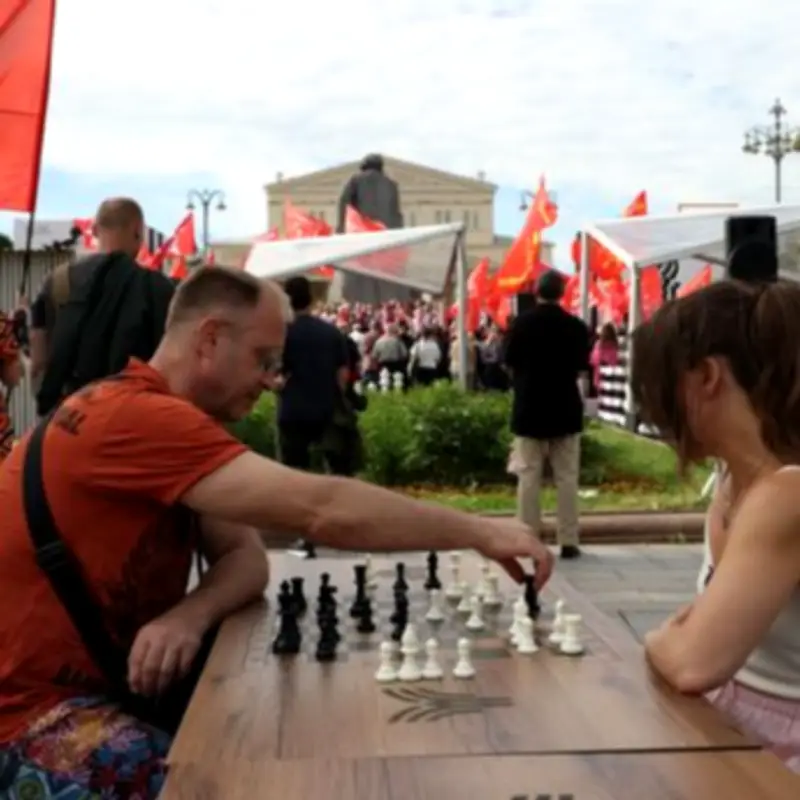
Zyuganov's remarks came on the 85th anniversary of Nazi Germany's attack on the Soviet Union, which Russia commemorated with a ceremony at the Tomb of the Unknown Soldier in Moscow. President Putin attended the wreath-laying event. Earlier, the Communist Party of the Russian Federation held its own parade, with members dressed in Soviet-era uniforms and waving hammer and sickle flags.
Zyuganov's Political History
Zyuganov has led the Communist Party since 1993 and has been a member of parliament since 1994. He has run for president four times, losing to Boris Yeltsin in 1996, placing second to Putin in 2000, and gaining only 17.76% of the vote in 2008 against Dmitry Medvedev, who won with 70.23%. He lost again in 2012. Since then, he has focused on party leadership while making occasional controversial demands that are often ignored.