UK households experienced a decline in disposable incomes during the first three months of 2026, as rising prices and higher wealth taxes squeezed average spending power, according to official data.
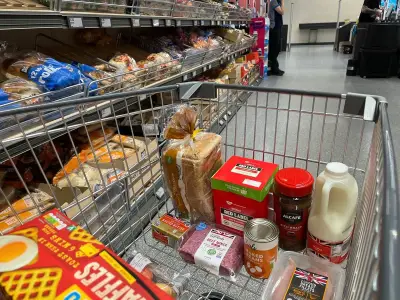
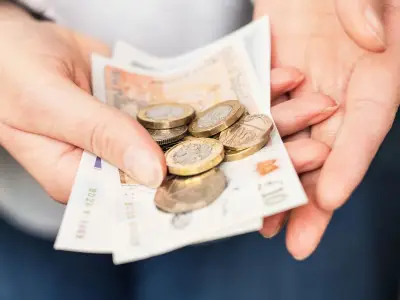
The Office for National Statistics (ONS) reported that real household disposable income dropped by 0.8% from January to the end of March, driven by an increase in the consumer prices index (CPI) measure of inflation and higher capital gains tax receipts. This marks the fourth quarter in the last five where disposable incomes have fallen, the ONS noted in its latest economic assessment.
Political Response and Living Standards Pledge
Andy Burnham, expected to succeed Keir Starmer as prime minister next month, used a major speech on Monday to signal that tackling the cost of living and reversing the decline in living standards would be central to his premiership. He declared: "We need a new determination to raise living standards of every person in this land. And we must accept that to do that, to fix the economy and the country, we need to change politics and we need to do it now."
Burnham announced a 10-year mission to raise living standards across the UK and reduce the cost of essentials such as water, energy, and transport.
GDP Growth Confirmed but Revised Slightly Down
The ONS confirmed early estimates showing the economy grew by 0.6% in the first quarter, though annual GDP growth was revised down slightly from 1.4% to 1.3%. All three main sectors—services, production, and construction—expanded, with services contributing the most, growing by 0.8%.
Thomas Watts, an investment manager at Julius Baer, said the figures were a boost for Chancellor Rachel Reeves in what are expected to be her last weeks in office. "Encouragingly, the composition of growth was more balanced than in recent quarters. Both construction and production posted gains of 0.2%, signalling a modest but welcome broadening in economic momentum," he said. "The fact that all three main sectors contributed positively will be particularly reassuring for policymakers, both at Threadneedle Street and in Downing Street."
Household Saving Ratio Declines
The household saving ratio, which measures the proportion of disposable income saved rather than spent, edged down from 9.6% in the final quarter of 2025 to 8.9%. During the pandemic lockdowns, households pushed the saving ratio to 27.5% as they were unable to spend much of their income. It increased again during the politically unstable period before the last election, after which it has steadily declined, though it remains above pre-pandemic levels.
Economic Outlook and Inflation Forecast
Phil Shaw, an economist at Investec, described the first quarter as "a decent start to 2026," but warned that attention would soon turn to the negative impact from the recent rise in energy prices. "We envisage growth coming close to a halt in the third quarter, although the level of the saving ratio will give households in aggregate a cushion to absorb cost increases without an abrupt interruption in spending," he said. "Thereafter the unwinding of the energy price spike should form a tailwind and help to support expenditure and economic activity more widely."
Shaw added that the Bank of England is likely to view the figures as showing the economy remains robust, though without much growth expected in the next six months, allowing it to avoid interest rate rises. "We have lowered our forecast of the peak in inflation over the remainder of the year from 4.0% to 3.1% … Nevertheless we still consider that the [Bank] will adopt a cautious approach to policy and guard against lingering threats of more persistent inflationary pressures," he said. "We remain of the view that a rate increase is off the table, but that the committee will maintain the Bank rate at 3.75% for the remainder of the year, with rate cuts coming into view over 2027."