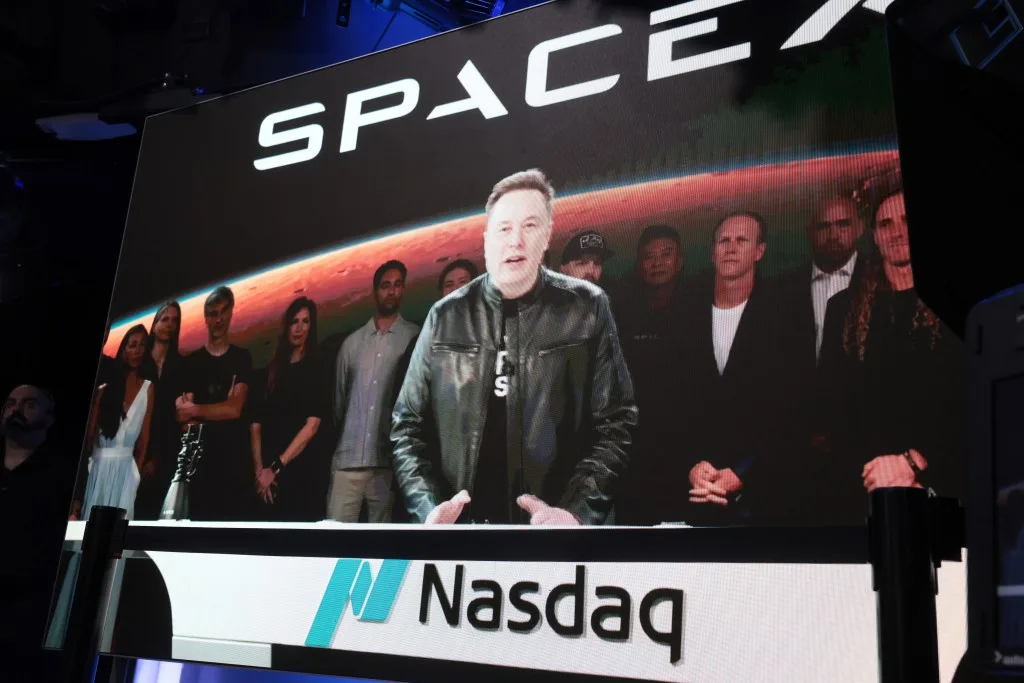
SpaceX Takes Major Step Toward Record-Breaking Stock Market Debut
Elon Musk's rocket and satellite company SpaceX has quietly taken a monumental step toward what could become the most significant stock market debut in history. The firm has confidentially filed for a blockbuster initial public offering (IPO) that could potentially value the company at an astonishing $2 trillion. This move sets the stage for a market-shaking listing that would instantly position SpaceX among the six most valuable companies globally.
Unprecedented Valuation and Market Impact
At a potential valuation exceeding $1.75 trillion, the Elon Musk-led enterprise would dwarf previous listings. It would rank behind only Nvidia, Apple, and Microsoft, while being comparable in value to Amazon and Google-owner Alphabet. Remarkably, this valuation would surpass that of Tesla, Musk's electric car manufacturer. If the listing proceeds, Musk would become the first individual to oversee two trillion-dollar public companies simultaneously.
The blockbuster float is anticipated to raise over $50 billion, comfortably surpassing Saudi Aramco's $29.4 billion listing in 2019, which remains the largest IPO ever staged. However, this figure represents only a fraction of SpaceX's overall valuation, as the company is expected to offer just a small percentage of its total shares to the public. The vast majority of the business would remain under the control of Elon Musk and existing investors.
Wall Street Heavyweights and Strategic Moves
Behind the scenes, SpaceX has been assembling a formidable lineup of Wall Street banks to manage this complex deal. Leading financial institutions including Citigroup, Goldman Sachs, JPMorgan Chase, Morgan Stanley, and Bank of America are serving as the lead banks, underscoring the scale and intricacy of the offering. This IPO push follows SpaceX's recent merger with Musk's artificial intelligence startup xAI, creating a sprawling technology powerhouse that spans rockets, satellites, and advanced AI systems.
From Startup to Space Titan
Founded in 2002, SpaceX has undergone a remarkable transformation from a reusable rocket startup into NASA's primary launch partner following the conclusion of the space shuttle program in 2011. According to Charlie Bilello, CEO of Compound Capital Advisors, the company was valued at approximately $10 billion a decade ago. Much of its current value is attributed to its satellite internet division, Starlink, alongside its next-generation rocket program, Starship, and lucrative government contracts.
Starlink has experienced rapid expansion from its initial user base, with Elon Musk reporting that the service now boasts over 2.5 million users worldwide and is operational in dozens of countries. Meanwhile, Starship—the fully reusable rocket system designed to transport cargo and humans to the Moon and Mars—remains central to SpaceX's ambitious vision. The company has conducted multiple high-profile test flights, including integrated launches of Starship stacked on its Super Heavy booster, standing roughly 400 feet tall and making it the most powerful rocket ever constructed.
Government Contracts and Future Prospects
Government work continues to play a pivotal role in SpaceX's growth trajectory. The company has secured billions of dollars in contracts from NASA and the Pentagon, including a substantial $2.9 billion contract to develop a lunar lander for NASA's Artemis program. This ambitious and capital-intensive program is crucial for future NASA missions and the broader commercial space travel industry.
Taken together, these diverse ventures—from broadband internet services to deep space exploration—help elucidate why SpaceX's valuation has surged so dramatically in recent years. The firm has experienced a meteoric rise since its inception, evolving from a niche rocket startup into one of the world's most valuable private companies. As it stands on the brink of a historic public offering, SpaceX's journey underscores the transformative potential of private space exploration and technological innovation.






