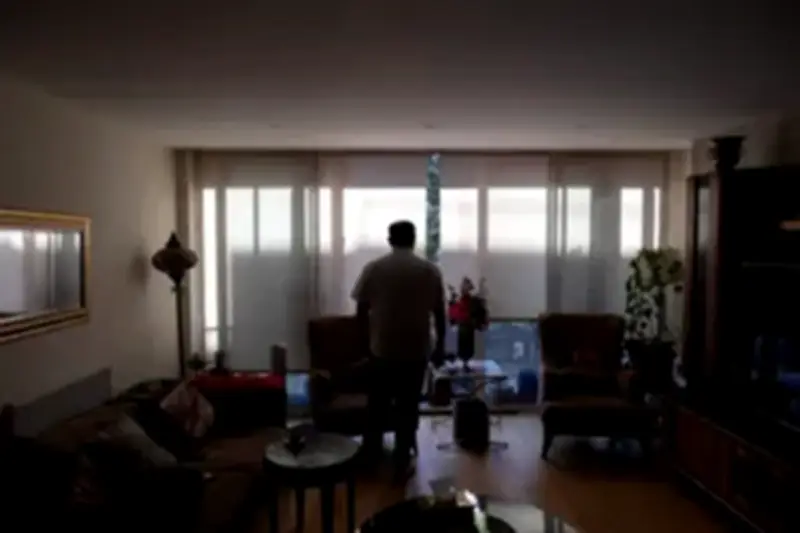
Social housing tenants living in a block of flats in central London are facing homelessness because a council “blunder” has seen them sold off for private rent.
Housing association residents living in Gem House, Marylebone, said their new private landlord has asked them to pay rents up to eight times higher than their current rate — or pack up and leave.
Legal loophole leads to sale of 16 flats
The 16 flats were sold to Gem House Limited due to a legal loophole within the council’s original agreement with the site developer. Westminster City Council launched a legal claim to try and stop the new landlord from converting the social homes to private rentals.
Earlier this month, the Court of Appeal rejected the council’s bid which means the new landlord can now let the properties out at market rates, which for Marylebone are eye-watering.
Westminster City Council has told the tenants, many of whom have already spent years in temporary accommodation, that they must make a new homelessness application in order to be rehoused by the local authority.
Many of the families and residents still have no idea where they will be living at the end of summer, despite being told previously their homes were secure permanent affordable accommodation and are blaming the council for the “blunder” that left them in this position.
Families face uncertainty and eviction
Mr and Mrs Banjak, who live in Gem House with their three children, claim they have been asked to pay £6,850 per month — more than eight times higher than their current social rent of £793.
Unable to pay, the family is now set to be evicted at the end of August pending a legal case. The council has asked them to make a homelessness application which they say means they may not find out where they are moving until a few days before the eviction date.
“It’s very, very horrible, especially because we don’t know where we are going. This is the main issue,” Mrs Banjak told the Local Democracy Reporting Service (LDRS).
“They left us with no time. For example, if they had time to tell us the address, we could move in peace. But, we are just waiting. We don’t know where we are going.”
Mrs Banjak said that the uncertainty is taking a toll on their three children, all of whom are still in education.
“It’s hard for kids regardless when they move, but even harder when you can’t prepare them, make them feel assured you’re moving to a nice place. You can’t show them the schools they’ll be going to—you don’t know. You can’t say, ‘Oh, we’re not that far from your friends,’ because you have no idea,” she said.
Mr Banjak said he believes that the council should make his family a direct housing offer rather than forcing them to go through the homeless system again. The former Transport for London bus driver was placed into temporary accommodation after he was forced to stop work due to a stroke.
After marrying Mrs Banjak, the family moved into a one-bedroom temporary home in Westminster. They spent 12 years at this property, with all three of their children born there. The family was finally moved into what they thought would be their “forever home” in 2019.
“Westminster Council has to play a more important role in supporting and assuring the tenants,” said Mr Banjak. “The council has to do it more flexibly, not [making us] start from the very beginning to do another application, another load of papers to be uploaded for them. They could have made it more comfortable and easy for us.”
Mahmoud, who also lives in the building with his two children, is worried the family may be rehoused in a different borough. The 60-year-old father is disabled and relies on a relative who lives nearby to help with his care needs.
“We’re worried about becoming homeless,” he said, adding: “I thought this was my dream home – my home for life.”
His son, who is studying at university, said that the uncertainty has greatly affected his studies. “It’s a game and we are in the middle of the cross fire,” he said.
Another tenant, who has asked to remain anonymous, said the experience has been “quite traumatising”. Like the other householders, her family has been told that they must now make a homelessness application in order to be rehoused. “We have been living around two years in total instability,” she said. “We don’t know if we are staying or going.”
Council criticised for handling of situation
When the development was first completed, Westminster City Council required the 16 affected houses at Chiltern Street to be kept as affordable accommodation. In 2023, the then-owner of the properties, Kinsman, was deregistered as a social housing provider, on the basis that it had breached the Governance and Financial Viability Standard. Kinsman was declared bankrupt and its mortgagee decided to sell the homes to Gem Properties Limited for £12.6million.
Councillor Concia Albert, Labour’s Shadow Cabinet Member for Housing Services, said: “The people living here are not private tenants who found their homes on the open market. They were placed in these flats by Westminster Council on the understanding that these were affordable homes. Westminster Conservatives must now take responsibility for the consequences of their own contract and ensure every affected resident is rehoused promptly in suitable, secure accommodation within the borough. These people did everything that was asked of them and should not lose their homes because of a mistake that had nothing to do with them.”
In a statement to the LDRS, Westminster City Council did not commit to providing direct offers to affected residents. A spokesperson said: “Westminster faces significant demand for affordable home and there are more than 6,500 households currently on the housing register. We commenced legal action against the landlord of Gem House in 2024 and challenged the landlord’s decision to abandon the original Section 106 agreement, believing that it was in the best interests of the community for these properties to remain affordable homes. We recognise that this is an unsettling time for residents and we continue to work closely with the affected households – providing advice and support with their housing options.”