

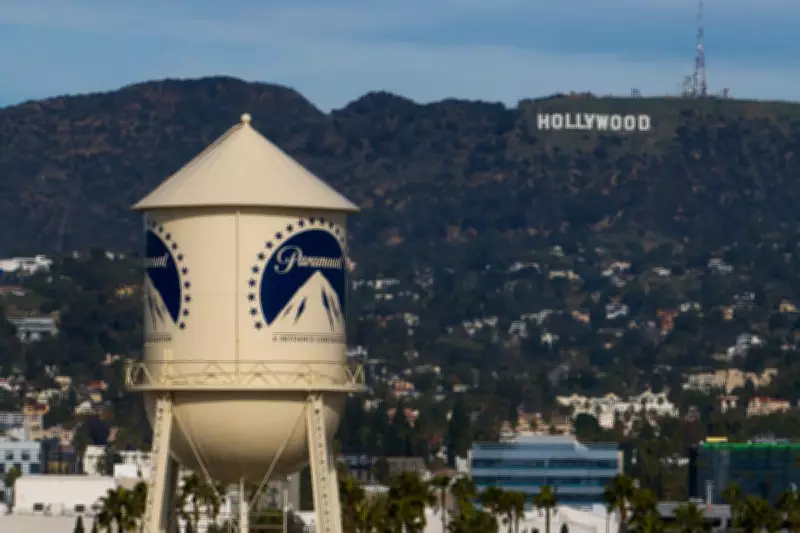
Paramount Secures Warner Bros. in Historic Hollywood Merger
In a dramatic conclusion to a months-long bidding war, Paramount has successfully acquired Warner Bros., marking one of the most significant consolidations in Hollywood history. This monumental deal, valued at approximately $111 billion including debt, signals a profound transformation for the entertainment industry, potentially reducing the major studio count from five to four.
Netflix Withdraws from Bidding War
Netflix, which had initially pursued Warner Bros. Discovery's assets including their film library and HBO, withdrew from the competition on Thursday, citing financial considerations. The streaming giant had reached a preliminary agreement in December but declined to counter Paramount's superior offer of $31 per share, compared to Netflix's $27.75 per share proposal.
"We believe we would have been strong stewards of Warner Bros.′ iconic brands," stated Netflix co-CEOs Ted Sarandos and Greg Peters in a joint announcement. "But this transaction was always a 'nice to have' at the right price, not a 'must have' at any price."

Warner Bros. Discovery's board had consistently supported the Netflix agreement until Thursday evening, when they acknowledged Paramount's bid as "superior." CEO David Zaslav expressed enthusiasm about the potential collaboration with Paramount Skydance, emphasizing their shared mission of storytelling.
Paramount's Strategic Vision for Warner Bros.
Paramount Skydance chairman and CEO David Ellison has outlined ambitious plans for the combined entity, aiming to produce over thirty films annually while maintaining Paramount and Warner Bros. as distinct operational units. In regulatory filings, Paramount emphasized their commitment to building a vibrant industry that benefits consumers, encourages competition, and strengthens employment markets.
The merger is expected to generate approximately $6 billion in savings through elimination of redundant positions and operational efficiencies. Paramount executives argue that combining forces with Warner Bros. will enhance their competitive position in the streaming landscape, providing customers with more extensive content libraries.
Industry Response and Creative Implications
The entertainment industry has responded cautiously to the announcement, with limited public commentary emerging initially. However, with major awards ceremonies approaching, including the Actor Awards on Sunday, more reactions are anticipated.
Filmmaker Maggie Gyllenhaal, currently promoting Warner Bros.' latest production "The Bride!", acknowledged the news while praising the studio's support for meaningful cinema. "I feel really deeply supported by Pam Abdy and Mike DeLuca," Gyllenhaal told The Associated Press. "They've been supporting films that are actually about something while encouraging filmmakers to reach as broad an audience as possible."
Contrasting Studio Performance and Output
The merger brings together two studios with markedly different recent trajectories. Warner Bros. has enjoyed a banner year with both commercial blockbusters and critical successes, earning thirty Oscar nominations for films including "Sinners," "One Battle After Another," and "Weapons." In contrast, Paramount received zero nominations.
Box office performance further highlights the disparity: Warner Bros. captured twenty-one percent of domestic ticket sales in 2025, driven by hits like "A Minecraft Movie," "Superman," and "Sinners." Paramount managed only six percent market share, largely attributable to "Mission: Impossible — The Final Reckoning," which failed to crack the top ten releases.
Paramount had previously committed to increasing theatrical output to at least fifteen films in 2026, up from their typical eight releases annually before the Skydance merger. The studio's portfolio remains heavily franchise-oriented, featuring properties like "Transformers," "Scream," "Sonic the Hedgehog," and "Paw Patrol."

Theater Industry Concerns and Opportunities
Cinema United, representing movie theater interests, had strongly opposed a potential Netflix acquisition of Warner Bros., fearing negative implications for theatrical exhibition. The organization now expresses similar concerns about consolidation, noting that a combined Paramount-Warner Bros. entity could control up to forty percent of annual domestic box office revenue.
While Paramount's commitment to thirty annual films theoretically benefits theaters, skepticism remains about whether this output will materialize as promised. Hollywood historian Mark Harris voiced doubts on Bluesky, predicting Warner Bros. would eventually become a "classy" label within Paramount before diminishing to specialty status.
Unanswered Questions and Regulatory Scrutiny
Several crucial details remain unresolved, including potential integration of streaming services HBO Max and Paramount+, possible bundling arrangements similar to Disney+ and Hulu, and the fate of historic studio lots in California and the United Kingdom.
The Paramount lot in Los Angeles spans sixty-five acres with thirty soundstages, while Warner Bros.' Burbank facility occupies 110 acres with thirty-one stages. Both locations represent significant entertainment heritage and face uncertain futures amid production shifts away from California.
Regulatory approval represents another major hurdle, with the U.S. Department of Justice already initiating reviews. International regulatory bodies are expected to follow suit, potentially complicating the merger's completion timeline.
This acquisition marks the latest chapter in Hollywood's ongoing consolidation, following Disney's purchase of 20th Century Fox nearly a decade ago. As the industry adjusts to this new reality, questions persist about creative freedom, market competition, and the future of cinematic storytelling in an increasingly consolidated entertainment landscape.





