
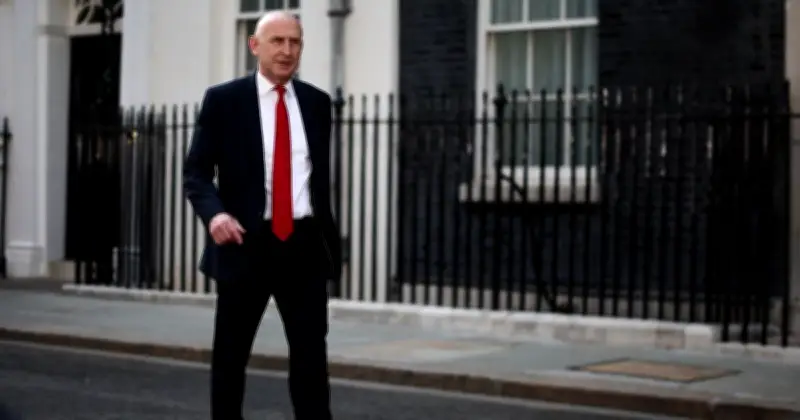
John Healey is just three days into his new role after Andy Burnham appointed him Chancellor on Monday. The former defence secretary now steers Britain's economic policy after the departure of his predecessor, Rachel Reeves. Details of Mr Healey's plans for UK Plc won't be confirmed until later in the year, and most likely not until the next Budget. But having served in the Treasury in previous Labour governments and having made some initial pronouncements, including on the cost of living, it is possible to consider what his appointment may mean for your money.
Lower inflation is 'good news' for savers
Ed Wood, Financial Planning Director at wealth and investment management firm Rathbones, told the Daily Express "hard pressed consumers" will get "a little help" from the VAT cut on energy bills and £2 bus fare cap announced this week. He added: "They will also help to hold down inflation, which is good news for savers, but also good news for anyone needing to remortgage over the next couple of years."
Mr Wood said over recent months it appeared interest rates would need to rise before the end of the year, with the potential for further increases next year. The expert said Mr Healey will be hoping the fall in inflation reported on Wednesday (July 22) will continue as it would mean the Bank of England can hold off on any interest rate rises. The BoE's base rate is currently 3.75%. The Office for National Statistics said the rate of Consumer Prices Index inflation was 2.6% in June, down from 2.8% in May and the lowest level since March 2025.
Gilt market jitters
Rathbones' expert said the gilt market is already looking "fairly wary" about Prime Minister Andy Burnham's new Government, with long term interest rates increasing on Monday (July 20). This translates into lower prices for gilt holders. Mr Wood said: "Burnham famously said he didn’t want 'to be in hock' to the bond markets and has found it easier to suggest tax cuts and spending rises than vice versa. Whether or not he wants to be in hock to the bond markets, UK borrowing was over £57billion in the last quarter alone and Healey will know he cannot play fast and loose with the gilt market."
He added that the proposed increase to the personal allowance, which "seemed likely" on Tuesday morning (July 21) was seemingly ruled out by the afternoon. The Prime Minister has suggested increasing the £12,570 tax-free personal allowance is something the Government will look at in the Budget this year.
Tax rises to pay for defence
Mr Wood reminded the Express that Mr Healey resigned as defence secretary after Sir Keir Starmer’s refusal to increase defence spending to 3% of GDP. Rathbones' expert said it seemed almost certain Mr Healey will announce an increase in Britain's defence budget. He said this can only be funded through cutting government spending or more borrowing - with rates already high and national debt approaching £3trillion. The expert said both options are "unlikely".
Mr Wood said this would leave raising taxes to boost defence spending. He said: "Tax it may be then. The question, though, is from where?" He asked what Mr Healey's options would be after Labour's general election manifesto ruled out increases to income tax, National Insurance and VAT. Mr Wood said: "What are his options? In the short term, an increase to Capital Gains Tax looks most likely." Mr Burnham has previously suggested aligning CGT with income tax rates, which would represent a significant increase from 24% up to 40 to 45% for a higher/additional rate taxpayer. Mr Wood said: "We have already seen some investors look to realise gains ahead of the Budget and expect this may continue over the next few months."
End Budget speculation
Besides speculation as to what Mr Healey might mean for your money, the new Chancellor faces fresh demands from finance experts. Tom Selby, Director of Public Policy at investment platform AJ Bell, said Mr Healey's focus must be on "restoring certainty, simplicity and confidence" for savers, investors and people planning for retirement. He added: "Recent Budgets have been dominated by speculation over potential pension tax raids, ISA reform and changes to salary sacrifice. That uncertainty is damaging in and of itself, often encouraging people to make rushed decisions that may not be in their best long-term interests."
Mr Selby said Mr Healey's "number one objective" should be to end the "circus" of Budget speculation, especially relating to pensions tax-free cash. The expert said: "The Chancellor should make an early, unequivocal commitment not to cut or further restrict pension tax-free cash or other tax reliefs at the earliest possible opportunity." He added that without it, the same rumour and speculation will inevitably begin again as the new Chancellor's first Budget comes into view.
Clarify the future of the triple lock
Mr Selby said the Chancellor should also clarify his thinking on the triple lock pensions guarantee, which sees the state pension rise by the highest of CPI inflation, average earnings or 2.5%. The expert said the Chancellor should set out a sustainable policy for the state pension that gives pensioners certainty while recognising pressure on the public finances. This could include the state pension reaching a defined proportion of median earnings before reverting to an earnings link, according to Mr Selby.
Mr Healey was also urged to revisit plans to bring pensions into Inheritance Tax; to rip up Ms Reeves' ISA reforms; to reconsider the proposed £2,000 cap on salary sacrifice, and the tapering of the personal allowance. This is where people earning over £100,000 pay a higher marginal tax rate before it drops down again on earnings above £125,140. Mr Selby said: "The Chancellor should look to fix this to boost aspiration, reduce complexity and remove a distortion that can discourage people from taking on extra work or responsibility."
Review pension savings
AJ Bell's expert suggested the Treasury and Department for Work and Pensions should lay out a roadmap to improve pensions adequacy. Mr Selby said on the back of a Pension Commission report due in 2027, the Chancellor will need to consider how to encourage some employees and employers to save more for retirement. He added: "Such demands can’t be made overnight; both individuals and employers need time to adapt to new contribution levels. The Treasury now needs to work with DWP to set out a roadmap for improving adequacy, including the future of contribution rates, and how changes can be phased in affordably. They also need to finally tackle how to encourage the self-employed to save more for retirement, rather than leaving them on the ‘too-difficult-to-solve' pile."




