
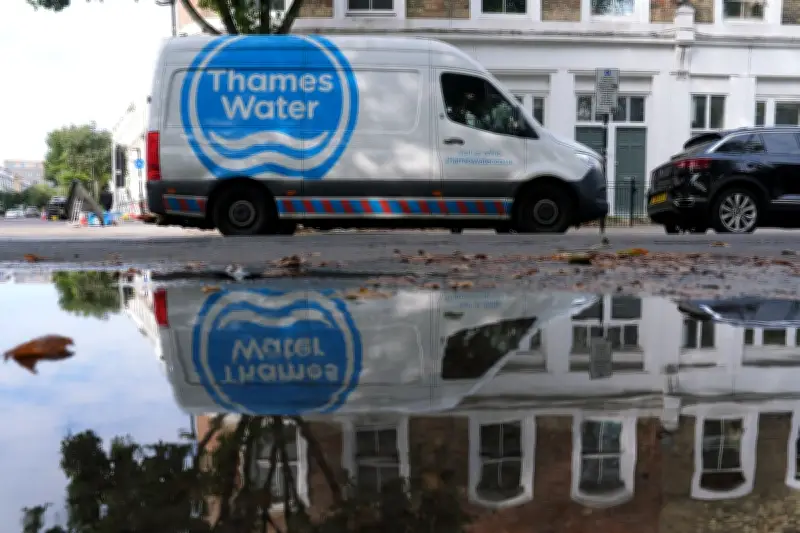
Ministers have expressed concerns that a £10 billion rescue deal for Thames Water may not adequately protect consumers or the environment. Environment Secretary Emma Reynolds has written to the regulator Ofwat, stating that the rescue bid from the consortium London & Valley Water does not sufficiently safeguard consumer interests and could lead to reduced performance standards and delays in vital infrastructure improvements.
Ofwat was reportedly close to accepting the offer, which involves injecting £10 billion into the debt-laden Thames Water in exchange for a four-year waiver on any new fines related to sewage leaks. The government's reservations raise the possibility of temporary nationalisation for the troubled utility, adding uncertainty to its future amid potential political changes.
Emma Reynolds is understood to have written to Ofwat on Monday, warning that the creditors' bid would place an 'undue burden' on customers. This development comes as Andy Burnham, the Mayor of Greater Manchester, aims to win the Makerfield by-election on Thursday, which could enable him to challenge Prime Minister Sir Keir Starmer for leadership. Burnham has recently expressed a desire to implement a 10-year plan to renationalise the water industry, emphasising the need to prioritise public interest.
Thames Water, Britain's largest water supplier serving 16 million customers, is seeking this deal to avoid temporary nationalisation after being burdened by nearly £20 billion in debt. The company has also faced substantial fines for poor environmental performance in recent years. The creditors' rescue bid is seen as the last realistic option to prevent the company from entering the government's special administration regime, following the collapse of a previous deal with US private equity giant KKR in May last year.
Administrators have been prepared to step in if necessary, but the government has consistently stated a preference for a 'market solution' over temporary nationalisation. On Tuesday, Ms Reynolds stated: 'Thames Water customers have been let down for far too long, with 15 years of underperformance, increasing serious pollution, and customers left to pick up the bill. I have written to Ofwat to outline my early views that I am not convinced the current proposal is good enough for consumers or the environment. We stand by for any outcome.'
Officials at the Environment Department (Defra) clarified that Ms Reynolds' views do not predetermine any future decision by Ofwat, which is set to be abolished and replaced by a new regulator as part of water sector reforms, and do not constitute a government direction. They reassured customers that water supplies would not be disrupted due to Thames Water's financial position.
It had been anticipated that the government would endorse the Thames Water takeover this summer, as the utility rapidly depletes its cash reserves and faces potential collapse within months without a deal. London & Valley Water's proposed deal would inject £3.35 billion in new equity and up to £6.55 billion in new debt. However, Thames Water would also need to pay nearly £750 million to its creditors, lawyers, and advisers as part of the restructuring. The supplier would reportedly be responsible for £160 million in fees and £285 million in accrued interest owed to creditors, including institutional investors like US hedge funds Elliott Management and Silverpoint Capital.
Thames Water, along with other water companies, faces ongoing backlash from campaigners and the public over rising bills, executive bonuses, poor customer service, supply outages, and pollution of rivers, lakes, and seas. There are increasingly vocal calls for outright renationalisation of the sector.
Cliff Roney of the GMB union, representing water industry workers, commented: 'It was clear from the outset that this deal would do nothing for consumers or the environment, and it's a relief to see that government recognise that. As the Government forges ahead with bringing rail companies back under public control, we urgently need them to do the same for the water companies. Temporary nationalisation is not enough to end uncertainty for water workers and it won't fix the deep-seated problems with Thames Water. Renationalisation is the only way to end this farce and protect consumers, water workers, and our precious waterways.'




