
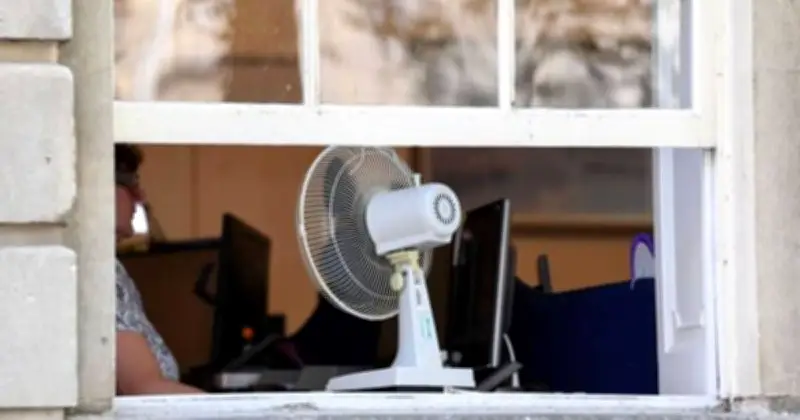
The UK government's own heatwave plan warns that electric fans become ineffective and may do more harm than good when the air temperature exceeds 35C. This comes as the Met Office forecasts temperatures could reach 36C in much of the UK on Thursday, August 13, with a rare amber weather warning for extreme heat covering London, most of the Midlands, and parts of the north as far as Sheffield.
Fans only work below 35C
According to the government's heatwave plan, electric fans only work in temperatures under 35C. The advice states: "Homes can overheat and become uncomfortable during warmer weather, particularly when you are trying to sleep. Use electric fans if the air temperature is below 35C, but do not aim the fan directly at your body as this can lead to dehydration."
At any temperature, fans do not actually cool the room; they simply move the air around. So, although you might feel a bit better with one in your face, the room is just as hot as it was before, and it could actually lull you into a false sense of security if you use a fan instead of staying hydrated or cooling the room properly.
Better ways to cool down
The best things to do are to shade windows, increase airflow, close curtains, keep cool with regular water or cold showers, and stay out of direct sunlight. This advice is likely to become more important as temperatures are only expected to keep getting hotter in the future.
The government's advice adds: "Climate change is already causing warmer temperatures in the UK. All of the warmest years on record in the UK have occurred since 2002, and in July 2022 temperatures exceeded 40C for the first time on record. It is estimated that 2,803 people aged 65 years and over died due to the heat in England in 2022, and it is predicted that the number of heat-related deaths per year may triple by 2050."
Health risks of hot weather
"Hot weather can increase the risk of heart attack, stroke, lung problems and other diseases. Older people, babies and young children are more likely to be unwell from hot weather because their bodies are less able to regulate temperature. People with underlying medical conditions can also be vulnerable to the effects of hot weather."
"Many of the harms linked to heat exposure are preventable if a few simple actions are taken. During the summer, UKHSA will work with the Met Office to issue alerts alongside the weather forecast if the weather is so hot that it has the potential to affect people's health, and will help you to take steps to protect yourself and others."




