

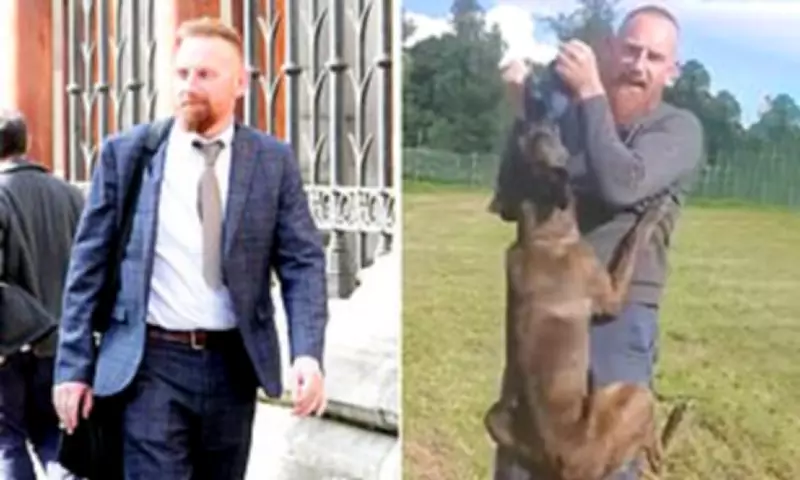
A celebrity dog whisperer is taking legal action against the government, demanding more than £8 million in compensation after his exclusive kennels were forced to close to make way for the controversial HS2 rail project. Matthew Wiggins, a renowned pooch guru, supplied highly trained dogs sourced from overseas to institutions, professionals, high-net-worth individuals, and celebrities, including Game of Thrones actress Indira Varma.
Business Upheaval Due to HS2 Project
Mr Wiggins established his business, WKD Trained Dogs Ltd, at Brookhouse Farm near Stone in Staffordshire in 2012. He transformed the 3.4-acre farm into a high-end training centre featuring 35 kennels, dedicated to crafting 'perfect pets' for elite clients. However, in 2019, the farm was slated for demolition as it lay near the projected path of the £100 billion HS2 rail line. The Department for Transport (DfT) eventually acquired the property through a compulsory purchase order in January 2023.
Legal Battle Over Compensation Figures
WKD Trained Dogs Ltd is now battling the DfT at the Upper Tribunal in London, seeking a payout of £8,051,292. The company argues that four years of uncertainty prior to the compulsory purchase severely damaged its operations. In contrast, the DfT maintains that its offer of £3,262,726 is fair and adequate, suggesting that any additional losses were likely caused by the Covid-19 pandemic rather than HS2-related blight.

The dispute intensified when the High Speed Rail Bill passed through Parliament in 2017, first floating the possibility of Brookhouse Farm being sacrificed for the rail line. HS2 has faced widespread criticism since its inception in 2019, with successive governments condemned for its colossal costs, impact on local communities, and uncertain completion timeline.
Shadow Losses and Blight Factor Claims
Central to the legal argument are the 'shadow losses' WKD suffered from 2019 to 2023 due to the 'blight factor.' Mr Wiggins claims this period of looming acquisition adversely affected staff morale, performance, and retention. Additionally, he asserts that the uncertainty impacted his 'mindset and focus,' preventing him from travelling to his preferred suppliers in Eastern Europe for fear of missing potential relocation opportunities.
Lawyers for WKD accuse the DfT of dithering in informing the company about crucial deadlines for deciding whether to relocate or terminate the business. The tribunal also examines the company's 'extinguishment value,' calculating the impact of closing down operations at Brookhouse Farm.
Impact on Training and Market Demand
Barrister Isabella Tafur, representing Mr Wiggins, highlighted that HS2 and the compulsory purchase order caused a decline in WKD's online training sector. She noted that the 'rate of trained dogs to failed dogs' decreased during the shadow period. However, DfT barrister Mark Westmoreland-Smith KC acknowledged this drop but attributed it more to the advent of Covid-19 and fluctuating market demand changes.
Outside court, Mr Wiggins revealed that the farm is now 'derelict,' and his business remains on hold pending the tribunal's decision. The 41-year-old self-trained dog trainer founded WKD in 2010 with a unique vision: sourcing and training top-quality dogs from regions like Hungary and Serbia for onward sale to discerning clients.
Unique Business Model and Celebrity Clientele
Mr Wiggins specialises in selling ready-trained dogs, honing his skills through a mentor's guidance that led to a sudden 'lightbulb' moment. His 'entirely unique' ability lies in selecting dogs with the right temperament for training, while weeding out unsuitable candidates. Ms Tafur described the business as 'niche if not unique,' focusing on sourcing, training, and selling fully trained dogs aged 10 to 24 months.
The company operated on a pre-order basis, with customers paying deposits and prices fixed at the time of order. Demand typically outstripped supply, resulting in a long waiting list. Trained dogs came with a guarantee, including remedial training or a full refund if issues arose. WKD refined its selection approach over time, basing it on statistical traits rather than breed, which reduced guarantee invocations and shortened training periods to around four weeks by 2016.

WKD primarily sourced dogs from suppliers in Hungary or Ireland, with Mr Wiggins conducting temperament testing either abroad or at the farm. The trial continues as both sides present their arguments, with the outcome poised to set a significant precedent for businesses affected by large-scale infrastructure projects like HS2.





