
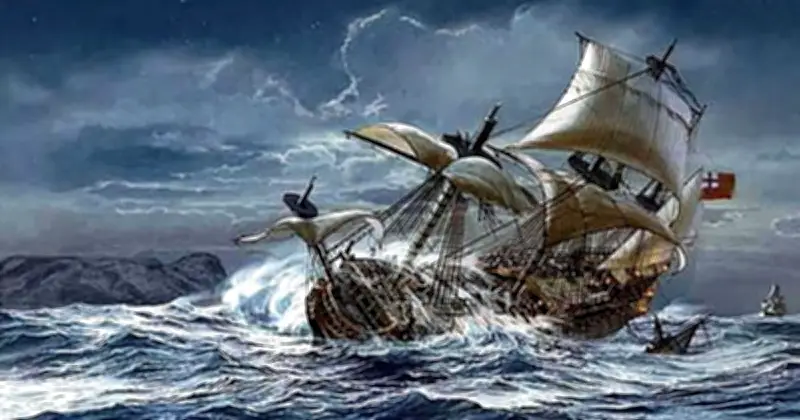
Britain abandoned a £5.5billion treasure hunt involving a Royal Navy shipwreck after ministers feared the operation could upset Spain, according to leaked diplomatic cables. The wreck, believed to be HMS Sussex, was the site of a recovery deal that became embroiled in a diplomatic dispute between London and Madrid.
Shipwreck and treasure
The Royal Navy flagship sank in a storm off Gibraltar in 1694 while carrying as much as 10 tons of gold, according to records. The value of the gold would be £5.5billion today, making it the most lucrative shipwreck discovered. HMS Sussex is believed to lie in international waters east of Gibraltar.
Britain could claim the wreck under international maritime law, while Spain argued that it owned the ship because of its position in what it claimed were Spanish waters.
Discovery and agreement
The discovery became a possibility after Odyssey Marine Exploration, the US deep sea exploration company, said in 2001 that it was "99 per cent" sure it had located HMS Sussex following a three-year search. In September 2002, the UK Government signed an agreement with Odyssey to recover the wreck and divide the proceeds from the treasure.
The arrangement rapidly became controversial in Spain and contributed to diplomatic tensions between the two countries. US diplomatic cables, subsequently released by Wikileaks, recorded British concerns about the dispute.
Diplomatic tensions
Dame Denise Holt, then deputy head of mission at the British embassy in Madrid, said the row represented "an unnecessary threat" to British-Spanish relations. The documents said British officials would seek to "terminate" the contract with Odyssey. In June 2007, Dame Denise said the "controversy" had prompted the British embassy to "distance themselves as much as possible from Odyssey". She said the dispute was also affecting "Gibraltar issues".
The Florida-based company would also lose British "aid" when its ships sailed from Gibraltar, where they were moored, she said. The Spanish opposition to the search was also recorded in another cable. Carmen Calvo, Spain's culture minister, said in a November 2005 cable that Odyssey would search for HMS Sussex "over her dead body", reports the Daily Mail. The leaked correspondence referred to the dispute as a "six year saga".
Recovery operation details
The wreck itself had been discovered in 1998 at a depth of 821 metres (2,694 feet) in the Mediterranean sea. Underwater robots and remote operated vehicles were used to identify it. The operation had cost Odyssey millions of dollars and members of the project were "hounded" by "aggressive" Spanish patrol boats, it was said.
Neil Cunningham Dobson, a marine archaeologist involved in the project, told the Daily Mail: "The Guardia Civil were hostile towards us. We had to abandon the site, leaving equipment and archaeological investigations not completed." "They were aggressive towards us," he added.
The recovery agreement contained detailed provisions governing the division of the proceeds. Odyssey was entitled to 80 per cent of the first $45million (£33million) made from selling the coins. The next proceeds, up to $500million (£375million), would be divided equally. Anything above that would be split 60-40 between Britain and Odyssey.
Spain continued to claim Gibraltar and said the ship could have been Spanish, despite a lack of evidence supporting the claim. International law, however, gives UK authorities jurisdiction over wrecks belonging to British ships wherever they are located. The recovery effort was eventually halted while the agreement between Odyssey and the UK Government ran its course. Reports also said Spain had deployed coastal patrols in attempts to disrupt the operation.
The treasure aboard HMS Sussex had a military purpose. The ship was secretly transporting gold and silver coins to the Duke of Savoy to help finance his war against Louis XIV during the Nine Years War against France. It served as the flagship of Admiral Sir Francis Wheeler's fleet, which consisted of 40 warships and 166 merchant ships. The disaster left almost the entire crew dead, with only two people out of the 550 believed to have survived. Admiral Sir Francis Wheeler's body was washed up on a Spanish beach two days after the sinking.
The Ministry of Defence and Odyssey have been contacted for comment.




