

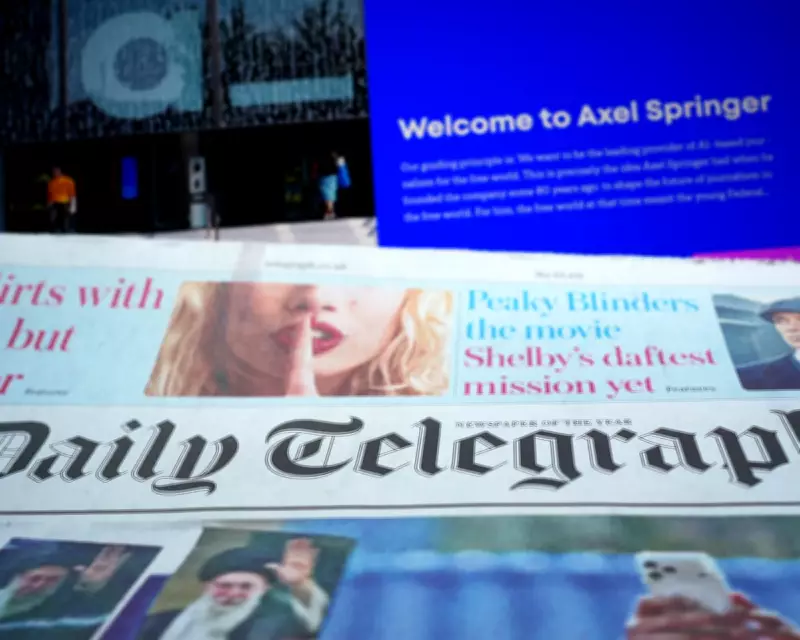
Axel Springer's Surprise Telegraph Takeover Sparks Media Shake-Up
In a dramatic turn of events, Axel Springer's chief executive, Mathias Döpfner, has pledged to elevate the Telegraph to the leading centre-right media outlet in the English-speaking world. This bold declaration follows the German media giant's unexpected £575 million knockout offer, which gazumped Daily Mail owner Lord Rothermere at the eleventh hour, thwarting his nearly three-decade ambition to unite the titles under one right-leaning stable.
A Long-Awaited Dream Dashed
Lord Rothermere, who assumed control of the Daily Mail and General Trust (DMGT) in 1998, had first eyed the Telegraph in 2004, only to be outbid by the Barclay family's £665 million takeover. By early March, after other prospective buyers—including Abu Dhabi-backed RedBird IMI, a consortium led by New York Sun owner Dovid Efune, and another by Gerry Cardinale's RedBird Capital—were thwarted, Rothermere's team was poised to finalise a £500 million deal. However, Axel Springer swooped in, securing the British crown jewel to bolster its transatlantic empire, having previously lost bids for the Telegraph in 2004 and the Financial Times a decade later.
Döpfner's Vision and Concerns
Standing at 6ft 7in, Mathias Döpfner made an imposing presence during visits to the Telegraph's London office, where he met with management and staff, including editor Chris Evans. He has promised editorial independence, yet speculation persists about potential leadership changes. Döpfner's focus on a digital-first strategy and artificial intelligence is notable; last year, he urged employees to embrace AI or die, signalling a tech-driven future for the paper.

However, Axel Springer's track record with Bild, Europe's top-selling newspaper, raises eyebrows. Founded in 1952 with a partisan ethos, Bild has faced penalties for pushing rightwing populism and violating journalism ethics. Since the late 1960s, Axel Springer staff have been required to sign a pledge supporting principles like Israel's right to exist, a free-market economy, and the Germany-US alliance. This could clash with the Telegraph's staunchly anti-Brussels stance, especially regarding Brexit, as noted by Andrew Neil on X, who quipped about the very English and Eurosceptic Telegraph being owned by a German and very Europhile Springer.
Internal Reactions and Future Implications
Insiders report a generational split among Telegraph staff: younger employees welcome Axel Springer's investment promises, while older staffers, many with Mail titles experience, viewed a DMGT victory as more predictable. One source remarked, No one saw this coming, but Springer's promises of investment are more believable than DMGT's. Döpfner plans to digitally turbocharge the Telegraph's expansion into the US, leveraging assets like Politico and Business Insider.
For Lord Rothermere, the failed deal poses long-term commercial risks. A media analyst warned, The Mail revenue streams are precarious, lacking a strong digital subscription business and vulnerable to AI changes. Axel Springer's resources could threaten the Mail's market share online. Meanwhile, RedBird IMI, forced to sell due to UK legislation blocking foreign state ownership, has recouped more than the £600 million it fronted, with the Spectator sold to GB News investor Sir Paul Marshall for £100 million and the Telegraph titles fetching £675 million total.
Seeking Stability After Turmoil
After almost three years of instability and multiple ownership changes, Telegraph staff crave certainty. One source expressed hope that this gets wrapped up without another dramatic twist. As Axel Springer moves forward, the media landscape watches closely to see if Döpfner's vision will curb or exacerbate the Telegraph's editorial direction, shaping its role in the global centre-right discourse.






