

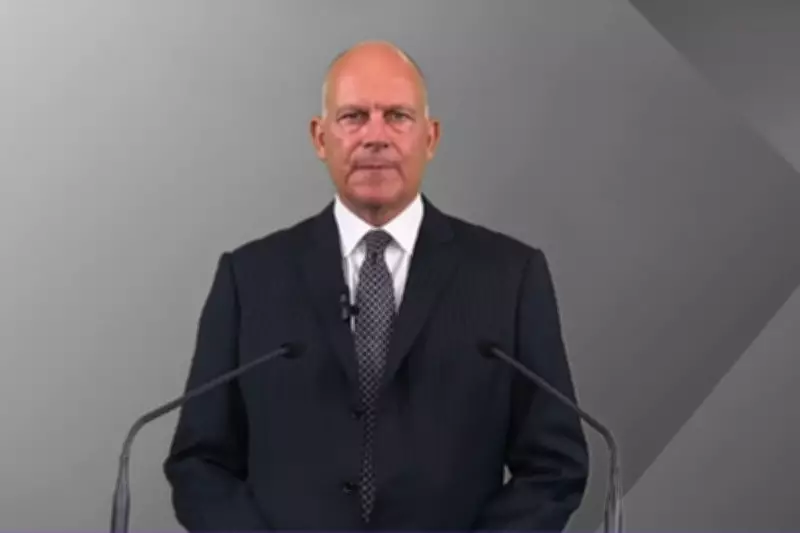
Air India Chief Executive Steps Down After Turbulent Tenure
Air India has confirmed the resignation of its chief executive Campbell Wilson, marking a significant leadership change for the carrier just ten months after the catastrophic Ahmedabad crash that claimed 260 lives. The airline continues to grapple with the profound aftermath of last year's disaster involving a London-bound Boeing 787 Dreamliner in western India, alongside mounting financial difficulties and regulatory scrutiny over safety failures.
Leadership Transition Amid Multiple Crises
The airline announced it has established a committee to identify a successor to Mr Wilson "in the coming months." According to earlier Reuters reports, the New Zealand-born former Singapore Airlines veteran, who assumed leadership in 2022 following the Tata Group's acquisition of the carrier from the Indian government, was expected to remain in position until his replacement was secured. His original contract was scheduled to run until 2027.
In an official statement, Air India revealed that Mr Wilson had initially informed chairman N Chandrasekaran of his intention to step down back in 2024 but had continued in his role to ensure organisational stability during the transition period. Mr Chandrasekaran expressed "deep appreciation for Campbell's leadership and contribution over the past four years," acknowledging the "numerous external challenges" faced during his tenure, including post-pandemic supply chain disruptions, aircraft delivery delays, and significant geopolitical headwinds.

Safety Failures and Regulatory Reprimands
The past year represents one of the most challenging periods in Air India's ninety-four-year history. In June last year, the Boeing 787 Dreamliner crashed mere seconds after takeoff from Ahmedabad en route to London, resulting in the deaths of 241 passengers and crew members aboard, plus nineteen individuals on the ground.
Subsequent investigations by aviation regulators have led to severe reprimands for the carrier concerning multiple safety deficiencies. These included operating an aircraft eight separate times without a valid airworthiness certificate and failing to conduct proper emergency equipment checks before flights. In December, the airline publicly acknowledged an "urgent need for improvements in process discipline, communication, and compliance culture."
Financial Pressures Intensify
Compounding these operational challenges, the US-Israeli conflict with Iran has imposed additional financial strain on Air India's operations. With Gulf airspace severely disrupted since late February, the airline has been compelled to reroute European and North American flights over African airspace, adding substantial hours and significantly increased fuel costs to each journey. Simultaneously, jet fuel prices have escalated sharply due to the ongoing conflict.
The combined financial losses for Air India and its budget subsidiary Air India Express reached Rs 98.08 billion (approximately £830 million) during the 2024-25 fiscal year. Industry analysts now project these losses could potentially double to Rs 200 billion (around £1.7 billion) for the 2025-26 period, creating severe sustainability concerns.
Transformation Claims and Industry Context
In his departure statement, Mr Wilson asserted that Air India had undergone substantial transformation during his leadership, citing the acquisition and successful merger of four airlines, complete modernisation of operational systems, introduction of new physical products, implementation of elevated service standards, and the addition of 100 new aircraft to the fleet.
"With these foundational blocks now settling and a brief window until deliveries from the nearly 600-strong aircraft orderbook commence in earnest from 2027, the time is right for me to hand over the reins for the next phase of Air India's rise," Mr Wilson stated. "It has been a true honour to play a small part in this latest chapter of Air India's long history."
Mr Wilson's departure leaves Air India without permanent leadership at a critical juncture, with its low-cost subsidiary Air India Express also currently lacking a managing director following that executive's departure last month after completing his five-year term.

Broader Industry Developments
The resignation follows closely on rival carrier IndiGo's appointment of Willie Walsh, director general of the International Air Transport Association, as its next chief executive officer, scheduled to assume responsibilities on 3 August. IndiGo's previous CEO Pieter Elbers resigned in December 2025 following mass flight cancellations that affected hundreds of thousands of passengers and approximately 5,000 flights.
Air India, originally founded in 1932 by industrialist JRD Tata before nationalisation in 1953, returned to Tata Group ownership in 2022 after years of substantial losses under government control. Singapore Airlines maintains a 25 percent stake in the carrier, which now faces one of its most precarious periods as it seeks to recover from tragedy, regulatory censure, and financial instability.





