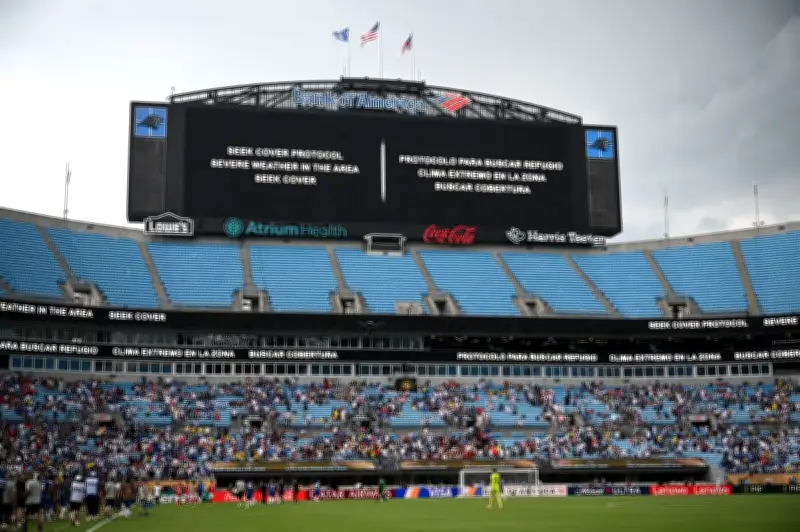
Mother nature is set to play a distinct role in the upcoming World Cup, with weather conditions such as heat, rain, and lightning expected to influence matches. Followers of last summer's Club World Cup will recall Chelsea's round-of-16 tie against Benfica, which was paused four minutes from time due to lightning detected locally. The match eventually finished four-and-a-half hours after kick-off.
FIFA's Severe Weather Policy
FIFA does not have a standalone severe weather policy; it must adhere to regulations imposed by local authorities. These authorities take a no-nonsense approach, particularly regarding lightning. Any match will be suspended if lightning is detected within eight miles of a stadium, followed by a delay of at least 30 minutes. All players must leave the pitch, and all fans must leave the stands. The match may not resume until a full 30 minutes have passed with no lightning detected within that eight-mile radius.
Duration of Delays
FIFA has no hard-and-fast cut-off point for suspending a match. Decisions about when matches will be formally called off are based on ensuring supporters can get home safely. If a match is postponed due to weather, it will most likely resume the following day, picking up from the exact point at which it was stopped. For example, if a match was stopped with 65 minutes played, teams would return to complete the remaining 35 minutes.
It remains to be seen how FIFA will approach weather delays for matches scheduled simultaneously, such as the final round of group stage fixtures.