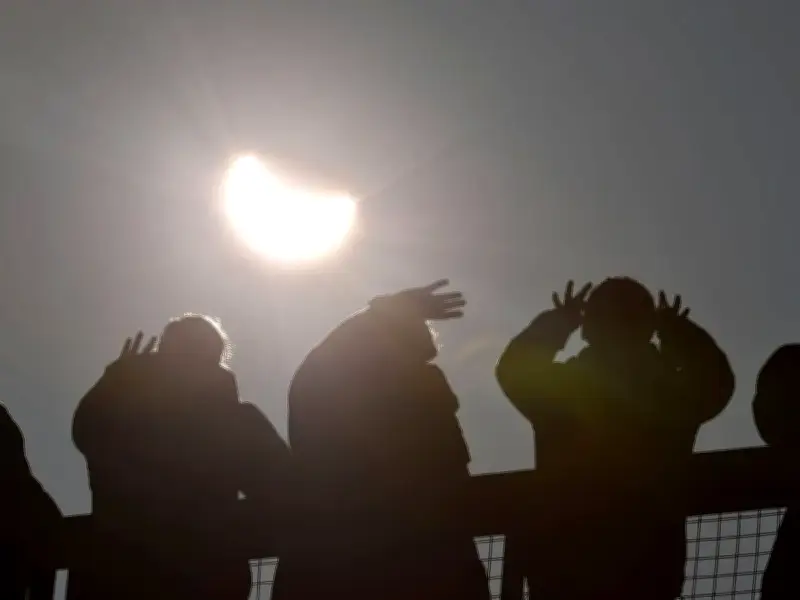
Britain will witness its most complete solar eclipse for the next 54 years today, with over 90% of the Sun concealed by the Moon between 6.17pm and 8.06pm on August 12. The Royal Greenwich Observatory has cautioned that ordinary sunglasses are not safe for viewing, and astronomy enthusiasts should use certified eclipse glasses or household items like a colander to project the image.
Safety warnings and expert advice
The Royal Greenwich Observatory warned that sunglasses don't offer sufficient protection. Viewing a solar eclipse poses risks because the Sun appears fainter than normal, tempting people to gaze directly, which can result in vision damage. Imo Bell, a planetarium astronomer at the observatory, told the Press Association: "It's not a total eclipse, but over 90% is really exciting. We're not going to get one this good for a really long time."
Bell explained that solar eclipse glasses are very different from sunglasses, blocking so much light that you can't see anything through them except the Sun. She also suggested using a solar telescope or checking local astronomy society events. As a last resort, she recommended projecting the eclipse using a colander: "point the colander towards the Sun with your back facing it, and in the shadow of the colander you'll be able to see the eclipse in the holes, which is really cool."
Colander method and camera protection
To use the colander method, place a sheet of paper on the ground, hold the colander with your back to the Sun, and let sunlight shine through the holes onto the sheet. Each hole will project an individual crescent Sun. For cameras, phone and digital camera sensors can be permanently damaged by the Sun's brightness. A physical lens filter, such as the Absolute Eclipse Solar Filter Sheet, which is ISO certified and blocks 99.9997% of visible light, can be used.
Peak times and personal warning
Peak coverage is anticipated at approximately 7.13pm today. Bell recommended finding an elevated spot facing west with few buildings nearby. She noted the sky will get a little dark, and the Sun will appear as a crescent near the western horizon. Peter Smith, from Taunton, who damaged his vision 27 years ago using a welder's mask, warned: "Make sure its got the right protection and filters to stop any damage because any damage you get, it'll never heal. It's not like cutting your hand." He added that residual impacts remain, such as flashing dots when tired. The next time the Moon obscures this much of the Sun is estimated to be in 2081, and the next total solar eclipse visible from the UK won't happen until 2090.