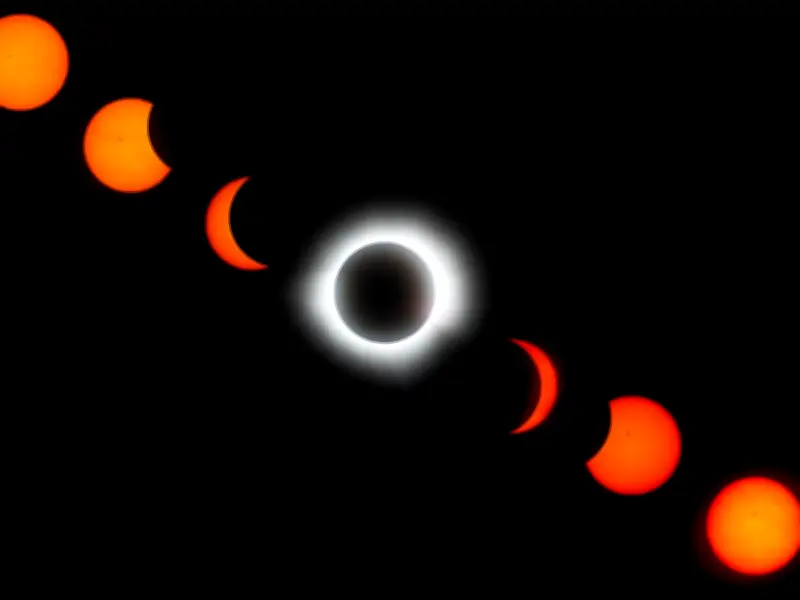
The UK's biggest solar eclipse in 27 years is fast approaching. On Wednesday, August 12, sky watchers across parts of Europe will be treated to an impressive celestial spectacle.
While those in parts of Spain, northern Portugal and Iceland are set to witness a total eclipse that will transform day into night, in the UK only a partial eclipse will be visible – but there's something special about this one.
Most Coverage Since 1999
According to Royal Museums Greenwich, next week's partial solar eclipse will be the most coverage seen from the UK and Ireland since the 1999 eclipse. A solar eclipse takes place when the Moon passes between the Sun and Earth, casting a shadow on Earth. Depending on where you are in the UK, up to 96 per cent of the Sun will be covered by the Moon.
The UK last witnessed a solar eclipse in March 2025, but only around 30-40 per cent of the Sun was covered by the Moon. Now, more than 90 per cent of the Sun will be obscured, causing the sky to dim as the Moon blocks our sunlight.
Best Views in the South West
The last time the UK was lucky enough to see this much coverage of the Sun was during the 1999 eclipse, when parts of south west England witnessed totality. And again, those in parts of Cornwall, Devon and the Isles of Scilly are set to enjoy the best views in the 2026 solar eclipse, providing skies are clear.
How and When to Watch
The celestial event is set to begin just after 6pm, with the maximum eclipse occurring between about 7.05pm and 7.13pm BST in the UK. In Manchester, the spectacle will begin at 6.13pm and end at 8.03pm, with the maximum eclipse at 7.10pm.
Those hoping to view the solar eclipse are urged to not look directly at the Sun or view the eclipse through telescopes and binoculars unless they have a special solar filter.
Safety Advice
RAS President Professor Jim Wild said: "I would encourage everyone to enjoy the spectacle safely. Never look directly at the Sun without appropriate solar viewing equipment. Certified eclipse glasses, specially designed solar filters for telescopes and binoculars, or indirect methods such as pinhole projectors are all safe ways to observe the event. With the right precautions, this eclipse promises to be an inspiring experience for seasoned astronomers and first-time skywatchers alike."
Perseid Meteor Shower
And if you've found the perfect sky watching spot for the evening eclipse, why not stay out into the early hours to watch some shooting stars? The peak of the Perseid meteor shower – one of the most spectacular of the year – falls overnight on August 12-13. It's best viewed between midnight and 5.30am, according to Royal Museums Greenwich, with up to 150 meteors an hour lighting up the sky.