On Wednesday, August 12, 2026, a solar eclipse will be visible across many countries, and in the UK, millions can see a partial solar eclipse. This is one of the best astronomy events of the decade.
Visibility across the UK
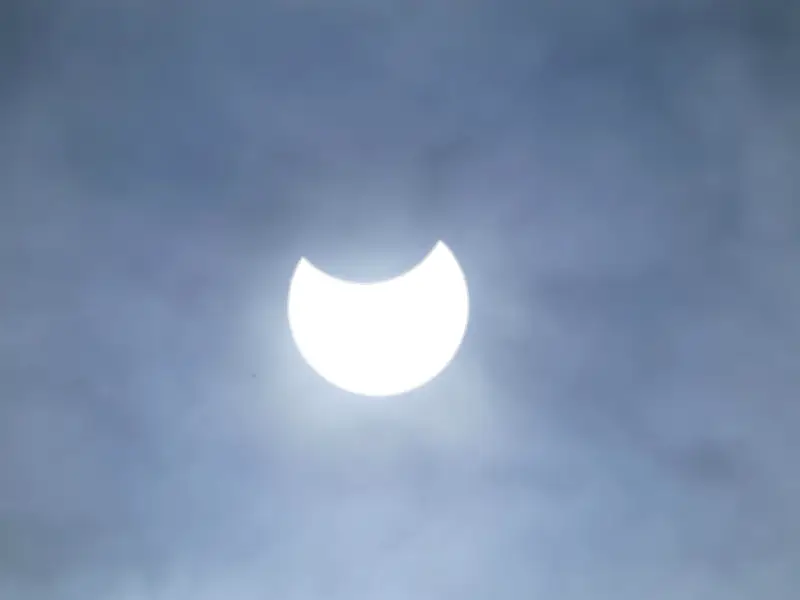
The solar eclipse will be visible across the whole of the UK. People watching in the south west are likely to see the greatest proportion of the Sun covered by the Moon. This partial eclipse will almost be total, with around 90-96% of the Sun being obscured by the Moon at the maximum.
The amount of coverage you'll see depends on your location within the UK and Ireland. You'll need a clear view to the western horizon to see the eclipse, as the Sun and Moon will be setting and therefore low on the horizon.
Last UK total eclipse was in 1999
The last time the path of an eclipse's totality went over the UK was in 1999. According to Royal Museums Greenwich, this was one of the most viewed total solar eclipses due to its path falling on areas of high population density.
The total solar eclipse will sweep across Greenland, Iceland, northern Russia, the Atlantic Ocean, Spain, and a small corner of Portugal. When the Moon moves in front of the Sun, those in the centre of the Moon's shadow will experience a total solar eclipse.
For most in the path of totality, the Sun will be fully eclipsed for less than two minutes. For anyone near the very centre of the eclipse path in Greenland, Russia, or the North Atlantic, totality will last a little longer.
How to watch safely
In the UK, the Moon will never completely block the Sun and the eclipse will be partial only. Royal Museums Greenwich has shared advice for watching the eclipse safely next week.
People can watch the Royal Observatory's live stream, who will be broadcasting a free, live feed of the eclipse from London. Another way to watch is by using eclipse glasses. These block out the Sun's harmful rays and allow you to look at the eclipse safely with your own eyes.
The safest, cheapest and one of the most convenient ways to view the event is by pinhole projection. Projecting a solar eclipse in this way means you're observing the effects of the Moon passing in front of the Sun without actually looking at the Sun itself.
Projection is best for partial solar eclipses or during the early and late stages of a total solar eclipse, when the Sun is turned into a crescent shape as the Moon passes in front of it.
Timings for Liverpool
BBC Sky at Night Magazine has suggested Liverpool will see the partial solar eclipse between 6.13pm and 8.04pm. The peak of the eclipse is expected to be at 7.10pm.