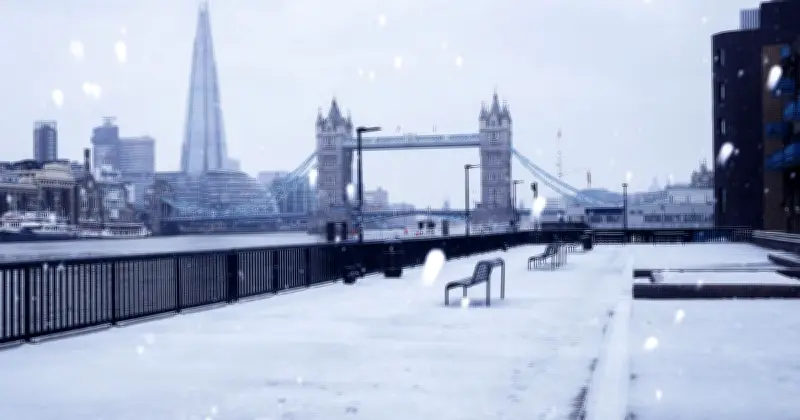
The El Niño weather phenomenon, which has contributed to a scorching summer with record-breaking heatwaves, could lead to a colder winter with snow in the UK, according to climate experts. The polar vortex, an area of cold air that normally spins over the poles, could be disrupted, sending freezing air into the US and Europe.
El Niño's Impact on UK Winters
El Niño, the warming of sea surface temperatures in the central-east equatorial Pacific, drives changes in high and low pressure patterns. Its effects often peak in December, and it has been linked to an increased risk of colder winters in the UK, according to the Met Office.
The Met Office's guidance states: "Our research helped show that the El Niño and La Niña cycle has impacts all over the world. For example, El Niño years are one factor that can increase the risk of colder winters in the UK."
Polar Vortex Disruption
The polar vortex is vulnerable to disruption from jet streams of air. When disrupted, it can send freezing air southward, creating cold snaps and snow. According to USA Today, El Niño can interact with the polar vortex, affecting weather patterns.
Darryn Waugh, a professor in Earth and Planetary Sciences at Johns Hopkins University, said: "The polar vortex above the Arctic is linked to the jet stream. Both can be impacted by El Niño, and bring about changes in our weather patterns." Amy Butler, a physicist at NOAA's Chemical Sciences Laboratory, added: "El Niño drives changes in the high- and low-pressure patterns in the troposphere, the lowest layer of Earth's atmosphere where weather happens."
Met Office Caution
The Met Office urges caution, noting that El Niño is just one of several climate drivers influencing UK weather. Its impacts are typically indirect, but it can increase the likelihood of unsettled conditions later in the year, including milder, wetter, and windier weather during autumn and early winter.
The Met Office adds: "El Niño can also be associated with colder and calmer late winter periods in the UK. However, any potential impacts will be assessed in more detail later in the year as forecasts evolve."